In a groundbreaking development, Foxconn is set to integrate Nvidia-powered humanoid robots into its manufacturing operations within the next six months. This initiative signals a significant leap toward AI-driven automation by one of Apple’s principal production partners.
Foxconn to Revolutionize Assembly Lines with Humanoid Robots
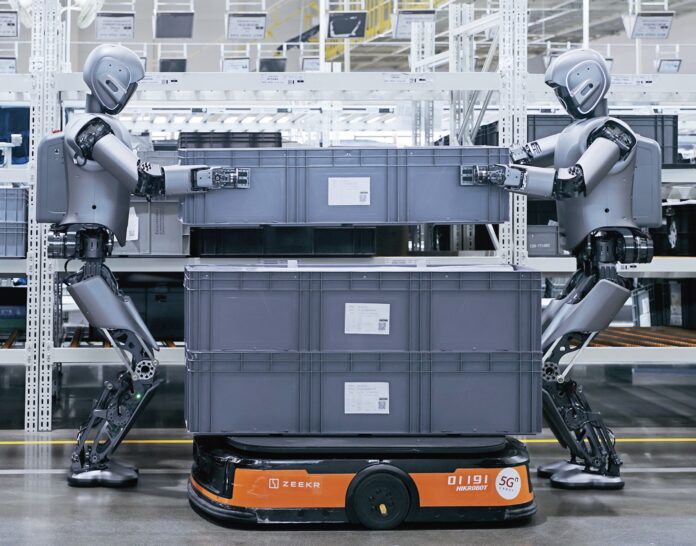
The prospect of humanoid robots dominating factory floors might evoke images of futuristic dystopias, yet Foxconn is actively turning this vision into reality. The Taiwanese manufacturing giant, renowned for assembling products for tech titans like Apple and Microsoft, has announced plans to introduce bipedal robots to its workforce within half a year.
Young Liu, Foxconn’s CEO, revealed that these robots will initially be tasked with assembling AI servers for Nvidia, marking the first deployment of such advanced robotics in the company’s extensive history.
Foxconn, also known as Hon Hai Precision Industry, operates multiple manufacturing sites across the United States, including facilities in Texas, California, and Wisconsin, with expansion plans underway in Ohio.
Harnessing Nvidia’s AI to Power Smart Manufacturing
Nvidia, the world’s most valuable company by market capitalization as of 2024, is collaborating closely with Foxconn to pioneer a cutting-edge AI-enabled factory. This partnership leverages Nvidia’s Isaac Gr00T N platform, a sophisticated technology that empowers robots to function autonomously within production settings.
Both companies describe the upcoming facility as a “world-class AI smart factory,” designed to set new standards in operational efficiency and automation. This initiative exemplifies the growing trend of integrating artificial intelligence into industrial manufacturing to optimize productivity and reduce human error.
Addressing Challenges and Planning Ahead
Despite the ambitious announcement, Foxconn has yet to disclose detailed specifications regarding the humanoid robots’ capabilities or the scale of their deployment. The company faces the complex task of harmonizing robotic systems with human workers, which will necessitate meticulous safety protocols and logistical coordination.
As the integration progresses, it will be crucial to monitor how these robots perform in real-world factory environments and how they impact workforce dynamics. This development could serve as a bellwether for the broader manufacturing sector’s shift toward AI-driven automation.