Published:Dec 8, 2025
Estimated Reading Time:2 minutes
Horizon Robotics Unveils Revolutionary Fourth-Generation BPU “Riemann” Architecture
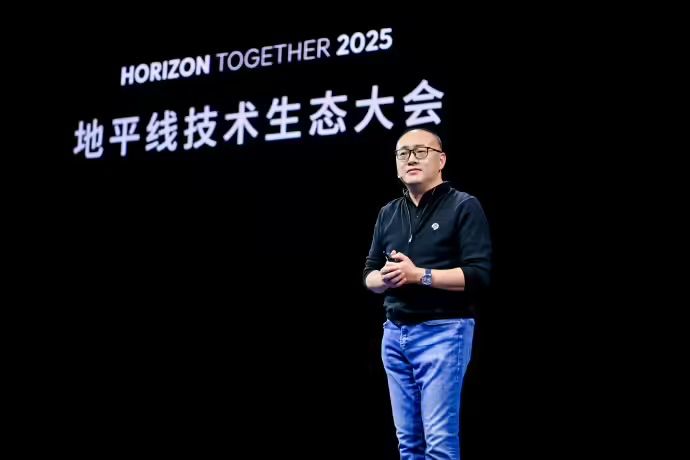
On December 8, 2025, Horizon Robotics introduced its groundbreaking fourth-generation Brain Processing Unit (BPU) architecture, dubbed Riemann-a tribute to the renowned mathematician Bernhard Riemann. This new architecture marks a significant milestone in advancing the capabilities of autonomous driving systems and next-generation robotics by delivering unprecedented performance and energy efficiency.
Key Innovations and Performance Breakthroughs
Riemann’s design incorporates cutting-edge high-dimensional data optimization techniques that reduce complexity while enhancing computational power. The architecture boasts four transformative improvements:
- Tenfold increase in core operator throughput, enabling faster and more complex data processing;
- Tenfold expansion in support for high-precision operators, broadening the scope of AI model compatibility;
- Comprehensive full-precision floating-point computation from tensor to vector operations, enhancing accuracy across workloads;
- Fivefold boost in energy efficiency specifically optimized for large language model (LLM) tasks, reducing power consumption significantly.
Integration and Evolution: From Bernoulli to Riemann
Founder and CEO Yu Kai emphasized that Riemann will be seamlessly integrated into Horizon’s upcoming Journey 7 chip series, continuing the company’s legacy of innovation. This evolution follows a strategic progression from the Bernoulli architecture launched in 2016, through Bayes in 2018, and Nash in 2021-each iteration aligning with pivotal advancements in autonomous vehicle technology.
Riemann is engineered to serve as the foundational compute platform for versatile robotic systems, capable of managing intricate processes ranging from environmental prediction to autonomous decision-making. This positions Horizon Robotics at the forefront of enabling intelligent machines that can operate reliably in dynamic real-world scenarios.
Advancements in AI Compilation: OpenExplorer Tiangong Kaiwu 4.0
Alongside the hardware announcement, Horizon Robotics revealed the release of OpenExplorer Tiangong Kaiwu 4.0, a major upgrade to its AI compiler platform. This new version ushers in an era of AI-driven compilation, supporting a wide array of Transformer model variants. The enhanced compiler accelerates model compilation speeds and delivers a 20% uplift in runtime performance, allowing developers to optimize AI workloads more effectively.
Commercialization and Strategic Partnerships
Horizon also shared that assisted city driving solutions powered by the Journey 6M chip are approaching mass production. These systems are targeted at vehicles priced around the US$14,000 range, aiming to democratize advanced driver assistance technologies for mid-market automobiles.
To accelerate ecosystem development, Horizon has established two categories of partnerships:
- Chip and toolchain collaborators including Bosch and Joywise, focusing on hardware-software integration;
- Algorithm and service partners such as Denso and CoRe Driving, specializing in AI-driven driving assistance solutions.
These collaborations are designed to foster a robust, scalable platform that supports the rapid deployment of autonomous and semi-autonomous driving technologies worldwide.