Breakthroughs in technology seldom emerge from isolated efforts. Instead, they are often the product of collaborative teams spanning multiple countries, where knowledge and ideas flow as seamlessly as digital information.
This dynamic is especially evident in robotics and automation, fields where hardware, software, and human processes intertwine. Success hinges not only on technical expertise but also on how engineers conceptualize challenges and weigh competing priorities. My professional journey has revealed how exposure to diverse cultural perspectives profoundly influences this mindset.
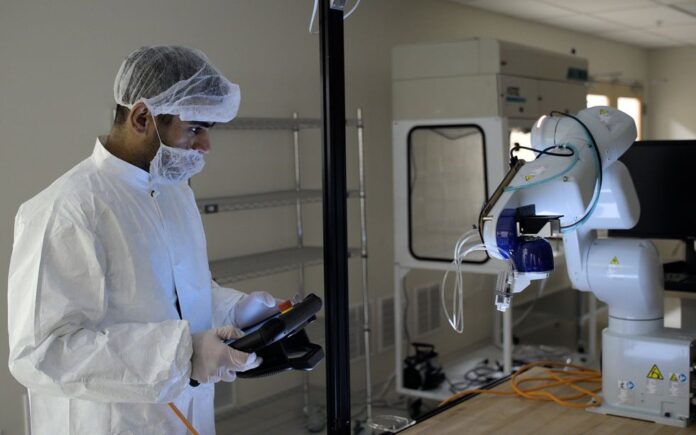
Having worked across different cultural environments, I have gained unique insights into teamwork, design strategy, and risk management. As a mechanical engineer and IEEE member at Re:Build Fikst in Wilmington, Massachusetts, my roots in India and early engineering education there have shaped my approach.
This blend of experiences underscores that diversity in STEM fields transcends mere representation; it is a strategic advantage that enriches how technologies are conceived, developed, and implemented.
Building Engineering Expertise Through Global Exposure
My foundational training began with a bachelor’s degree in electrical and electronics engineering at Amity University in Noida, India. During this time, I honed skills in problem definition and adaptive thinking.
Projects emphasized identifying core system requirements and validating performance within realistic constraints. Instead of relying on idealized models, we prioritized understanding the critical variables that truly impact functionality.
This methodology fostered a first-principles mindset-starting from fundamental physical laws and system behaviors rather than defaulting to conventional solutions-and encouraged maximizing resource efficiency.
However, I also learned that efficiency has its boundaries. In complex or safety-sensitive applications, insufficient testing can mask risks and undermine reliability. Recognizing when to balance simplicity with thorough validation became a key lesson in my engineering development.
In 2021, I transitioned to the United States to pursue a master’s degree in robotics and autonomous systems at Arizona State University in Tempe. This shift introduced me to a distinctly rigorous engineering culture.
Within the U.S. R&D landscape, particularly in robotics, stringent standards govern design processes. Systems must demonstrate consistent performance across diverse users, environments, and extended operational cycles. Comprehensive documentation, safety assessments, and reproducibility are integral components.
Far from stifling creativity, these protocols enable scalable, durable, and trustworthy technologies.
Adapting to this environment required me to blend my efficiency-driven instincts with structured methodologies. Design choices demanded detailed justification, and collaboration involved harmonizing perspectives from scientists, software developers, and technicians-each bringing unique priorities and success metrics.
Ultimately, I realized that the true strength lies not in favoring one approach but in discerning when to apply each.
This balance is crucial in robotics and automation. Resourcefulness without rigor risks failure at scale; a prototype that excels in controlled settings may falter under real-world variability. Conversely, excessive formalism can hinder rapid innovation by delaying iterative testing.
Engineers with multicultural backgrounds often develop an intuitive ability to navigate these tensions, crafting solutions that are both robust and practical, tailored to actual workflows rather than theoretical ideals.
Much of my current work involves embedding automated systems into operational contexts where technical performance must align with human factors. For instance, a robotic assembly cell might operate perfectly in isolation but require redesign to improve operator access for loading, troubleshooting, or maintenance. Similarly, automated testing platforms must anticipate user responses to errors, interruptions, and unexpected outputs.
This holistic perspective demands considering not only individual components but also how entire systems are operated, maintained, and restored after disruptions.
My multicultural engineering background profoundly informs how I assess design trade-offs and foster interdisciplinary collaboration.
Leveraging Diverse Perspectives to Enhance Technological Solutions
Engineers educated in different cultural contexts often approach identical challenges with varying emphases-some favor rapid prototyping, others stress thorough validation. When these viewpoints converge, teams generate more insightful questions early on, challenge assumptions, uncover edge cases, and develop technologies resilient to real-world complexities.
Such cognitive diversity is especially vital in robotics and automation, where machines interface closely with human users. Designing effective automated systems requires deep understanding of user interactions, error propagation, and environmental influences. Professionals with cross-cultural experience tend to possess heightened sensitivity to these variables, leading to superior design choices and more cohesive teamwork.
International engineers contribute significantly to the U.S. innovation ecosystem, particularly in interdisciplinary domains. Many serve as vital connectors, bridging disparate problem-solving methods, expectations, and design philosophies cultivated worldwide. They translate not only language but also engineering intent, facilitating the transition from theoretical concepts to practical applications.
As robotics and automation advance, future challenges-such as scaling experimental validation, enhancing reproducibility, and integrating intelligent systems into complex environments-will demand engineers adept at crossing geographic, disciplinary, and cultural boundaries.
Both the Indian and American engineering landscapes are intricate, mature, and continually evolving. My experiences navigating these spheres have taught me that engineering excellence stems not from rigid adherence to a single mindset but from the ability to adapt fluidly.
In today’s interconnected global environment, innovation thrives with engineers who embrace diversity and transform differences into strengths.