NXMind Launches Tianqiong Chip Series to Power Next-Gen Robotics
By Cheng Zi | Published March 12, 2026 | 4-minute read
Introduction to NXMind’s Breakthrough in Robotics Chips
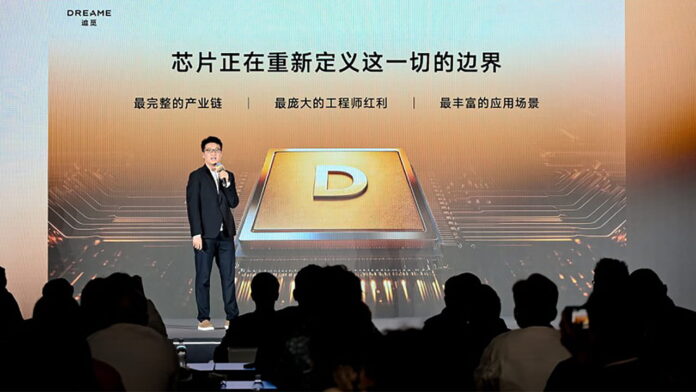
On March 11, NXMind, a key player within Dreame’s innovation ecosystem, announced the commercial release of its Tianqiong chip lineup. These advanced processors have entered large-scale production and are set to be integrated into Dreame’s full range of robotic devices, marking a significant milestone in intelligent hardware development.
Surging Demand for Computing Power in the AI Era
The rapid expansion of artificial intelligence has accelerated the need for computational resources at an unprecedented rate, far outpacing the traditional expectations set by Moore’s Law. A 2018 OpenAI study revealed that the compute power used in the largest AI training models has doubled approximately every 3.4 months since 2012, resulting in a staggering increase of over 300,000 times. As AI models grow larger and edge intelligence evolves from simple sensing to sophisticated decision-making, the demand for powerful, efficient computing has become a critical bottleneck in AI advancement.
Challenges Facing Global Computing Infrastructure
Despite this surge, the semiconductor industry confronts significant physical and logistical hurdles. The miniaturization of transistors is nearing its physical limits, slowing the pace of performance improvements. Additionally, the capacity for manufacturing cutting-edge chips remains limited, causing supply uncertainties. On the infrastructure side, terrestrial data centers are constrained by energy consumption limits, cooling challenges, and land scarcity, all of which hinder the ability to scale computing resources to meet AI’s growing appetite.
Energy Consumption and Environmental Constraints
The International Energy Agency’s 2024 report projects that global data center electricity usage could surpass 1,000 terawatt-hours by 2026-comparable to the entire annual electricity consumption of Japan. This surge in energy demand, coupled with cooling inefficiencies and limited site availability, poses significant barriers to expanding traditional computing facilities.
Transforming Semiconductor Design: From Chips to Intelligent Systems
In response to these challenges, the semiconductor industry is undergoing a paradigm shift. Edge computing chips are evolving beyond single-function units into comprehensive system-on-chip (SoC) platforms that integrate multiple processing elements. These SoCs serve as intelligent hubs, enabling embodied AI capabilities in robotics and other devices. Furthermore, computing infrastructure is expanding beyond terrestrial boundaries, incorporating networks that span space, air, and ground, with low Earth orbit (LEO) emerging as a promising new domain for distributed computing.
China’s Strategic Push in Chip Innovation
Wu Zhongze, former vice minister of China’s Ministry of Science and Technology, highlighted at the Appliance & Electronics World Expo that chip manufacturers are quietly revolutionizing global operations. China has been fostering deeper integration across innovation ecosystems, supply chains, capital flows, and talent development to sustain long-term growth in the chip and computing sectors.
Edge Intelligence: Redefining Chip Architecture for Robotics
As embodied intelligence and humanoid robots transition from experimental stages to real-world applications, chip design is shifting focus. Chips are no longer mere processors but foundational elements that connect sensing, cognition, decision-making, and action. Robots operating in unpredictable environments require ultra-low latency, energy efficiency, and high reliability-demands that traditional general-purpose chips struggle to meet. This has accelerated the adoption of heterogeneous SoC designs that combine multi-core CPUs, neural processing units, and microcontrollers to handle perception fusion, planning, and motion control locally on the device.
NXMind’s Tianqiong Chip: A New Standard for Edge AI
The Tianqiong series exemplifies this new approach. It integrates a multi-core CPU, a dedicated neural processing unit (NPU), and an independent microcontroller unit (MCU) into a single platform. This architecture supports advanced features such as LiDAR-based sensing, AI-powered vision fusion, and binocular obstacle avoidance algorithms, enhancing robotic navigation and safety in complex home environments.
Leveraging Dreame’s Ecosystem for Competitive Advantage
NXMind’s strategy capitalizes on Dreame’s existing strengths. Instead of building chip platforms from scratch, NXMind synergizes with Dreame’s extensive algorithmic expertise, supply chain infrastructure, and real-world operational data from product deployments. This collaborative design methodology tightly couples chip architecture with software algorithms, enabling scenario-specific optimizations that create robust competitive barriers.
Emerging Trends: Scenario-Specific Chips and Space-Based Computing
Scenario-tailored chips are becoming a key differentiator in the semiconductor industry, allowing companies to address unique application needs more effectively. Meanwhile, as terrestrial data centers face physical and environmental limits, space-based computing is gaining traction. LEO offers a natural vacuum for efficient heat dissipation and uninterrupted solar power, potentially enabling denser, more energy-efficient computing clusters. Space-based nodes could also provide real-time processing for satellite internet constellations, remote sensing, and deep space missions, reducing latency by minimizing reliance on ground stations.
NXMind’s Foray into Space Computing
NXMind plans to launch its inaugural Yaotai space computing module into orbit this March, marking the beginning of a supercomputing center in LEO and the initial testing of an in-orbit computing network. This initiative signals NXMind’s transition from research and development toward early-stage commercialization in space-based computing.
Diverse Portfolio and Future Outlook
Currently, NXMind’s product range spans smartphone processors, autonomous vehicle chips, robotics SoCs, space computing technologies, and personal AI computing devices. This broad ecosystem reflects a larger industry trend: computing power is decentralizing from centralized cloud data centers to distributed edge environments, while simultaneously integrating multi-layered architectures that connect terrestrial, aerial, and orbital platforms.