
Japanese Airports Explore Integration of Advanced Humanoid Robots
Trial of Chinese-Made G1 and Walker E Robots in Airport Operations
Japanese aviation authorities are set to evaluate the performance of humanoid robots developed by Chinese firms Unitree Robotics and UBTECH Robotics, specifically the G1 and Walker E models. Despite the increasing scale of production by Chinese manufacturers, humanoid robots generally remain expensive, often priced in the tens of thousands of dollars. Notably, the Unitree G1 offers a more affordable entry point, with its base model retailing at approximately $13,500.
Initial Demonstrations Highlight Current Limitations
Recent footage from a controlled demonstration held in an aircraft hangar reveals one of these humanoid robots attempting to interact with a large metal cargo container. The robot’s pushing motion appears tentative, and the container only moves once a human operator activates the conveyor system, underscoring the current gap between robotic capability and autonomous task execution.
Safety and Operational Challenges in Busy Airport Environments
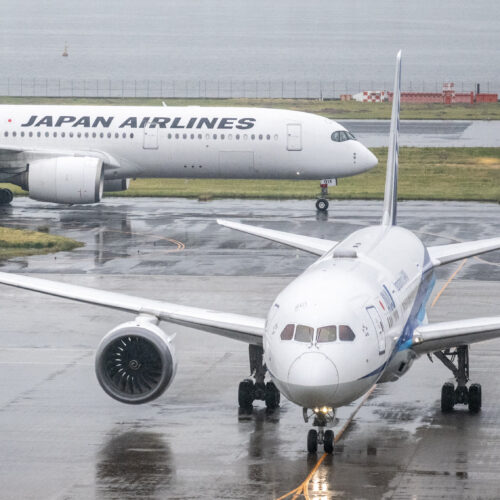
For humanoid robots to match the efficiency of human ground staff, significant advancements in their operational effectiveness are necessary. Moreover, integrating robots into bustling airport settings such as Tokyo’s Haneda Airport-Japan’s second busiest, with flights landing roughly every two minutes-raises critical safety concerns. The pilot program will initially focus on pinpointing zones within the airport where robot deployment can be conducted safely without disrupting human activity.
Addressing Labor Shortages with Robotic Solutions
Japan’s airports have been grappling with acute labor shortages, particularly among cargo handlers and ground personnel. For instance, in December 2023, Narita Airport faced the inability to service over 30% of weekly flight requests due to insufficient staffing. Government statistics reveal a decline in ground crew numbers nationwide, dropping from 26,300 in March 2019 to 23,700 by September 2023. The introduction of cost-effective robotic assistants could alleviate these workforce deficits and enhance operational resilience.
Looking Ahead: The Future of Robotics in Aviation
As humanoid robots continue to evolve, their potential to transform airport logistics and ground operations grows. With ongoing improvements in AI, sensor technology, and mechanical design, future iterations may achieve greater autonomy and reliability. This progress could lead to safer, more efficient airports capable of handling increasing passenger and cargo volumes amid persistent labor challenges.