
Advancing Space Travel: Breakthrough in Lithium-Powered Electric Thrusters at NASA JPL
Revolutionizing Propulsion for Deep Space Exploration
NASA’s Jet Propulsion Laboratory (JPL) in Southern California recently achieved a significant milestone by firing a cutting-edge electromagnetic thruster powered by lithium vapor. This test, conducted on February 24, 2026, marked the highest power level ever reached by an electric propulsion system in the United States, surpassing all previous benchmarks.
The prototype demonstrated power outputs exceeding those of any electric thrusters currently deployed on NASA spacecraft, providing critical insights that will guide a series of upcoming experiments aimed at scaling this technology.
Electric Propulsion: A Game Changer for Space Missions
Electric propulsion systems offer a dramatic reduction in propellant consumption-up to 90% less compared to conventional chemical rockets-by generating continuous, low-thrust acceleration over extended periods. For instance, NASA’s Psyche spacecraft utilizes solar-powered electric thrusters to gradually reach speeds of approximately 124,000 miles per hour.
Unlike existing thrusters, the lithium-fed magnetoplasmadynamic (MPD) thruster tested at JPL employs intense electrical currents interacting with magnetic fields to accelerate lithium plasma electromagnetically. Although MPD thrusters have been studied since the 1960s, this marks one of the first times such a system has been tested at megawatt-class power levels.
Record-Breaking Performance and Future Ambitions
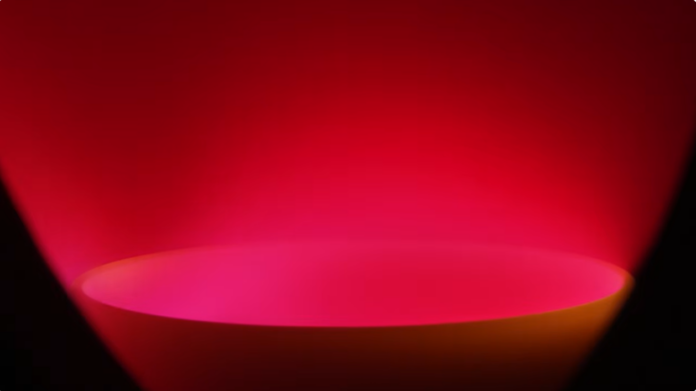
During the test, the thruster operated at power levels up to 120 kilowatts-over 25 times more powerful than the thrusters aboard Psyche. The tungsten electrode at the core of the thruster reached temperatures exceeding 5,000 degrees Fahrenheit (2,800 degrees Celsius), glowing intensely as it emitted a vivid red plasma plume inside JPL’s 26-foot-long water-cooled vacuum chamber.
James Polk, senior research scientist at JPL, emphasized the significance of this achievement: “This test not only confirms the thruster’s functionality but also validates our targeted power levels. It sets the stage for addressing the engineering challenges involved in scaling up the technology.”
Challenges and Prospects for Human Mars Missions
Looking ahead, the team aims to develop thrusters capable of operating between 500 kilowatts and 1 megawatt. Human expeditions to Mars could require 2 to 4 megawatts of power, necessitating multiple MPD thrusters functioning reliably for over 23,000 hours. Ensuring the durability of components under extreme thermal conditions will be a critical hurdle.
When fully matured and integrated with nuclear power sources, lithium-fed MPD thrusters promise enhanced thrust and propellant efficiency, potentially reducing spacecraft mass and enabling the transport of larger payloads essential for crewed interplanetary travel.
Collaborative Efforts and Strategic Investment
This innovative propulsion research, ongoing for the past two and a half years, is a collaborative effort between NASA JPL, Princeton University, and NASA’s Glenn Research Center. Funded by NASA’s Space Nuclear Propulsion initiative, the program focuses on developing megawatt-class nuclear electric propulsion technologies critical for future Mars missions.
The project is managed through NASA’s Marshall Space Flight Center and forms part of the agency’s broader Space Technology Mission Directorate, which prioritizes breakthrough technologies to enable sustainable human exploration beyond Earth orbit.
Explore More About NASA’s Nuclear Propulsion Initiatives
For additional information on NASA’s advancements in nuclear propulsion and electric thruster technologies, visit: https://www.nasa.gov/ignition/