The Dawn of AI-Driven Robotics in Everyday Life
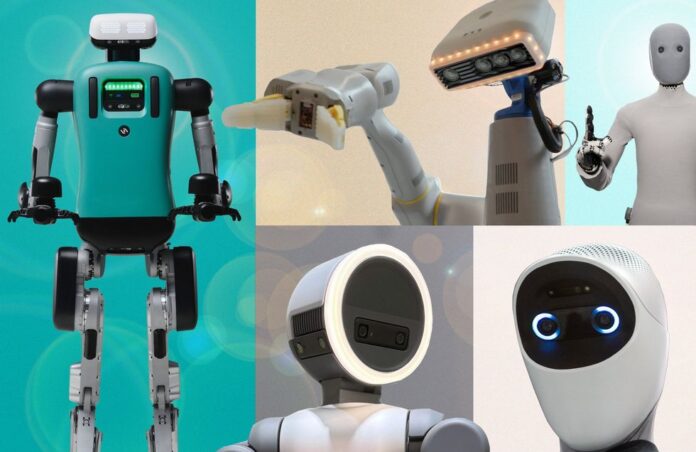
In the coming decades, autonomous robots powered by artificial intelligence will become ubiquitous collaborators in our daily environments. These machines will operate in factories, handle monotonous warehouse duties, provide eldercare, assist in hazardous disaster zones, deliver goods to our doorsteps, and eventually integrate into household routines. While some robots may resemble humans, many will adopt diverse forms. Regardless of their appearance, AI will be the cornerstone enabling these robots to deliver meaningful, practical benefits.
Robotics Investment Surges Amid High Expectations
By 2025, investments in robotics ventures soared to an unprecedented $40.7 billion, representing nearly 9% of all venture capital funding. This influx of capital raises a pivotal question: what milestones must AI-powered robots achieve to generate substantial economic impact? Although numerous companies forecast humanoid robots entering our homes soon, a significant divide remains between visionary promises and tangible realities.
From Sci-Fi to Reality: The Complex Journey of AI Robotics
The concept of robots coexisting and collaborating with humans has long been a staple of science fiction. Traditional programming methods have struggled to navigate the unpredictable complexities of the physical world. However, AI has revolutionized this landscape by enabling robots to learn from experience rather than relying solely on pre-written instructions. Through extensive practice, robots can now interpret their surroundings, reason about their environment, and execute tasks that are dependable, safe, and valuable.
Insights from Industry Pioneers
Drawing from over a decade of experience at the forefront of AI and robotics-ranging from academic research to leading innovative projects in industry-we recognize that the next leap in robotics will stem from the strategic integration of multiple AI systems rather than a single breakthrough akin to ChatGPT. Our work deploying AI-enabled robots in real-world scenarios has highlighted both the immense potential and the current limitations of these technologies.
Five Realities Shaping the Future of AI Robotics
1. The Reality Behind Viral Robot Videos
Videos showcasing humanoid robots performing complex dances or martial arts moves often captivate audiences. However, insiders caution against overestimating these demonstrations. For instance, a recent martial arts performance by Unitree robots at a major festival was meticulously choreographed, relying heavily on pre-programmed sequences rather than autonomous decision-making. While the precision and synchronization were impressive, the level of intelligence exhibited aligns more closely with industrial robots on assembly lines than with adaptable home assistants.
Such displays prompt a common question: if robots can execute acrobatic feats, why aren’t they commonplace in factories or homes? The answer lies in the immense challenge of enabling robots to perform versatile tasks in unpredictable human environments. Current AI applications in these demos primarily support low-level motor functions, such as balance, and do not yet encompass the broad cognitive abilities required for general-purpose operation.
2. The Data Dilemma in Robotics
Large Language Models (LLMs) like ChatGPT and Claude have demonstrated remarkable abilities by training on vast, human-generated text datasets. This extensive, high-quality data foundation has been crucial to their success. In contrast, robotics faces a daunting data challenge. Robots must learn to navigate a multidimensional space involving physical constraints, sensory inputs, and dynamic interactions, all within unstructured environments.
Collecting comprehensive, high-fidelity data for training robotic AI is a monumental task. Techniques such as teleoperation, motion capture, video analysis, and extensive simulation are employed to gather this information. For example, a leading robotics initiative ran over 240 million simulated robot trials in a single year to develop a model for sorting waste. Achieving human-level proficiency across diverse robotic skills will require similarly vast datasets, underscoring the scale of this challenge.
3. The Myth of a Universal Robot AI
The vision of a single AI model capable of controlling all types of robots in every environment remains distant. Robots vary widely-from wheeled platforms to legged humanoids, aerial drones to underwater explorers-each facing unique operational demands. Training one AI to master this diversity is currently unfeasible.
Instead, the future lies in “agentic AI” architectures: high-level systems that coordinate specialized AI modules tailored to specific tasks. These agentic models will enable robots to plan, reason, and adapt with minimal supervision. Moreover, we anticipate collaborative networks of robots communicating and working together through these intelligent frameworks, unlocking new capabilities and markets.
The democratization of AI tools, including open-source models, mirrors the internet’s evolution-broad accessibility will accelerate innovation and adoption in robotics.
4. Overcoming Hardware Limitations
Robots are intricate assemblies requiring seamless integration of sensors, processors, and actuators. Traditional industrial actuators, designed for rigid, repetitive tasks, are ill-suited for robots operating safely alongside humans. Human movements are characterized by compliance and adaptability, enabling delicate interactions with the environment.
Consider the simple act of inserting a key into a lock: humans rely on tactile feedback and subtle adjustments rather than perfect alignment. To replicate such finesse, robots need advanced actuators capable of sensing force and exhibiting compliant behavior. While prototypes exist, scalable production of these components remains a bottleneck for widespread deployment in human-centric settings.
5. Practical Value Lies in Everyday Tasks
Robotics exemplifies Moravec’s paradox: tasks that challenge humans are often straightforward for machines, while seemingly simple human activities are extraordinarily complex for robots. Real-world deployment demands that robots not only perform tasks but do so reliably, safely, and more efficiently than existing methods.
Early deployments of humanoid robots in customer environments revealed safety as a paramount concern. For instance, initial trials required physical barriers to mitigate risks, prompting extensive engineering efforts to enhance human detection and behavior control through AI. Similarly, autonomous robots operating in office spaces have demonstrated the unpredictable nature of real environments, informing the design of AI architectures that blend simulation and real-world data.
Success in robotics hinges on iterative development focused on specific customer needs and environments. There is no single breakthrough or dataset that will instantly yield general-purpose robots; instead, progress will emerge from continuous real-world experience and refinement.
Gradual Progress Toward an AI-Integrated Robotic Future
The integration of AI into robotics marks the beginning of a transformative era akin to a “Cambrian explosion” of intelligent machines. AI is not a singular technology but a vast landscape of approaches unlocking unprecedented capabilities. Rather than a sudden revolution, the evolution of AI-powered robots will unfold through incremental advances, gradually expanding their utility across multiple industries.
As these technologies mature, they will tap into markets valued in the hundreds of billions of dollars, profoundly enhancing productivity and quality of life worldwide.