Imagine purchasing a humanoid robot for less than the cost of a typical smartphone. Would you consider acquiring multiple units to assist with everyday tasks such as cooking, cleaning, childcare, or even professional work?
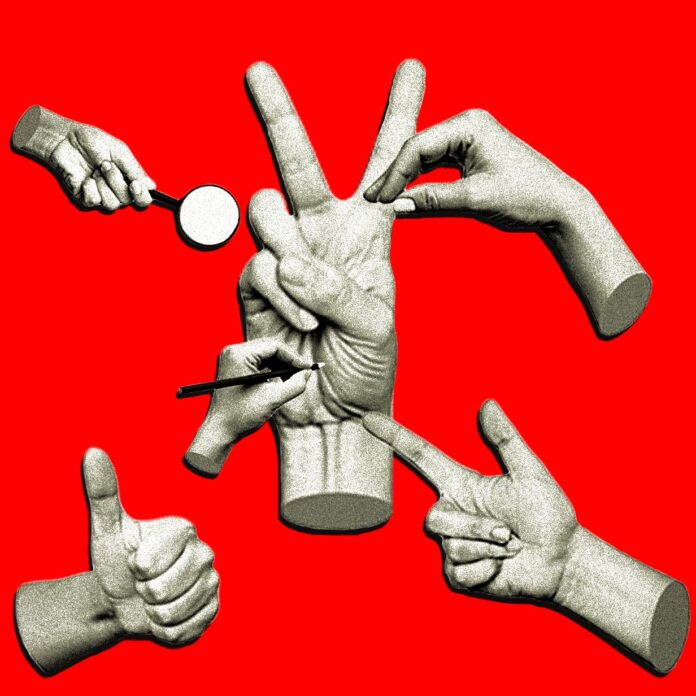
This vision is championed by Zhou Yong, the 40-year-old founder and CTO of LinkerBot, a prominent Chinese company specializing in advanced robotic hands. Their flagship product features a fully articulated hand with five fingers and over 11 joints, retailing at an affordable price starting around $600 in China. These robotic hands demonstrate remarkable dexterity, capable of playing musical instruments, threading needles, tightening screws, and assembling intricate electronics. Zhou forecasts that within three to five years, the cost will drop to approximately $200 per unit, ultimately leading to a future where the average person owns about ten robots.
While public spectacles like Beijing’s humanoid robot marathon have highlighted robotic mobility, the true technological challenge lies in replicating human hand functionality. Elon Musk emphasized this point last year, stating that “the hands represent the most complex engineering challenge in humanoid robotics.” Since its inception in 2023, LinkerBot has rapidly become a dominant player, shipping 10,000 robotic hands last year alone-accounting for roughly 80% of global demand. Their clientele spans research institutions, manufacturing firms, and other humanoid robot developers.
LinkerBot has also attracted significant venture capital interest, completing six funding rounds within just over a year. Investors include the Chinese government, Alibaba’s Ant Group, HongShan Capital, and Sequoia Capital’s China branch. The company is currently pursuing another financing round, aiming for a valuation near $6 billion-double its worth from a few months prior-and is reportedly considering an initial public offering in Hong Kong.
After selling a previous autonomous driving startup in 2019, Zhou shifted his focus to robotics, anticipating a surge in the industry around 2025. However, the rapid growth, especially among Chinese startups, has surpassed expectations. While American firms like OpenAI initially led robotic hand development, many have since pivoted toward AI software and large language models, allowing Chinese companies to take the forefront in hardware innovation.
“The valuation disparity between Chinese and U.S. robotics markets has essentially vanished,” Zhou notes.
Inspired by the Japanese anime character Doraemon-known for his endless array of futuristic gadgets-Zhou envisions creating a real-world equivalent. Developing a highly capable, dexterous robotic hand is a critical milestone toward realizing this ambition.
Image courtesy of LinkerBot
Focusing on Core Competencies: Mastering the Robotic Hand
Zhou believes that success in robotics comes from excelling at a specific component rather than attempting to build entire humanoid systems. By concentrating exclusively on robotic hands, LinkerBot avoids direct competition with companies like Unitree or Tesla, which focus on full-body humanoid robots.
Hong Shangguan, a seasoned investor in China’s tech sector and former partner at Legend Capital, compares this strategy to supplying essential tools during a gold rush. “With the humanoid robot market expanding rapidly, specializing in hand technology is akin to selling shovels or water to miners,” she explains.
LinkerBot’s pricing strategy gives it a competitive edge. Their Linker Hand series ranges from $600 to $15,000, depending on the complexity and number of joints. Rui Ma, founder of Tech Buzz China, highlights that while many companies can demonstrate impressive prototypes, few can deliver affordable, factory-ready robotic hands. Ma’s recent analysis positions LinkerBot as the most likely candidate to become the industry standard in the near future.
Zhou places great faith in China’s manufacturing prowess. Historically, when China and other countries enter new markets simultaneously, China often emerges as the leader-whether in solar energy or electric vehicles. The challenge lies in framing this dominance as an opportunity rather than a threat. “Our goal is to help global robotics manufacturers reduce costs and accelerate adoption worldwide,” Zhou says. To address lingering doubts about Chinese product quality, LinkerBot offers international customers up to a year for exchanges.
The Evolution of Humanoid Robots: From Entertainment to Everyday Assistance
Zhou outlines a three-phase rollout for humanoid robots. Initially, robots will serve entertainment and social functions, such as dancing and greeting guests-roles already demonstrated by Chinese companies. The second phase involves robots performing specialized tasks like bartending, cooking, and package sorting. The final stage envisions robots operating in complex, variable environments like private homes, where each setting presents unique challenges requiring a blend of diverse skills to complete even simple tasks.
Image courtesy of LinkerBot
Currently, LinkerBot is tailoring its robotic hands for use in advanced manufacturing environments, aligning with China’s push to modernize its factories. The company even employs its own robotic hands on assembly lines to produce more hands, showcasing their practical industrial applications.
Although China has traditionally been known for low-cost labor, domestic manufacturers are increasingly embracing automation. Shangguan notes that labor shortages are becoming a pressing issue, as younger generations show less interest in factory work. “In sectors where human workers are scarce, robots are becoming indispensable,” she says.
Zhou envisions a future where robots surpass human capabilities by a factor of 100 and eventually replace human labor entirely. While this prospect may seem daunting, he remains optimistic. “People’s primary concern isn’t unemployment itself, but whether they receive adequate social support like welfare or relief payments,” he explains.
He predicts that AI and robotics will generate such an abundance of goods and services that traditional work will become unnecessary. Nonetheless, Zhou acknowledges that socioeconomic disparities will persist. “Some may witness the wealthy traveling to the moon while they themselves can only afford trips to places like Italy,” he reflects.