
Authored by Cheng Zi Published on 6-minute read
Direct Drive Tech Advances Toward Hong Kong Main Board IPO
In late June 2026, Direct Drive Tech successfully passed its listing hearing with the Hong Kong Stock Exchange, marking a significant milestone as it pursues a Main Board IPO. The company has appointed CITIC Securities as its exclusive sponsor and intends to offer approximately 122 million H shares in the public offering.
Specializing in Robotic Joint Modules, Not Complete Robots
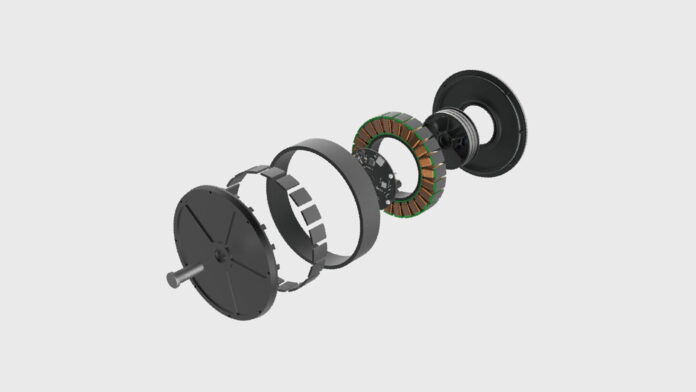
Distinct from robotics firms that manufacture entire robots, Direct Drive Tech concentrates on producing robotic joints, specifically direct drive power modules. These integrated units deliver torque directly without the need for external reducers, enhancing efficiency and precision. Industry research by Frost & Sullivan highlights Direct Drive Tech as the first global company to ship over five million direct drive modules tailored for consumer robots. In 2025, it dominated China’s consumer robot direct drive power module market with a commanding 61.1% share.
Market Position and Competitive Landscape
Despite its leadership in the direct drive niche, Direct Drive Tech holds only an 8th place ranking in the broader Chinese consumer robot power module market, capturing a modest 2.4% share. This discrepancy arises because direct drive modules represent a mere 3.9% of the total market. The leading competitor, a micromotor manufacturer established in Dongguan in 2000, commands a 12.9% market share and remains privately held.
Rapid Revenue Growth Fueled by Consumer Robot Demand
Direct Drive Tech’s revenue surged from RMB 17.54 million (USD 2.6 million) in 2023 to RMB 282 million (USD 41.5 million) in 2025, reflecting an extraordinary compound annual growth rate (CAGR) of 300.8% over two years. This expansion was primarily driven by sales of direct drive modules for consumer robots, which escalated from RMB 3.2 million (USD 470,000) in 2023 to RMB 248 million (USD 36.5 million) in 2025.
The company’s growth coincided with a procurement boom among leading consumer robot manufacturers. Notably, Direct Drive Tech supplies four of the world’s top ten consumer robot producers. Key product categories such as robotic vacuum cleaners and lawn mowers have increasingly integrated direct drive technology, positioning the company at the forefront of this industry transformation.
Financial Performance: Narrowing Losses Amidst Expansion
While revenue has soared, profitability remains elusive. On a non-IFRS basis, the adjusted net loss margin improved dramatically from 349.1% in 2023 to 15.4% in 2025. However, reported net losses were substantial: RMB 75.6 million (USD 11.1 million) in 2023, RMB 93.7 million (USD 13.8 million) in 2024, and RMB 881 million (USD 129.5 million) in 2025-the latter figure inflated by valuation adjustments related to redemption rights.
Operating cash flow has been negative for three consecutive years, with net outflows of RMB 52.96 million (USD 7.8 million) in 2023, RMB 66.7 million (USD 9.8 million) in 2024, and RMB 69.6 million (USD 10.2 million) in 2025. Nevertheless, the company ended 2025 with RMB 354 million (USD 52 million) in cash reserves, bolstered by Series C funding and bank loans. Financing activities generated a net inflow of RMB 424 million (USD 62.3 million) during this period.
Understanding the Revenue-Profit Gap
Revenue Composition and Business Model
In 2025, power modules constituted 97.4% of Direct Drive Tech’s revenue, amounting to RMB 274 million (USD 40.3 million), while complete robots contributed a mere 2.6%, or RMB 7.3 million (USD 1.1 million). This underscores the company’s role primarily as a component supplier rather than a finished product manufacturer. The complete robots serve more as technical demonstrators than significant revenue drivers.
Margins and Pricing Dynamics
The gross margin for the module segment was a modest 21.5% in 2025, up from 13.5% in 2023 but still relatively low. Breaking down by product, direct drive power modules had a 20% gross margin, embodied joint modules achieved 35.6%, and complete robots, despite their small sales volume, boasted the highest margin at 64.3%.
Unit economics reveal that in 2025, Direct Drive Tech sold 8.5 million direct drive power modules at an average price of RMB 29 (USD 4.3) each. Prices remained stable over the past three years, hovering around RMB 28-30 (USD 4.1-4.4). This highlights the company’s position as a volume-driven component supplier competing primarily on cost efficiency rather than premium pricing.
Price pressures have intensified recently, prompting Direct Drive Tech to scale production dramatically-from 200,000 units in 2023 to 8.5 million in 2025-and to leverage stronger supplier negotiations to maintain margins.
Risks from Customer and Geographic Concentration
Direct Drive Tech faces notable concentration risks. In 2025, its top five customers accounted for 85.7% of revenue, with the largest single client representing 42.8%. Geographically, 99.4% of sales were generated within mainland China, leaving minimal international exposure. On the supply side, the five largest vendors made up 40.1% of procurement, sourcing critical raw materials such as enameled copper wire, magnets, and iron cores-commodities vulnerable to price volatility.
Funding History and Shareholder Structure
Between April 2020 and December 2025, Direct Drive Tech completed 12 financing rounds, raising approximately RMB 648 million (USD 95.3 million). Early investors have seen substantial paper gains; for example, XbotPark’s cost per share rose from RMB 0.05 (USD 0.007) in the 2020 seed round to RMB 9.97 (USD 1.5) by the Series C round, a 200-fold increase over five years.
The shareholder base includes three Lenovo-affiliated funds-Lenovo Capital and Incubator Group, Legend Star, and Legend Capital. The Series C round attracted Rockets Capital, linked to Xpeng (with Xpeng holding a 60.73% stake), a SenseTime subsidiary, and Nanjing Chuangyi, associated with Horizon Robotics. Beijing state-owned entities collectively hold about 21%, making them the second-largest shareholder group after the founder.
Valuation Context and Industry Comparisons
Under Hong Kong’s Chapter 18C listing rules, companies must meet a minimum valuation of HKD 4 billion (USD 510 million) and annual revenue of HKD 250 million (USD 31.9 million). Direct Drive Tech satisfies both criteria. Based on its 2025 revenue of RMB 282 million, the implied valuation from its Series C round equates to a price-to-sales ratio near 12x.
For perspective, other robotics firms listed in Hong Kong trade at varying multiples: Dobot at 17-19x, UBTech Robotics above 30x, and Estun Automation around 4-5x. However, these competitors manufacture complete robots, whereas Direct Drive Tech operates upstream as a component supplier, which typically commands lower valuation multiples.
Leadership and Management Team
Founder, chairman, and CEO Zhang Di, aged 31, holds a bachelor’s degree in mechanical engineering from Beijing Institute of Technology (2016) and advanced studies in robotic systems and control engineering from the Hong Kong University of Science and Technology. Prior to the IPO, Zhang controlled 41.3% of voting rights through entities Worang Zhonghe (21.96%), Worang Zhongchuang (15.92%), and Guyuan Investment (3.42%).
President Liu Xuyang, 33, earned a bachelor’s degree in new energy materials from the University of Electronic Science and Technology of China and a PhD in electrical and electronic engineering from the University of Hong Kong. He joined Direct Drive Tech in 2022, bringing experience as former general manager of Ironnovation, a motor and drive control solutions provider.
CFO Zhang Hongbo, appointed in May 2025, is a seasoned capital markets professional tasked with overseeing financial strategy and IPO preparations.
Outlook: Riding the Wave of Direct Drive Module Adoption
After six years of development, Direct Drive Tech is poised to capitalize on the growing adoption of direct drive modules, which are increasingly replacing traditional robotic components. Market forecasts project China’s direct drive module sector to expand at a CAGR of 48.6% from 2026 through 2030, underscoring significant growth potential. The company’s upcoming IPO pricing will be a critical test of investor appetite for this specialized segment.
Note: Currency conversions use estimated exchange rates as of July 7, 2026 (HKD 7.84 = USD 1; RMB 6.80 = USD 1) for reference purposes only.