
Renewed Search Effort Underway for Missing Malaysia Airlines Flight MH370
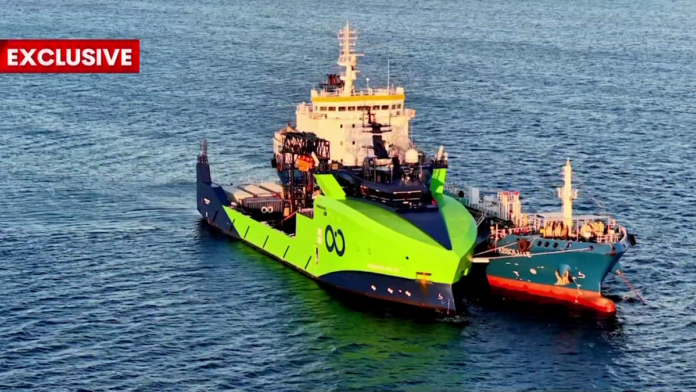
In a renewed mission to locate the elusive Malaysia Airlines flight MH370, an American robotics firm has embarked from Perth on its third expedition. The passenger aircraft disappeared over a decade ago, in March 2014, carrying 239 individuals, including six Australians.
Advanced Technology Deployed in Remote Indian Ocean Region
After restocking supplies in Western Australia, the search vessel set course for a distant area in the Indian Ocean, identified as the last known satellite communication point from the missing plane. This region remains one of the most challenging underwater environments for search operations.
The company, Ocean Infinity, is utilizing cutting-edge autonomous underwater vehicles (AUVs) capable of generating detailed three-dimensional maps of the ocean floor at depths reaching six kilometers. This technology represents a significant advancement compared to previous search attempts.
Previous Searches and Challenges Faced
Ocean Infinity’s earlier efforts in 2018 did not yield any conclusive results, and a subsequent search in early 2025 was halted due to adverse weather conditions. Despite these setbacks, the team remains optimistic that their latest technological enhancements will improve the chances of success.
Emotional Impact on Families and Hope for Closure
For families of the victims, the ongoing search offers a glimmer of hope. Jeanette Maguire, sister of passenger Cathy Lawson, expressed cautious optimism: “We can only hope and pray that this time they’ve found the right spot. My gut feeling tells me they’re close.”
Significance of Recovering the Black Box
The Malaysian government has pledged a $100 million reward to Ocean Infinity, contingent upon the discovery of the aircraft. A successful recovery of the plane’s black box would mark an unprecedented milestone in aviation history, as no flight recorder has ever been retrieved after more than two years submerged, let alone after a decade.
Aviation specialists affirm that the flight data recorders are engineered to endure extreme underwater pressures. Commercial pilot Duncan Watkinson noted, “These devices are designed to withstand depths of up to 6,000 meters, so there’s every reason to believe they remain operational.”
Looking Ahead: The Future of Deep-Sea Aviation Searches
This latest search underscores the growing role of robotics and autonomous systems in solving aviation mysteries. As technology evolves, the potential to uncover long-lost aircraft in the vast ocean depths becomes increasingly feasible, offering hope to families and the aviation community worldwide.