
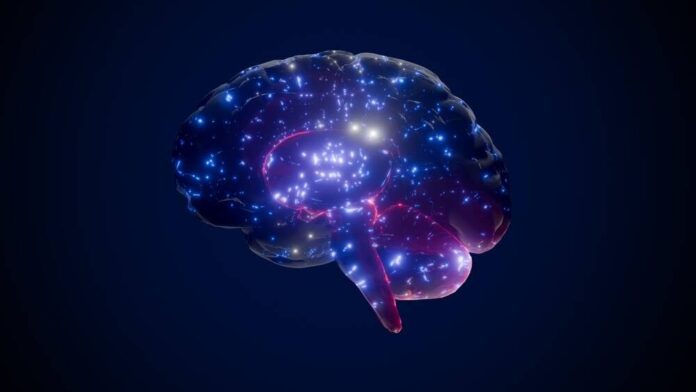
Neuromorphic Computing: A New Frontier in Efficient Scientific Computation
Recent advancements at Sandia National Laboratories reveal that neuromorphic computers-systems inspired by the human brain’s architecture-are not only accelerating neural network tasks but also excelling at solving intricate mathematical problems. This breakthrough could herald a new era of ultra-efficient supercomputing.
Emulating the Brain’s Remarkable Efficiency
The human brain operates on roughly 20 watts of power, effortlessly processing immense streams of sensory data while maintaining continuous awareness. For decades, scientists have sought to replicate this extraordinary efficiency in silicon-based devices, a field known as neuromorphic computing.
Sandia has been a pivotal player in this domain, deploying a variety of neuromorphic platforms from industry leaders such as Intel, SpiNNaker, and IBM. These systems have primarily been explored for artificial intelligence and machine learning applications, but emerging research indicates their capabilities extend far beyond.
Complex Computations Hidden in Everyday Actions
According to Sandia researchers James Aimone and Brad Theilman, the brain constantly performs sophisticated calculations, often without our conscious awareness. For example, tasks like swinging a golf club or catching a frisbee involve computations comparable to exascale-level problems-massive computational challenges that supercomputers tackle today, but which the brain handles effortlessly and energy-efficiently.
Neuromorphic Solutions for Partial Differential Equations
In a recent publication in Nature Machine Intelligence, Sandia scientists introduced an innovative algorithm designed to solve partial differential equations (PDEs) on neuromorphic hardware, including Intel’s Loihi 2 chips. PDEs underpin many complex scientific simulations, from modeling electromagnetic interactions at the molecular level to predicting fluid dynamics in turbines and analyzing radio wave propagation in urban environments.
These equations typically demand substantial computational resources, often monopolizing the power of high-performance supercomputers. Neuromorphic computing offers a promising alternative, potentially delivering comparable results with significantly reduced energy consumption-if scalability challenges can be overcome.
Benchmarking Neuromorphic Efficiency
Though still emerging, neuromorphic systems have demonstrated remarkable energy efficiency. Intel’s Loihi 2 processors, integrated into Sandia’s Hala Point and Oheo Gulch platforms, achieve approximately 15 trillion operations per second (TOPS) per watt-about 2.5 times more efficient than cutting-edge GPUs like Nvidia’s Blackwell series.
Even more impressive, the SpiNNaker2 system introduced at Sandia last year claims an 18-fold increase in performance per watt compared to conventional GPUs, underscoring the potential of brain-inspired architectures.
Overcoming Programming Challenges with NeuroFEM
Neuromorphic architectures, particularly those relying on in-memory computing, pose significant programming hurdles, often necessitating the development of novel algorithms. To address this, the Sandia team created NeuroFEM, an algorithm that applies the finite element method (FEM)-a standard technique for solving PDEs-on spiking neuromorphic hardware.
Importantly, this work transcends theoretical models. The team successfully executed PDE solutions on Intel’s Oheo Gulch system, which houses 32 Loihi 2 chips. Their experiments demonstrated near-ideal strong scaling: doubling the number of cores halved the computation time. NeuroFEM achieved an impressive 99% parallelization efficiency, approaching the theoretical limits described by Amdahl’s law.
The researchers emphasize that NeuroFEM significantly reduces the complexity of programming neuromorphic devices, making them more accessible for a wide range of numerical applications without demanding extensive user intervention.
Future Directions: Analog Neuromorphics and AI Integration
Looking ahead, transitioning to analog-based neuromorphic systems could further accelerate PDE computations while lowering power consumption, as current digital neuromorphic chips like Loihi 2 still face inherent limitations.
Simultaneously, the scientific community is exploring complementary approaches, such as leveraging machine learning and generative AI surrogate models to enhance traditional high-performance computing (HPC) workflows.
As the researchers note, it remains uncertain whether neuromorphic hardware will surpass GPUs in deep neural network tasks, given that GPUs are optimized for single instruction, multiple data (SIMD) operations. Nonetheless, the expanding capabilities of neuromorphic systems position them as a compelling alternative for future computational challenges.