Astrobotic Secures $17.5 Million in NASA and Military Contracts for Advanced Reusable Suborbital Vehicles
Astrobotic, headquartered in Pittsburgh, announced on December 19 that it has been awarded $17.5 million in contracts from NASA and U.S. military agencies to develop three innovative reusable suborbital vehicles. These vehicles are designed primarily for technology demonstration and a variety of other aerospace applications.
Next-Generation Low-Altitude Vehicles: Xodiac C and Xodiac B
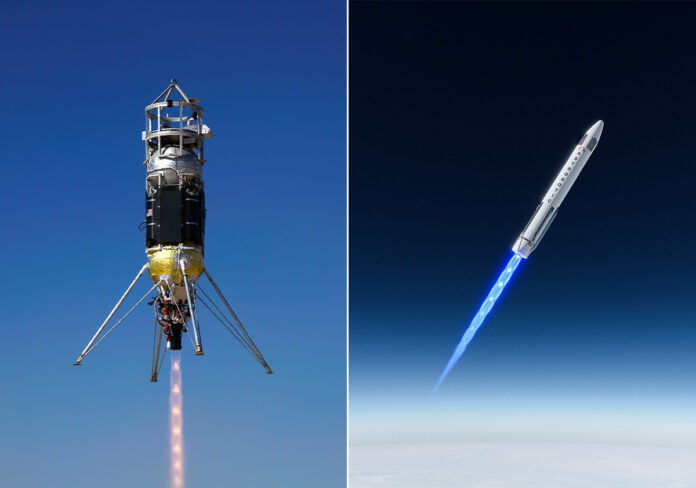
The funding will advance two low-altitude spacecraft that build upon the legacy of Astrobotic’s Xodiac vertical takeoff and landing (VTOL) vehicle. These programs were acquired in 2022 following Astrobotic’s purchase of assets from the bankrupt Masten Space Systems.
One of the contracts includes a $1.6 million NASA Small Business Innovation Research (SBIR) Phase 3 award for the development of Xodiac C. This vehicle is focused on refining entry, descent, and landing (EDL) technologies, crucial for future lunar and planetary missions. Sean Bedford, Astrobotic’s senior business development manager, highlighted that Xodiac C is designed as a direct successor to the original Xodiac A, which completed over 175 flights before a crash in May 2023 at the Mojave test site.
With the surge in lunar exploration-now at an unprecedented scale with multiple nations and private companies planning missions-there is a growing demand for platforms like Xodiac C to validate landing technologies. Astrobotic itself recently completed its Peregrine Lander mission in early 2024 and is preparing the larger Griffin Lander for a 2026 launch.
Xodiac C will feature enhanced payload capacity, extended flight duration, and improved maneuverability compared to its predecessor, tailored to meet the specific needs of customers developing landing systems for the Moon, Mars, and deep space destinations such as Europa or comet sample return missions.
In parallel, a $1.9 million SBIR award from the U.S. Space Force and Air Force Research Laboratory will fund the creation of Xodiac B. This variant is dedicated to testing cutting-edge rotating detonation rocket engines (RDREs), which promise higher efficiency than traditional propulsion systems. Bedford noted close collaboration with AFRL to design a system enabling RDREs to achieve faster ignition and operation.
While Astrobotic is developing its own RDRE, it is too large for Xodiac B’s approximately 1,000-pound thrust capacity. Instead, Xodiac B will serve as a testbed for external engine developers, with an initial customer already secured but not publicly disclosed.
Xogdor: A High-Altitude Suborbital Workhorse
The largest portion of the funding-a $14 million NASA SBIR Phase 3 contract-will support enhancements to Xogdor, a more substantial suborbital vehicle capable of reaching altitudes exceeding 100 kilometers. Unlike the low-altitude Xodiac series, Xogdor is designed for frequent flights, potentially multiple times per week, carrying payloads up to 200 kilograms.
Xogdor’s versatility makes it ideal for microgravity experiments and testing EDL systems for Mars missions. Bedford emphasized the value of its rapid flight cadence, which accelerates the iterative development and validation of aerospace technologies.
Additionally, Xogdor’s size and flight profile resemble those of short- and medium-range ballistic missiles, making it a valuable asset for national security applications. It can simulate missile trajectories for sensor calibration and missile defense initiatives such as the Golden Dome project. Bedford stressed the importance of affordable, high-frequency flight testing to advance these defense capabilities, a niche Xogdor is well-positioned to fill.
Development Timeline and Operational Plans
Astrobotic aims to have Xodiac C operational by the end of 2026, followed by Xodiac B in 2027, and Xogdor in 2028. The company has not disclosed whether additional funding will be necessary to complete these developments.
Currently, about 40 employees are dedicated to these vehicle programs. Testing of Xodiac has been conducted at the Mojave Space and Air Port, with plans to expand operations to Andoya Spaceport in Norway, following a contract signed in September 2023. Although the exact timing of the first Norwegian flight remains uncertain, Astrobotic is enthusiastic about this international expansion.
Astrobotic is also exploring flight operations from Edwards Air Force Base near Mojave. This location offers a less congested airspace and greater flexibility for testing, which is increasingly important as Mojave becomes busier with aerospace activities.
Legacy and Future Prospects
Masten Space Systems, the originator of the Xodiac program, began operations in Mojave over two decades ago when the area was largely undeveloped for aerospace testing. Bedford reflected on how the growing number of aerospace players in the region now requires more coordination but also provides opportunities for collaboration and innovation.
With these new contracts and ongoing development, Astrobotic is positioning itself at the forefront of reusable suborbital vehicle technology, supporting both commercial space exploration and national defense objectives.