Astrobotic Advances Rocket Propulsion with Successful Chakram Engine Trials
Breakthrough in Rotating-Detonation Rocket Engine Testing
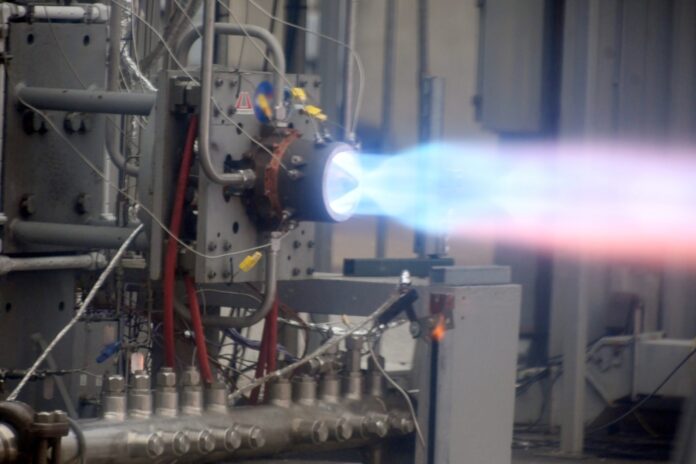
Astrobotic, a Pittsburgh-based aerospace company specializing in lunar landers and suborbital rockets, has recently achieved a significant milestone by successfully testing its innovative rocket propulsion system. The company completed a series of rigorous evaluations of its Chakram rotating-detonation rocket engine (RDRE) at NASA’s Marshall Space Flight Center, marking a promising step forward for next-generation space vehicle propulsion.
Extended Engine Burns Demonstrate Reliability and Power
During the testing campaign, two Chakram engine prototypes were fired for a total duration of 470 seconds, including an uninterrupted 300-second burn – the longest recorded for an RDRE to date. These tests confirmed the engine’s ability to generate over 4,000 pounds-force of thrust without sustaining any damage, underscoring its robustness and operational stability.
Understanding Rotating-Detonation Rocket Engines
Rotating-detonation rocket engines represent a cutting-edge propulsion technology where a detonation wave continuously circulates within the combustion chamber at supersonic speeds. This mechanism offers superior performance metrics compared to traditional rocket engines, such as enhanced specific impulse and improved thrust-to-weight ratios. However, controlling the detonation process poses significant engineering challenges, which have limited the technology’s flight heritage despite extensive experimental research in both spaceflight and hypersonic applications.
Chakram’s Performance Sets New Benchmarks
Astrobotic’s Chakram engine is believed to deliver some of the highest thrust levels ever recorded for RDREs, with the extended 300-second burn setting a new endurance record. “Transitioning from design to live testing always involves uncertainties, but Chakram exceeded our expectations in both performance and reliability,” said Bryant Avalos, the principal investigator leading the Chakram program at Astrobotic.
Innovative Manufacturing and Collaborative Support
The development of Chakram has been supported through NASA’s Small Business Innovation Research (SBIR) program and a Space Act Agreement with NASA Marshall. These partnerships enabled Astrobotic to explore advanced additive manufacturing techniques, which are critical for producing the complex geometries required by RDREs. “Achieving flawless engine operation on the first test attempt highlights the exceptional skill and resourcefulness of our small but dedicated team,” remarked Travis Vazansky, Astrobotic’s RDRE program manager.
Future Applications: Lunar Landers and Reusable Suborbital Vehicles
Astrobotic plans to integrate the Chakram engine into upcoming spacecraft, including enhanced versions of its Griffin lunar lander, which is scheduled for its maiden flight later this year. Additionally, the company aims to power a new fleet of reusable suborbital vehicles. In late 2023, Astrobotic secured $17.5 million in contracts from NASA and the Department of Defense to develop three such vehicles, leveraging technology acquired from the assets of the former Masten Space Systems.
Ongoing Development and Next Steps
Looking ahead, Astrobotic is focusing on refining key engine technologies such as regenerative cooling systems, throttle control, and weight reduction to optimize Chakram for operational deployment. While the company has not yet announced a timeline for flight readiness, these advancements are expected to pave the way for practical applications in both lunar exploration and suborbital missions.