Introducing Bedrock Robotics: A New Force in Autonomous Construction Machinery
In 2024, a fresh contender entered the autonomous construction equipment arena, backed by an $80 million initial investment and a team rich in autonomy expertise. Bedrock Robotics, founded by former Waymo executives, is targeting the deployment of retrofit autonomy solutions-both software and hardware-for heavy machinery by 2026. Their flagship product, the Bedrock Operator, is designed to enhance project efficiency, improve worker safety, and provide comprehensive productivity tracking.
Innovative Hardware and Seamless Integration
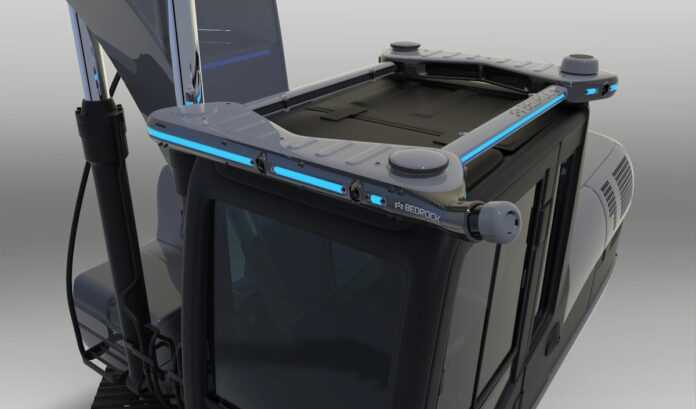
The Bedrock Operator system features a compact, square rack mounted atop the equipment’s cab, integrating advanced sensors such as LiDAR, GPS, and inertial measurement units (IMUs). Complementing these are eight high-resolution cameras and an onboard processing unit located inside the cab. This setup enables machines to operate autonomously with remarkable precision and endurance.
One of the system’s key advantages is its non-invasive installation process, which can be completed within hours without any permanent alterations to the machinery. This flexibility allows equipment to function autonomously around the clock, significantly boosting operational uptime. To date, Bedrock’s technology has been primarily tested on excavators, demonstrating promising results.
Collaborative Field Trials with Industry Leaders
Bedrock Robotics is actively partnering with several prominent contractors and suppliers to validate and refine its technology in real-world environments. These collaborators include:
- Sundt Construction, Phoenix, Arizona
- Zachry Construction, San Antonio, Texas
- Champion Site Prep, Georgetown, Texas
- Capital Aggregates, San Antonio, Texas
These partnerships enable Bedrock to gather diverse operational data and accelerate the adoption of autonomous solutions across various construction sectors.
Strategic Investment and Industry Support
Among the investors fueling Bedrock Robotics’ growth is NVentures, the venture capital division of Nvidia, a leader in graphics processing and AI software. Their involvement underscores the strategic importance of AI-driven autonomy in heavy equipment and construction technology.
Leadership with Deep Autonomy Expertise
Bedrock Robotics boasts a leadership team with extensive backgrounds in autonomous vehicle technology and heavy machinery innovation:
- Boris Sofman: Former senior director of engineering and head of trucking at Waymo, with four years of experience in autonomous driving.
- Tom Eliaz: Co-founder of Waymo and vice president of engineering, previously with customer data platform Segment.
- Ajay Gumballa: Vice president and co-founder of engineering, with seven years directing systems and programs at Waymo and over a decade as a hardware lead at Google.
- Laurent Hautefeuille: Chief operating officer, formerly executive vice president and chief business development officer at Uber Freight for eight years.
Kevin Peterson: A Visionary CTO Driving Innovation
Kevin Peterson, co-founder and chief technology officer, brings a wealth of experience from his previous roles. He founded Marble Robot in 2016 after serving as head of perception at Waymo Via for three years. Marble Robot’s technology was acquired by Caterpillar in 2020 and integrated into their construction, quarry, and industrial equipment lines. Peterson briefly worked as an autonomy engineer at Caterpillar, further solidifying his expertise in autonomous heavy machinery.
Looking Ahead: The Future of Autonomous Construction
With the construction industry increasingly embracing automation to address labor shortages and improve safety, Bedrock Robotics is positioned to make a significant impact. According to recent market analyses, the autonomous construction equipment sector is projected to grow at a compound annual growth rate (CAGR) of over 20% through 2030, driven by advancements in AI and sensor technologies. Bedrock’s approach of retrofitting existing machinery offers a cost-effective pathway for contractors to adopt autonomy without replacing their entire fleets.