
China’s Unified Lunar Exploration Initiative: Merging Robotic and Crewed Missions
China is advancing a comprehensive lunar exploration strategy that integrates its robotic Chang’e lunar probe program with its human spaceflight endeavors. This unified approach was unveiled by Zhang Jingbo, spokesperson for the China Manned Space Agency (CMSA), during a May 23 briefing ahead of the Shenzhou-23 crewed mission to the Tiangong Space Station.
Strategic Integration of Lunar Programs
At the Jiuquan Satellite Launch Center, Zhang highlighted the importance of consolidating decades of technological advancements and operational experience from both crewed spaceflight and robotic lunar missions. He explained that China plans to synchronize efforts across mission planning, resource allocation, and team collaboration to optimize outcomes for both manned and unmanned lunar exploration.
“Our objective is to achieve China’s inaugural crewed lunar landing by 2030,” Zhang emphasized, underscoring the nation’s commitment to this ambitious timeline.
Progress Through Rigorous Testing and Upcoming Missions
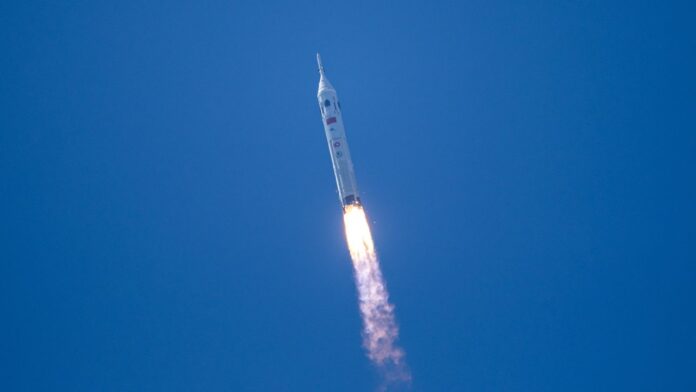
China has conducted a series of critical tests to validate its lunar mission technologies. These include low-altitude demonstration flights of the Long March-10 heavy-lift rocket and high-stress abort system trials for the Mengzhou crewed spacecraft. These milestones are essential steps toward developing a reusable crew transport system capable of supporting future lunar landings.
On the robotic front, the Chang’e-7 lunar probe was recently transported to the Wenchang Space Launch Site, with pre-launch preparations underway for a planned August 2026 liftoff. This mission will perform a suite of operations including orbiting, landing, surface roving, and deploying a lunar hopper to investigate the Moon’s south pole environment and resources. The mission also aims to foster international collaboration in lunar science.
Building a Robust Technological Base
Zhang outlined forthcoming key missions designed to further validate China’s lunar exploration capabilities. These include additional test flights of the Long March-10 rocket and inaugural missions for the Mengzhou spacecraft and the Lanyue lunar lander.
China’s Tiangong Space Station, operational for nearly four years, serves as a critical platform for testing technologies vital to crewed lunar landings. For instance, the recent Tianzhou-10 cargo mission carried experiments examining fluid dynamics in microgravity, which inform the design parameters of the human lunar lander.
Additionally, Tianzhou-10 hosted China’s first in-orbit test of perovskite solar cells, a promising technology for lightweight, efficient, and cost-effective solar power generation. These findings could significantly impact power systems for satellites, deep-space probes, and future lunar habitats.
Enhancing Technical Readiness Through Space Station Missions
The Long March-10A rocket and Mengzhou spacecraft share integrated design features tailored for both space station operations and lunar exploration. Zhang noted that ongoing missions over the next two years will elevate the technical maturity and reliability of these systems, laying the groundwork for safe and effective crewed lunar landings.
According to Ji Qiming, another spokesperson for China’s crewed space program, the Tiangong Space Station contributes to lunar mission readiness in three primary ways:
- Training astronauts and aerospace teams with extensive spaceflight experience.
- Providing a testbed for validating critical lunar exploration technologies.
- Facilitating missions that improve the safety and dependability of lunar transport systems.
Developing a Skilled Astronaut Corps for Lunar Exploration
China plans to send a three-person crew on its first manned lunar mission, with two astronauts designated to conduct scientific research and exploration on the lunar surface. Candidates for this mission will likely be drawn from the experienced astronauts who have participated in Tiangong Space Station expeditions, although final crew selection criteria are still being formulated.
Zhang emphasized that the space station program has cultivated a highly trained astronaut team with substantial mission experience, forming a strong talent pool to support China’s lunar ambitions.