Elon Musk’s Bold Predictions: A Fresh Look at the Future of Technology and Humanity
Elon Musk, currently the wealthiest individual worldwide, has an undeniable talent for generating wealth. However, his track record when it comes to forecasting technological advancements and societal shifts is more mixed. Over the years, Musk has made numerous ambitious predictions-ranging from autonomous vehicles and space colonization to brain-computer interfaces and robotics-that have yet to fully materialize.
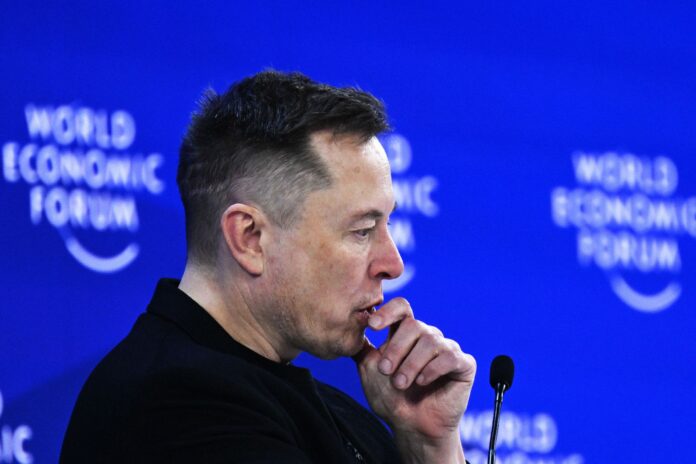
Despite some missed deadlines and overoptimistic timelines, Musk remains optimistic about the future. During his unexpected appearance at the World Economic Forum in Davos, Switzerland, he encapsulated his outlook: “It’s generally better for quality of life to be an optimist who is wrong than a pessimist who is right.” Given his ventures span diverse sectors-electric vehicles and automation (Tesla), aerospace and satellite internet (SpaceX), social media (X), artificial intelligence (xAI), tunneling infrastructure (The Boring Company), and neurotechnology (Neuralink)-even his casual remarks can influence global markets. Below is a summary of some of Musk’s most recent forecasts shared at Davos.
Are We Alone? Musk’s Take on Extraterrestrial Life
Kicking off his Davos discussion with BlackRock CEO Larry Fink, Musk touched on his worldview with a lighthearted jab at the existence of aliens. “With over 9,000 satellites orbiting Earth, we’ve never had to dodge an alien spacecraft,” he noted. This led him to suggest that conscious life might be extraordinarily rare, possibly unique to our planet.
Humanoid Robots: The Dawn of a New Era by 2027
Since 2021, Musk has been vocal about Tesla’s humanoid robot project, Optimus. The company, now positioning itself as a leader in robotics and autonomous systems, aims to produce thousands of these robots by 2025. However, recent reports indicate ongoing challenges, particularly with the robot’s dexterity and hand functionality.
Nonetheless, Musk remains confident that widespread deployment is imminent. He envisions a future where AI-driven robots become ubiquitous, dramatically expanding the global economy. “When AI and robotics become nearly free and universally accessible, the economy will experience unprecedented growth,” Musk explained. He predicts a world where robots outnumber humans and fulfill virtually every conceivable need, creating an abundance of goods and services beyond imagination. Tesla plans to begin selling Optimus units by late 2024.
Robotaxis: A Nationwide Phenomenon by 2027?
After years of anticipation, Tesla launched a limited robotaxi service in Austin, Texas, in 2025, albeit with human safety drivers present. Musk now claims that by the end of 2026, robotaxis will be “very widespread” across the United States. While this timeline remains ambitious, Tesla is actively pursuing regulatory approvals to expand services in states with more lenient autonomous vehicle laws, such as Arizona, Florida, and Nevada.
Cracking the Code of Human Aging
Although Musk admits he has not deeply researched the biology of aging, he is optimistic about finding a solution. “Once we identify the root cause of aging, the answer will be surprisingly straightforward,” he stated, urging the scientific community to accelerate efforts in this area. This aligns with growing investments in longevity research, where companies are exploring genetic and cellular therapies to extend healthy human lifespans.
SpaceX’s Starship: Toward Full Reusability in 2024
SpaceX has been developing the Starship rocket for over a decade, aiming to revolutionize space travel with a fully reusable launch system. Despite missing several self-imposed deadlines-such as a crewed Mars mission initially targeted for 2024 and orbital flights planned for 2022-Musk reaffirmed his commitment to achieving full reusability by the end of this year. This breakthrough could reduce launch costs by a factor of 100, potentially making space freight competitive with air cargo. Recent successful test flights demonstrate progress, but the timeline remains challenging.
The Rise of Superintelligent AI: Near-Term and Long-Term Outlooks
Musk has long been both a pioneer and a cautionary voice in artificial intelligence development. At Davos, he reiterated concerns about AI surpassing human intelligence, predicting that machines smarter than any individual will emerge by 2024, and by 2035, AI will surpass the collective intelligence of all humanity.
However, experts differ on these projections. Nvidia CEO Jensen Huang recently expressed skepticism about the arrival of a so-called “God AI,” emphasizing that current AI excels at specific tasks but remains far from mastering all human cognitive abilities. He suggested that achieving such comprehensive intelligence might be a distant prospect, measured in cosmic rather than human timescales.
As AI continues to evolve rapidly, the debate over its capabilities and risks remains central to technological discourse worldwide.