Revolutionizing Perovskite Solar Cell Development with AI-Driven Robotics
A global consortium of scientists has introduced an advanced robotic platform powered by artificial intelligence that autonomously designs, manufactures, and refines perovskite solar cells. This innovative system completes the entire experimental cycle within a self-regulating closed-loop framework, enabling unprecedented efficiency and throughput in solar cell research.
Integrating AI and Robotics for Autonomous Experimentation
Central to this breakthrough is the concept that robotic experimentation transcends mere automation of repetitive tasks. Instead, the platform translates complex chemical formulas and experimental parameters into machine-readable instructions, which are executed by robotic units. Following fabrication and testing, the system collects structured feedback, creating a continuous loop that connects hypothesis generation, execution, validation, and iterative model enhancement.
Massive Scale Fabrication and Testing Powered by a Specialized AI Model
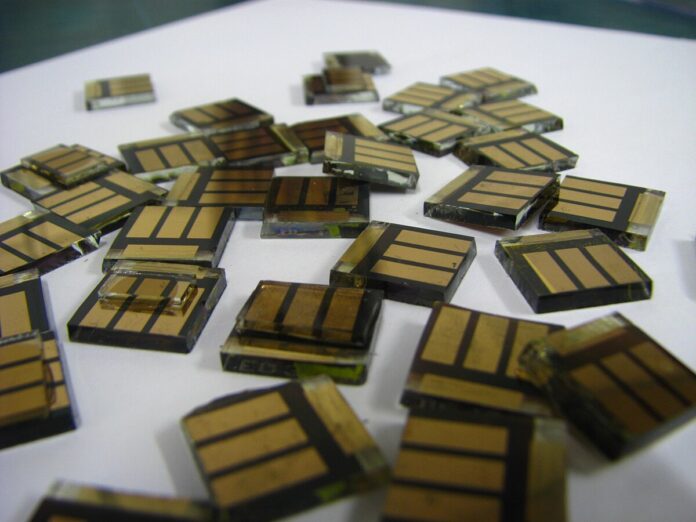
Utilizing this platform, the team has produced and evaluated over 50,000 perovskite solar cell devices, achieving power conversion efficiencies reaching 27%. The system is driven by a bespoke Recipe Language Model (RLM), which synthesizes knowledge from approximately 60,000 scientific publications on perovskite solar cells accumulated over recent decades, alongside real-time data generated during device fabrication. This information is processed through a sophisticated seven-layer AI architecture encompassing recipe learning, generation, dataset creation (RecipeQA), fine-tuning, reasoning, evaluation, and optimization.
Robotic Infrastructure and Process Automation
After the AI reasoning phase proposes new experimental recipes, eleven robotic modules autonomously perform synthesis, device assembly, and characterization. These modules collectively house 101 functional units, over 1,500 components, and manage more than 4,300 controllable parameters, ensuring precise and reproducible fabrication.
The initial three modules focus on chemical storage, solid sampling, and liquid dispensing. The subsequent eight modules handle critical processes such as spin-coating, antisolvent application, thermal annealing, laser treatment, device transfer, vacuum exchange, and thin-film deposition. Equipped with integrated cameras, sensors, and actuators, these units perform in situ characterization, continuously feeding data back into the AI model to refine future experiments.
Four-Phase Experimental Workflow for Optimized Solar Cell Performance
The robotic system’s experimental approach unfolds in four distinct stages:
- Stage 1: Broad, exploratory synthesis of perovskite formulations without interface or additive modifications, yielding efficiencies from 0% up to 17.4%.
- Stage 2: Introduction of additives and self-assembled monolayers (SAMs) to improve crystallization and interfacial properties, increasing efficiency to approximately 23% and narrowing performance variability.
- Stage 3: Application of surface passivation techniques to reduce defects, further enhancing efficiency to 25.6%.
- Stage 4: Integration of SAM-based hole transport layers combined with targeted additives and passivation strategies, culminating in a peak efficiency of 27.0%, with certification confirming 26.5%.
Innovative Contributions and Future Implications
The primary advancement of this research lies in the seamless fusion of three key elements within a single closed-loop AI-robotics system: precise robotic fabrication of complete perovskite solar cell devices, automated characterization that converts high-throughput experimental data into mechanistic insights, and a continuously evolving domain-specific Recipe Language Model that enhances recipe recommendations and execution fidelity.
This integrated approach not only accelerates the discovery and optimization of high-performance perovskite solar cells but also sets a new standard for autonomous materials research, potentially applicable to other emerging photovoltaic technologies.