Revolutionizing Hospitality: The Rise of Agentic AI and Socially Intelligent Robots
From Labor Challenges to Technological Solutions
For the second year running, the hospitality sector has been abuzz with discussions on artificial intelligence (AI) and its transformative potential. In 2026, the focus has shifted toward agentic AI-autonomous systems capable of independent decision-making-and the expanding role of robotics. This evolution was spotlighted in a recent industry forum titled “Beyond the Front Desk and Concierge: Agentic AI, Social Intelligence, and the Rise of Autonomous Hospitality Robots.” The session, led by Ajay Aluri, founding director of West Virginia University’s Nemacolin Hospitality Innovation and Technology Lab, alongside Scot Campbell, principal advisor at Integrated Resorts Advisors, showcased how socially adept robots are set to redefine guest experiences and operational efficiency.
Addressing Workforce Shortages with Intelligent Automation
Campbell highlighted the acute labor shortages plaguing the hospitality industry, particularly the difficulty in recruiting sufficient housekeeping staff. This scarcity, coupled with advancements in AI, presents a prime opportunity for robotics to alleviate repetitive workloads. By automating routine tasks, robots enable human employees to concentrate on delivering personalized and memorable guest interactions, thereby elevating service quality.
Enhancing Guest Experience Without Replacing Human Touch
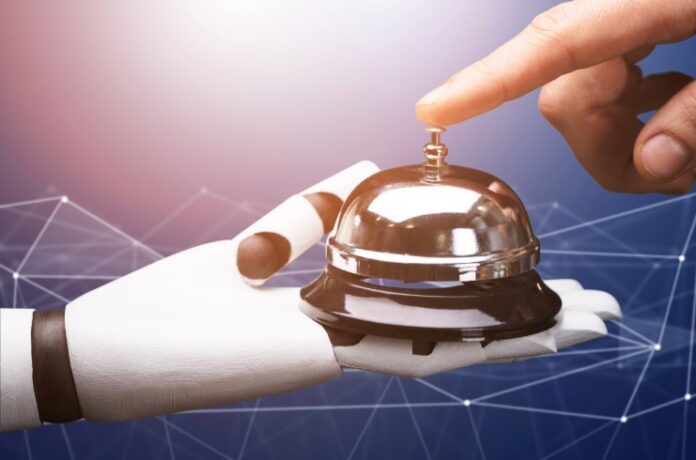
Aluri emphasized that the integration of AI in hotels is no longer a question of if, but where it can add the most value while preserving the essential human element of hospitality. Rather than substituting front-desk personnel, socially intelligent robots are designed to assist staff, allowing them to focus on meaningful guest engagement. “Let machines handle the repetitive so humans can elevate the meaningful,” he remarked, underscoring the complementary nature of this technology.
Robots as Team Members: A New Paradigm in Hospitality
Socially intelligent robots introduce a novel dimension to guest services. Beyond performing mundane tasks, they offer guests unique, interactive experiences without necessitating human contact. Aluri reflected on his prior work with robots that were limited in scope, contrasting them with Nylo, an advanced agentic AI robot capable of answering questions by accessing real-time internet data. This shift from scripted automation to context-aware, conversational AI marks a significant leap forward.
From Automation to Agency: The Evolution of Hospitality Technology
Historically, hospitality technology focused on automation, scripted commands, and transactional tools. Today, the industry is embracing AI that fosters agency, contextual understanding, and relationship-building. Robots like Nylo transcend traditional chatbots by engaging guests in meaningful dialogue, becoming digital team members who enrich the overall experience.
Real-World Applications: Case Studies of Social Robots in Action
These innovations are not theoretical. Aluri shared examples of IntBot’s robotic “family” deployed in various hospitality settings. Oto, the “chief vibes officer” at Las Vegas’ Otonomus Hotel, greets guests, adjusts room settings on request, shares local trivia, and communicates in over 50 languages. Tulse, serving as a concierge at Marriott Tulsa Hotel Southern Hills, assists guests with navigation and local insights. José, introduced at San José Mineta International Airport, helps travelers with directions and information. Collectively, these robots have engaged in over 370,000 guest interactions, conducted more than 22,000 full conversations, and supported communication in upwards of 70 languages.
Measuring Success: Beyond ROI to Return on Experience
While operational efficiencies and time savings for staff are clear benefits, Aluri urged the industry to shift focus from traditional return on investment (ROI) metrics to return on experience (ROE). This approach prioritizes enhancing emotional connections and guest satisfaction, which in turn fosters loyalty and repeat visits. For instance, some travelers have chosen to return to hotels specifically because of their positive interactions with robots like Tulse and José. Aluri stressed that combining ROI and ROE strategies creates a harmonious balance that benefits both business and guests.
Collaborative Futures: Humans and Robots Working Together
Contrary to fears that AI might displace human workers, Aluri envisions a collaborative future where humans, AI agents, and robots form integrated teams. This synergy aims to optimize hotel operations while maintaining the warmth and personal touch that define hospitality.
Introducing Nylo: The Socially Intelligent Hospitality Robot
During the session, Nylo engaged the audience with humor and spontaneous responses, demonstrating his ability to handle high-volume, repetitive inquiries such as providing directions and local recommendations. Designed by IntBot to interpret social cues and engage authentically, Nylo works alongside human staff to enhance service speed and quality. He reiterated that AI’s role is not to replace human employees but to amplify their capabilities. “Hospitality is fundamentally about people and personal connection. We’re here to support, not supplant,” Nylo explained, highlighting the balanced integration of technology and human service.