
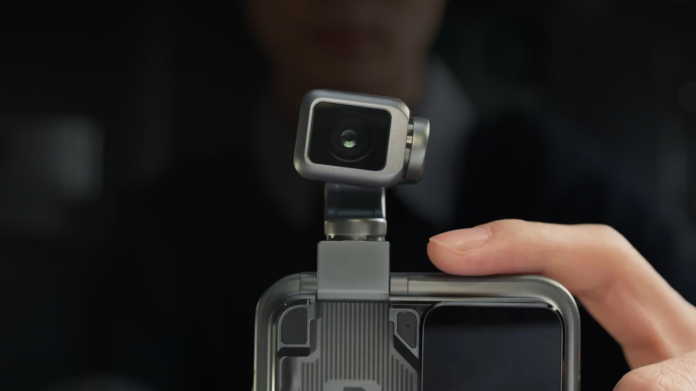
With its camera that nods, grooves to music, and tracks faces, this device conceals much more beneath its surface.
At this year’s Mobile World Congress, an intriguing gadget was showcased behind glass at Honor’s booth in Hall 3. It was fully operational, performing subtle robotic movements to captivate onlookers, yet no journalist was allowed to physically handle it.
This intriguing device is the Honor Robot Phone. Teased since October of the previous year, it made its official debut at MWC Barcelona on March 4, when Honor’s CEO James Li delivered the company’s inaugural keynote on the main stage at the event. The phone is slated for release in the latter half of 2026, initially targeting the Chinese market.
Its availability outside China remains uncertain, but the innovative hardware demonstrated in Barcelona is compelling enough to attract significant attention.
Revolutionizing Mobile Photography: A Miniature Gimbal Inside a Smartphone
The standout feature of the Honor Robot Phone is its motorized camera arm, which retracts seamlessly into the back of the phone when idle. This arm houses a 200-megapixel sensor integrated within what Honor claims to be the world’s smallest four-degree-of-freedom (4DoF) gimbal system.
At the core lies a bespoke micro motor crafted from titanium alloy, boasting a size reduction of 70% compared to conventional micro motors. Honor attributes this miniaturization to the extensive engineering expertise gained from years of developing foldable smartphones.
This innovation results in a three-axis mechanical stabilization system that delivers camera movements with precision previously exclusive to dedicated handheld gimbals and professional filming equipment. While Honor emphasizes that its stabilization matches external stabilizers rather than surpassing them, the technology is nonetheless impressive.
For videography, the phone offers a Super Steady mode optimized for dynamic shooting, AI Object Tracking that locks onto subjects with a double tap, and AI SpinShot, which automates 90° and 180° rotational camera movements. The arm itself can rotate a full 360°, enabling versatile shooting angles.
In a strategic collaboration, Honor partnered with ARRI Image Science, the renowned Austrian manufacturer of cinema cameras widely used in professional film production. Dr. Benedikt von Lindeiner, ARRI’s VP, explained that their joint effort focuses on delivering natural color reproduction, smooth highlight roll-off, and enhanced depth in mobile photography.
Beyond Optics: AI-Powered Physical Interaction
Beyond its mechanical ingenuity, the Honor Robot Phone incorporates AI-driven interactive features that blur the line between technology and personality. The camera arm can physically nod, shake, and tilt in response to voice commands and touch, effectively serving as a tangible gesture interface.
Additionally, it can detect ambient music and move rhythmically in sync with the beat, adding a playful dimension to user interaction.
During the keynote, the Robot Phone engaged in a scripted dialogue with CEO James Li and a humanoid robot also unveiled at MWC. This companion robot performed a dance to Imagine Dragons’ “Believer,” executed a backflip, and shook hands with Li before they exited the stage together.
Honor frames these capabilities within its “Augmented Human Intelligence” philosophy, positioning AI as a tool to amplify human abilities rather than replace them. While such claims often invite skepticism at trade shows, the tangible hardware lends credibility to this vision.
Unanswered Questions and Future Prospects
Despite the excitement, many critical specifications remain undisclosed. Honor has yet to reveal the processor powering the device, the amount of RAM, battery capacity-though it is known to use a silicon-carbon anode cell to meet the motor’s energy demands-or pricing details. Journalists at MWC were restricted to observing the phone behind glass, with no hands-on experience permitted.
Durability concerns are prominent in early discussions. Historically, smartphones with motorized camera components have struggled with reliability due to the vulnerability of moving parts in everyday use, including drops, pocket storage, and exposure to dust.
Honor’s engineers acknowledge these challenges, stating that they leveraged their expertise in foldable phone materials and simulation to enhance the miniaturized mechanism’s robustness. However, no independent durability testing results have been published to date.
Currently, the Honor Robot Phone represents a pioneering device with capabilities unseen in the smartphone market, yet it remains inaccessible for direct evaluation and is set to launch primarily in a market outside the immediate focus of many international journalists.
Whether this marks the beginning of a new era in mobile technology or a carefully controlled preview of a product that will evolve significantly before release remains to be seen.
The second half of 2026 will reveal the true impact of this innovation.