
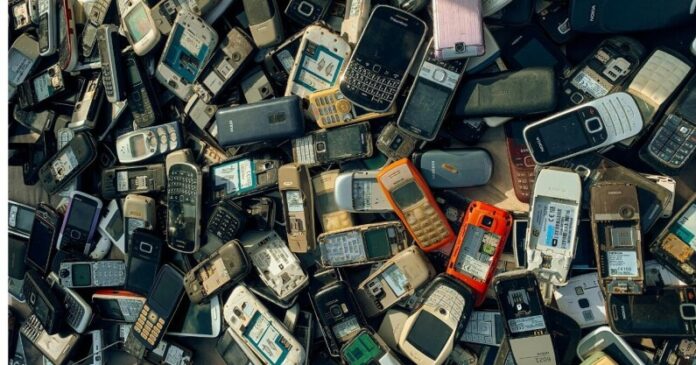
The issue of electronic waste, or e-waste, is a pressing global challenge. Unfortunately, a vast majority of discarded electronic devices are either improperly disposed of or processed through unsafe methods. Currently, approximately 78% of electronic products worldwide fail to undergo proper recycling, contributing to an ever-expanding mountain of waste.
By 2024, global smartphone production is projected to reach 1.22 billion units. When combined with the billions of laptops, televisions, and desktop computers manufactured annually, this surge intensifies a culture of disposability and rapid technological turnover.
According to recent United Nations data, e-waste volumes are expected to soar to 80 million tonnes by 2030-equivalent to about 1.5 million 40-ton trucks encircling the Earth. Eric Ingebretsen, Chief Commercial Officer at SK Tes, a company managing 40 IT asset disposition centers worldwide, highlights the urgency of addressing this growing environmental and economic concern.
To combat this escalating crisis, innovative e-waste initiatives that simultaneously promote sustainability and business growth are urgently needed.
Innovative Robotics from Denmark Tackling E-Waste
At the forefront of technological solutions, researchers at the Danish Technological Institute are pioneering an AI-powered robotic system designed to revolutionize e-waste management. This cutting-edge technology aims to modernize and scale the refurbishment industry, empowering local businesses while reducing electronic waste.
Mikkel Labi Olsen, a robotics researcher and consultant involved in the RoboSAPIENS project-which focuses on enhancing safe human-robot collaboration-demonstrated a prototype robot capable of automating laptop refurbishment tasks. Equipped with a robotic arm, specialized tools, and advanced visual recognition cameras, the system is trained to replace laptop screens, a labor-intensive process that many small businesses find challenging due to its complexity and repetitive nature.
So far, Olsen’s team has successfully programmed the robot to handle screen replacements on multiple laptop models and their variants. Efforts are underway to broaden the robot’s capabilities to accommodate a wider range of manufacturers and device types.
Utilizing AI-driven visual recognition, the robot can identify different laptop models, carefully remove plastic covers, unscrew components, and extract screens without damage. A recent demonstration video showcases the robot performing these tasks with precision and efficiency.
Olsen emphasizes that refurbishing laptops by replacing key components like screens can significantly reduce waste by extending the lifespan of devices that are otherwise fully functional.
Unlocking Economic Potential in E-Waste Refurbishment
Refurbished laptops can fetch prices around €200, depending on the market and device specifications. In stark contrast, the raw material value recovered by shredding and recycling the entire laptop is roughly €10. This stark difference underscores the financial benefits of targeted refurbishment over mere recycling.
“Replacing a few simple parts can dramatically increase the value of a device,” Olsen explains, highlighting the economic incentive behind refurbishment initiatives.
However, training AI systems to handle the vast variability in electronic devices presents challenges. Unexpected variations-such as different screw colors or subtle design changes-may require additional AI training to ensure the robot can adapt effectively.
Due to these unpredictable factors, Olsen advocates for a “human-in-the-loop” approach, where human operators oversee robotic processes and intervene when the system encounters anomalies or difficulties.
The Untapped Billion-Dollar Opportunity in E-Waste
E-waste contains valuable materials; for instance, one tonne of discarded smartphones yields more gold than one tonne of mined ore. Besides gold, critical metals like copper, silver, and palladium are essential for manufacturing new electronic devices globally.
Despite this, the majority of e-waste remains unrecovered. The question remains: why has the tech industry and other sectors not fully capitalized on this lucrative resource?
Olsen suggests that the global recognition of e-waste’s value is still emerging. While robotic recycling technologies show promise, their high costs and operational complexity have slowed widespread adoption.
Moreover, the vast diversity of electronic devices, varying conditions of discarded items, and the complexity of components make it difficult to develop universally adaptable robotic systems. Although AI has advanced significantly, it remains largely in the research and development phase for these applications.
Challenges and Progress in Modern Electronics Recycling
As electronic devices become increasingly compact, manufacturers often use adhesives instead of screws to assemble components, complicating disassembly and recycling efforts without causing damage. Despite these hurdles, Olsen remains optimistic about the progress made by European and international companies dedicated to refurbishing and recycling technology.
In Denmark, companies such as Tier 1A Refurb and Greenmind have demonstrated that refurbishment can be a profitable business model, with some aiming to process up to 2,000 units weekly.
Olsen’s vision includes expanding his robotic system’s capabilities to recognize and service a broader array of laptop models and submodels, ultimately creating a production-ready solution that supports local refurbishment enterprises.
Looking ahead, robotics and AI-driven systems are poised to transform e-waste management worldwide. These technologies will automate hazardous, repetitive tasks, enhance safety, and improve operational efficiency, unlocking the vast economic and environmental potential hidden within electronic waste.