Exercise Caution When Training Humanoid Robots in Martial Arts
Advancements in Humanoid Robotics and Training Techniques
Recent years have witnessed remarkable progress in humanoid robotics, with expectations soaring for their capabilities in the near future. Among the innovative training methods, teleoperation stands out as a prominent approach, enabling robots to learn complex tasks by mimicking human movements in real time.
How Teleoperation Enhances Robot Learning
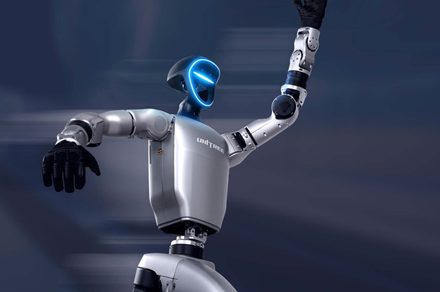
For instance, Unitree’s G1 humanoid robot is trained through teleoperation, where a human operator dons a motion-capture suit or uses specialized controllers to perform specific actions. The robot replicates these movements instantaneously, creating valuable datasets that feed into imitation learning algorithms. This process equips the robot with autonomous skills, which are further refined through reinforcement learning to ensure fluidity and precision in its motions.
Potential Hazards of Close-Quarters Teleoperation
Despite its effectiveness, teleoperation carries inherent risks, especially when the operator shares a confined space with the robot. A recent viral clip illustrates this vividly: during a martial arts training session, the operator executes a series of kicks, which the G1 robot mirrors flawlessly. However, when the operator attempts a powerful kick, the robot mimics it with equal force, inadvertently striking the operator in a sensitive area.
The operator’s sudden fall and audible reaction underscore the importance of maintaining safety protocols during such sessions. The robot, losing balance as well, collapses alongside the operator. This incident serves as a cautionary tale about the need for vigilance and spatial awareness when engaging in teleoperated training.
Unitree’s G1: A Glimpse into the Future of Robotics
Launched in 2024 and commercially available since early 2025 at approximately $13,000, the Unitree G1 targets academic institutions, research labs, and enterprises focused on robotics and artificial intelligence development. Its design and training capabilities exemplify the cutting edge of humanoid robotics, blending sophisticated hardware with advanced machine learning techniques.
Looking Ahead: Safety and Innovation in Robotics Training
As humanoid robots become increasingly integrated into research and industry, establishing comprehensive safety measures during teleoperation is paramount. Incorporating features such as proximity sensors, emergency stop functions, and operator training can mitigate risks. Moreover, ongoing improvements in AI algorithms promise smoother, more adaptive robot responses, reducing the likelihood of accidents.