
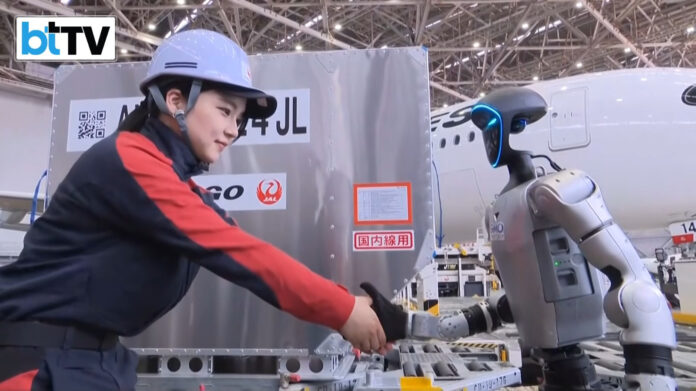
Tokyo Airport Introduces Humanoid Robots to Assist with Baggage Handling
Business Today / YouTube
Robotic Workforce Integration at Haneda Airport
In a move that feels straight out of a futuristic narrative, Japan Airlines (JAL) is pioneering the use of humanoid robots to support its baggage handling operations at Tokyo’s Haneda Airport. This initiative marks a significant step in blending advanced robotics with everyday airport logistics, aiming to enhance efficiency while addressing labor challenges.
Starting in May, JAL will launch a phased pilot program deploying androids designed to transport luggage and cargo. During a recent demonstration, one of these robots was observed carefully placing items onto a conveyor belt and even engaging in a friendly handshake with a human colleague. Standing at just 4 feet 3 inches tall-slightly shorter than the average adult-the robot operates on battery power for two to three hours per charge, showcasing both agility and endurance suitable for airport tasks.
Phased Implementation and Safety Measures
The rollout of these humanoid assistants will be methodical. Initially, JAL will conduct comprehensive mapping and analysis of the airport environment to determine safe zones for robot-human collaboration. Following this, the androids will undergo rigorous testing in simulated settings before being integrated into live operations alongside human workers on the tarmac. If successful, their roles could expand to include additional responsibilities such as aircraft cabin cleaning, further alleviating human workload.
Addressing Japan’s Workforce Shortage Through Automation
Unlike many regions where automation is viewed as a threat to employment, Japan’s demographic realities present a different context. With one of the world’s fastest aging populations and a persistently low birth rate, the country faces a shrinking labor pool. Coupled with restrictive immigration policies, these factors create a pressing need for innovative solutions to maintain operational capacity. The introduction of humanoid robots in airports exemplifies how technology can help bridge workforce gaps without relying heavily on foreign labor.
According to recent statistics, Japan’s working-age population has declined by over 10% in the past decade, intensifying the urgency for automation in sectors like transportation and logistics. This pilot program could serve as a blueprint for other industries grappling with similar demographic challenges.
The Future of Androids in the Workforce
The deployment of humanoid robots at Haneda Airport is just the beginning of a broader trend. Silicon Valley and global tech innovators are increasingly investing in human-like robots as the next frontier in automation. While these developments promise enhanced productivity and new capabilities, they also raise important questions about the future of work, ethics, and human-robot interaction.
As these androids become more prevalent, society will need to navigate the complexities of coexistence with robotic colleagues. The hope is that this integration will lead to positive outcomes, avoiding the dystopian scenarios often depicted in science fiction, and instead fostering a collaborative environment where humans and robots complement each other’s strengths.