
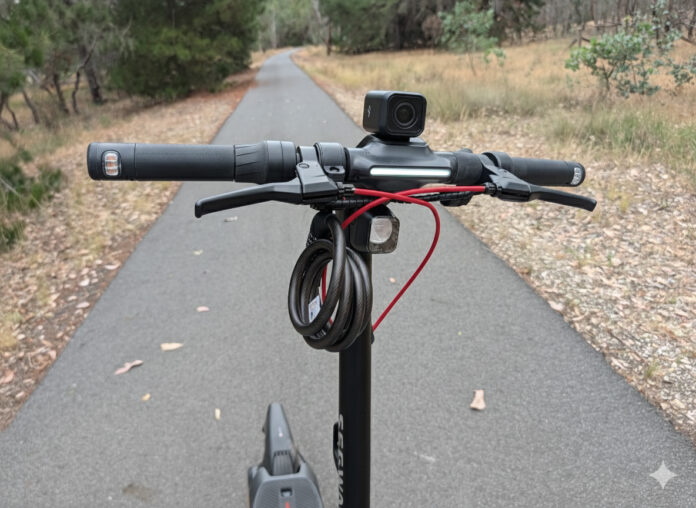
Reimagining E-Scooter Safety: The Case for Intelligent Speed Control
Electric scooters have transformed urban mobility by providing a practical, environmentally friendly alternative to cars for short-distance travel. While the technology powering these compact vehicles has evolved swiftly, the regulatory frameworks governing their use have lagged behind, often failing to reflect the complexities of modern transport environments.
Current Speed Regulations: A One-Size-Fits-All Challenge
Across most Australian states, e-scooters are restricted to a maximum speed of 25 km/h on public roads and pathways. This uniform speed cap aims to enhance safety but overlooks the varying conditions riders encounter. For instance, cruising at 25 km/h on a bustling city sidewalk presents different risks compared to riding on a spacious, quiet suburban bike path.
Such blanket restrictions can hinder efficiency and rider experience, underscoring the need for a more nuanced approach that balances safety with practicality.
Limitations of GPS-Based Geofencing
Many shared e-scooter services employ GPS geofencing to enforce reduced speeds in designated “slow zones,” such as crowded waterfronts or pedestrian-heavy shopping districts, where limits may drop to 10 km/h. While this method marks progress, GPS signals often falter in dense urban landscapes due to interference from tall buildings, causing erratic speed adjustments that frustrate riders.
Moreover, static geofencing maps fail to account for temporal variations in pedestrian traffic. A path congested during morning rush hour might be nearly empty late at night, yet the speed restrictions remain unchanged, limiting flexibility and responsiveness.
Advancing Safety with Real-Time Environmental Awareness
Transitioning from location-based controls to environment-responsive systems offers a promising solution. By equipping e-scooters with front-facing cameras and onboard AI processors, these vehicles can “perceive” their surroundings similarly to autonomous cars.
Such technology enables the scooter to detect pedestrians, cyclists, parked vehicles, and other obstacles in real time, dynamically adjusting speed to maintain safety. For example, the scooter could reduce speed to a walking pace when navigating through a crowded urban sidewalk, then accelerate safely when the rider moves onto a clear, separated bike lane.
Creating Adaptive Safety Zones
This approach effectively generates a “safety bubble” around the rider, modulating speed based on the proximity and density of nearby people and objects. It alleviates the rider’s responsibility to constantly judge safe speeds, reducing risky behaviors like weaving through crowds at high velocity.
In busy metropolitan areas, the system could limit speeds to allow sufficient reaction time for sudden hazards, such as opening car doors or pedestrians stepping into the path. Conversely, in less congested suburban or regional settings, speed limits could be relaxed, enhancing the scooter’s utility as a viable car alternative.
Incorporating Dashcam and Security Features Inspired by Automotive Innovations
Beyond speed regulation, integrating high-definition cameras opens new avenues for rider protection. Drawing inspiration from Tesla’s Autopilot cameras used in TeslaCam and Sentry Mode, e-scooters could continuously record journeys, providing crucial evidence in the event of accidents or disputes.
This built-in dashcam functionality eliminates the need for cumbersome external devices like helmet-mounted GoPros. Additionally, a “Sentry Mode” could monitor the scooter when parked, alerting owners via smartphone notifications if tampering or theft is detected, complete with video footage.
Essential Hardware Upgrades for Smart E-Scooters
Implementing these advanced features requires significant enhancements in scooter hardware, including high-resolution cameras and dedicated neural processing units. Similar technology is already prevalent in premium consumer drones and advanced driver-assistance systems (ADAS) in vehicles.
“Integrating vision-based safety technologies represents a critical evolution for micro-mobility, fostering greater public trust and acceptance.”
Marcus Zorn, Lead Engineer, Urban Mobility Systems
Although these upgrades may increase the upfront cost of e-scooters, the potential benefits-such as improved public safety and reduced insurance liabilities-justify the investment. Manufacturers could offer these enhancements as optional “Safety Packages,” akin to automotive safety feature bundles.
For rental operators, the reduction in accidents and associated costs would offset the initial expenditure, while local governments would gain confidence that scooters can coexist harmoniously in high-traffic zones.
Regulatory Evolution and Market Implications in Australia
To fully leverage smart scooter technology, Australian regulators should consider shifting from rigid speed limits to performance-based standards. This would enable certified “Smart Scooters” to operate under flexible rules tailored to their advanced safety capabilities, distinguishing them from basic models.
Currently, a premium e-scooter like the Segway-Ninebot MAX G2 is priced around A$1,699. Incorporating sophisticated computer vision systems could raise the cost to approximately A$2,200. While this represents a higher initial investment, the ability to safely travel faster where conditions permit offers significant value to riders.
Moreover, smart scooters would help riders avoid fines related to speeding in pedestrian zones, further enhancing their appeal.
Balancing Privacy with Safety Through Localized Data Processing
Privacy concerns are a major consideration when deploying computer vision on e-scooters, as continuous recording could raise surveillance issues. To address this, all data processing should occur locally on the scooter’s edge computing unit, avoiding cloud storage of sensitive footage.
The system’s focus would be on detecting objects and calculating distances and speeds, rather than capturing identifiable personal details. This approach preserves anonymity and respects pedestrian privacy.
Clear visual indicators, such as discreet LED lights, could inform bystanders when the safety system is active, ensuring transparency and trust.
Envisioning a Smarter, Safer Micro-Mobility Future
The future of urban transport lies not only in electrification but also in intelligent responsiveness to real-world conditions. Clinging to outdated regulations designed for earlier mobility paradigms limits the potential of modern technology.
By embracing AI-driven, context-aware speed management, we can create safer streets and more efficient micro-mobility options that adapt fluidly to their surroundings. This evolution is essential for reducing car dependency and fostering sustainable urban transport.
It is imperative for industry stakeholders and policymakers to collaborate on frameworks that support dynamic speed limits and smart scooter technologies, ensuring that micro-mobility solutions meet the demands of today’s cities.