
Inside China’s Leading Fentanyl Production Facility: A Closer Look at Controls and Controversies
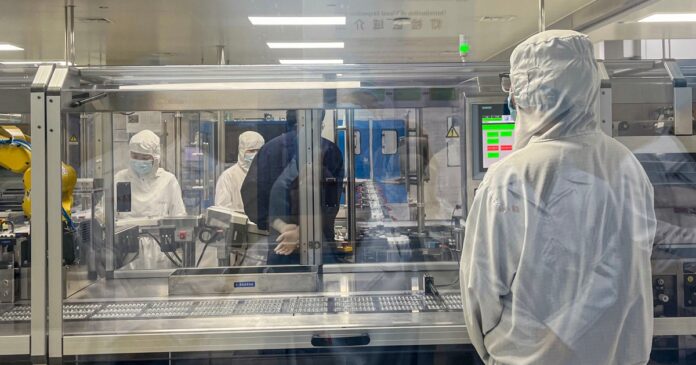
In the heart of Yichang, China, a state-of-the-art pharmaceutical plant hums with precision. Behind a transparent barrier, a worker clad in full protective attire monitors hundreds of small glass vials rapidly moving along an automated assembly line. These vials, meticulously sterilized and filled by robotic arms, contain fentanyl-a potent opioid at the center of ongoing geopolitical tensions between China and the United States.
Humanwell Pharmaceutical: Asia’s Largest Fentanyl Manufacturer
Humanwell Pharmaceutical, based in Yichang, stands as the largest fentanyl producer in China and across Asia. The company asserts that its fentanyl products are exclusively supplied to hospitals and are not distributed in North American markets. Du Wentao, Humanwell’s president, emphasized in an exclusive interview that in over five decades of operation, the company has never lost a single dose of medication, underscoring their stringent control measures. The facility itself is heavily secured with concertina wire and electronic surveillance.
Among only five licensed Chinese firms authorized to manufacture fentanyl for medical use, Humanwell produces approximately 100 million doses annually. To maintain the highest standards of hygiene, all personnel, including executives, don blue hospital caps, shoe covers, and lab coats before entering the production zones.
Automation and Rigorous Safety Protocols
The production process is largely automated to reduce human contact and contamination risks. Vials undergo thorough washing and sterilization before being filled with fentanyl via specialized tubing. Two staff members in protective gear oversee the operation, with alarms sounding every ten minutes to remind them to disinfect their gloves. Post-filling, the vials are inspected under intense lighting, labeled, packaged, and dispatched through a secure warehouse system.
Diplomatic Efforts and Trade Adjustments
During a summit in South Korea, former U.S. President Donald Trump urged Chinese President Xi Jinping to intensify efforts against fentanyl trafficking. Trump proposed reducing tariffs on Chinese goods containing fentanyl precursors from 20% to 10%, contingent on China’s commitment to curbing the illegal export of these chemicals. This move was part of a broader strategy to address the opioid crisis in the United States.
The Complex Supply Chain of Illicit Fentanyl
U.S. authorities have criticized China for insufficient action in halting the export of precursor chemicals used to synthesize fentanyl. These substances often end up in clandestine labs in Mexico, where they are converted into the highly addictive drug and smuggled into the U.S. According to the Centers for Disease Control and Prevention (CDC), synthetic opioids, including fentanyl, have been responsible for tens of thousands of American deaths annually, despite recent declines in overdose rates.
China’s Stance and Regulatory Measures
China maintains that it has implemented robust anti-fentanyl policies and attributes the crisis largely to persistent demand in the United States. Since 2019, China has banned fentanyl use outside of medical prescriptions, a move prompted by international pressure. While this has reduced the volume of fentanyl entering the U.S., reports indicate that the export of precursor chemicals and illicit narcotics continues unabated.
Chinese Foreign Ministry spokesperson Guo Jiakun expressed sympathy for those affected by the opioid epidemic in the U.S. and highlighted China’s comprehensive drug control policies, which include some of the strictest regulations worldwide.
Humanwell’s Commitment to Compliance
Du Wentao reaffirmed the company’s dedication to stringent fentanyl management, asserting that no doses produced by Humanwell have ever been diverted to the U.S. market. He dismissed claims linking China directly to the fentanyl crisis, citing the rigorous controls in place at his facility as evidence against such allegations.
Renewed Sino-American Cooperation on Narcotics Intelligence
In a significant development, NBC News was granted exclusive access to Beijing’s National Narcotics Intelligence Center. Although previously sanctioned by the U.S. in 2020, the center’s restrictions were lifted under the Biden administration, facilitating renewed collaboration between the two nations in combating fentanyl trafficking.
Chinese security officials confirmed ongoing exchanges with U.S. counterparts regarding evolving smuggling tactics. Hua Zhendong, the center’s lab director, emphasized the dynamic nature of drug synthesis methods and the importance of technical cooperation. He noted that newly identified precursor chemicals reported by the U.S. are promptly added to China’s monitoring lists to enhance enforcement efforts.
Challenges in Controlling Fentanyl Precursors
Despite these efforts, U.S. officials remain skeptical about the effectiveness of China’s crackdown. Experts like Michael Swaine from the Quincy Institute for Responsible Statecraft highlight the complexity of regulating fentanyl precursors, many of which are dual-use chemicals with legitimate industrial applications. The absence of a definitive list of all precursor substances complicates interdiction efforts.
Swaine cautions that while diplomatic gestures may signal progress, the fentanyl crisis is unlikely to be fully resolved in the near term due to these inherent challenges.