
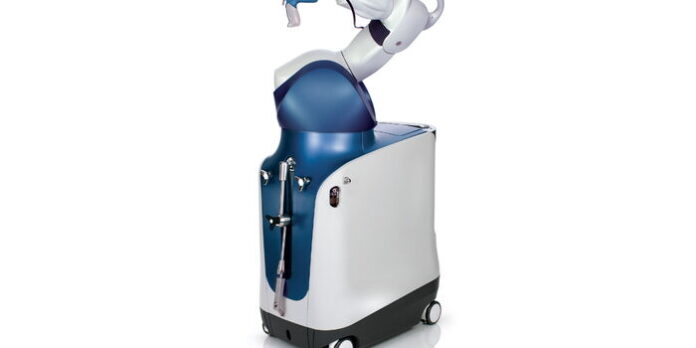
Record-Breaking Robotic Knee Replacement Surgery on Tallest Patient in Faridabad, India
A remarkable medical milestone was achieved in Faridabad, India, where a 6-foot-6 Kenyan man underwent a groundbreaking robotic bilateral knee replacement, setting a new world record for the tallest individual to receive the largest knee implants.
Patient Background and Medical Journey
Victor, the patient, had endured intense bilateral knee pain for several months, which severely limited his mobility despite prior treatments in Kenya. After consulting multiple healthcare providers locally without significant improvement, he sought advanced surgical care abroad.
Comprehensive diagnostic imaging and clinical assessments at the Indian hospital revealed advanced osteoarthritis affecting both knees, necessitating surgical intervention to restore function and alleviate pain.
Innovative Robotic-Assisted Surgery Tailored for Exceptional Anatomy
The procedure, conducted on July 20, 2025, was led by Dr. Anurag Aggarwal, Clinical Director of Orthopaedics and Joint Replacement at Marengo Asia Hospitals. Dr. Aggarwal emphasized the critical role of robotic technology in managing Victor’s unique anatomical challenges due to his height.
“Performing bilateral robotic knee replacement on a patient of this stature is exceptionally rare. Utilizing CT-based robotic planning allowed us to meticulously determine the appropriate implant size and alignment, ensuring the best possible surgical outcome,” explained Dr. Aggarwal.
Successful Outcome and Recognition
The surgery was completed without complications, and Victor was able to stand and walk within 24 hours post-operation-a rapid recovery that highlights the precision and effectiveness of robotic-assisted techniques.
For this pioneering achievement, Dr. Aggarwal was honored with the World Records of Excellence award. The implants used included an extra-large femoral component and a size-8 tibial tray, customized to fit Victor’s anatomy.
Advantages of Robotic Technology in Complex Joint Replacement
Hospital representatives noted that robotic-assisted knee replacement offers numerous benefits, such as smaller surgical incisions, minimized blood loss, accelerated rehabilitation, and enhanced accuracy in implant positioning. These factors collectively contribute to improved patient outcomes and satisfaction.
Medical Director Navneet Singh Chhabra remarked, “This case exemplifies how cutting-edge robotic systems empower surgeons to address even the most challenging anatomical variations with unparalleled precision, focusing on quicker recovery, reduced discomfort, and superior joint function.”
Implications for Medical Tourism and Specialized Care
Victor’s case underscores a growing trend among Kenyan patients seeking specialized medical treatments abroad, particularly for complex conditions where local healthcare options may be limited or have proven ineffective. This highlights the increasing importance of international collaboration and access to advanced surgical technologies.