Robotics has permeated almost every aspect of our lives in manufacturing, healthcare, domestic help, and even entertainment. To accomplish this, it has evolved to have many forms, whether it’s robotic arms for sorting packages to microscopic ones that have all sorts of medical applications. And perhaps, one of its most compelling evolutions is how some robots are starting to look more like humans.
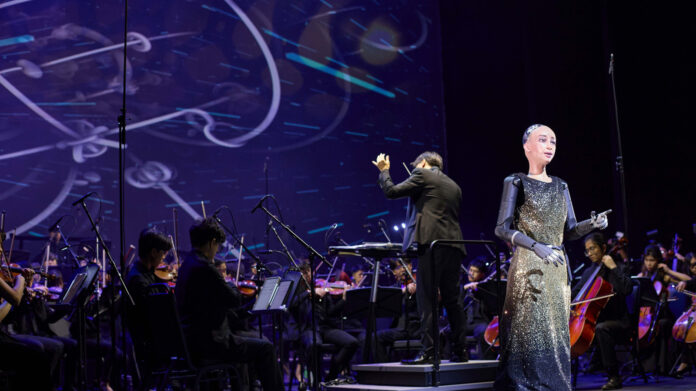
Through the years, scientists have developed a lot of humanoid robots. However, one recently started singing with supporting human musicians. In April 2026, the Hong Kong Baptist University (HKBU) unveiled a special performance with the humanoid robot Sophia, wherein she sang a trio of original songs alongside an orchestra. In a press release, HKBU shares that the performance was meant for “prompting the audience to consider questions of reality, existence, and embodiment.” That said, it isn’t the first time Sophia has dabbled in the arts. In 2019, Sophia also starred in a short film called SophiaWorld as well.
Developed by Hanson Robotics, CNBC reported that her features were inspired by the iconic film beauty, Audrey Hepburn, and the creator’s wife. But while initially unveiled over a decade ago, her (still) transparent skull and eerie facial expressions still continue to trigger a few people. Not to mention, Sophia was the poster child of how technology can turn evil when she said that she’ll destroy humans. But, what exactly causes us to be a little nervous around her?
What makes humanoid robots so creepy-looking
There’s a term for the very visceral, uncomfortable reaction we tend to experience in the presence of humanoid robots and it’s called “uncanny valley.” In general, the science behind uncanny valley has been around for half a century, wherein researchers explored how our affinity rises and falls within a spectrum of “likeness.” Many studies fundamentally attribute the fact that we (as well as other animals) are biologically wired to be cautious around “imposters” that look like us but aren’t. As of this writing, there’s no hard and fast rule for where a given likeness falls within positive or negative affinity, so it’s not exactly quantifiable how “human” something needs to be to be considered comfortable to be around them.
However, there’s still a possibility that we can still get used to our robot brethren and co-exist more meaningfully in the future. For example, if we are exposed to enough humanoid-looking robots more frequently, it’s possible that we normalize their appearances and behaviors. In recent times, body modification is growing increasingly accessible. As the appearances of human beings evolve, so do our expectations for what is considered “normal.” For example, people can add permanent horns to their head or even have futuristic tattoos that turn their skin into biological touchpads. It’s also possible that more research can help bridge the gap between the precise factors that make a robot feel more human.
New technology that might end uncanny valley
Adventtr/Getty Images
There are several components that make robots feel more human, which include gait, appearance, and ability to communicate. Technology-wise, it looks like all three are getting better each year, even if they’re done separately. Recently, the China Media Group shared a YouTube video showing humanoid robots performing impressive movements that ranged from dance, martial arts, and even backflips during its 2026 Spring Festival Gala. In the same year, other robots have proven to be formidable opponents for elite athletes from kinds of sports, including marathons and table tennis.
Around the same time, we reported how Chinese robotics company DroidUp also launched Moya, a biomimetic AI robot that was designed to be as close to a human as possible. To do this, they did everything from give her layered human-like skin, micro facial movements, and warm body temperature. While she still has a long way to go, it’s only a matter of time until technology surprises us even further, especially as developments in both appearance, movement, and artificial intelligence begin to intersect.
But until that day comes, we can all enjoy the fact that many other robotics companies are taking a different route. For now, there are a lot of little robots that you can buy from Amazon, which do everything from help you keep your plants alive, play chess or soccer with you, or teach you how to draw. While they’re not necessarily as talented as Sophia, the fact that they’re cute may help the transition.