
Breakthrough in Robotic Surgery at Islamabad’s Premier Public Hospitals
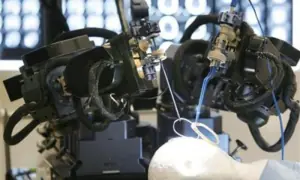
In a landmark medical achievement, specialists at Pakistan Institute of Medical Sciences (PIMS), Islamabad’s foremost public healthcare facility, successfully conducted a robotic-assisted surgery using the advanced Toumai surgical robot on Thursday.
Revolutionizing Urology with Robotic Precision
Robotic technology has transformed the field of urology, which focuses on disorders of the urinary tract and related organs. Compared to traditional surgical methods, robotic-assisted procedures offer enhanced accuracy, minimal invasiveness, and superior patient outcomes. The Toumai system, equipped with high-frequency response mechanisms, force-sensing technology, and remote surgical capabilities, exemplifies this cutting-edge innovation.
Collaborative Expertise from Local and International Surgeons
The robotic adrenalectomy was performed by a team comprising both Pakistani and British medical professionals. The UK contingent included Prof. Shamim Khan, Prof. Mateen Sharif, and Dr. Javed Burki, while PIMS was represented by Dr. Atif Inam Shami and Dr. Burhan Ul Haq. This collaboration highlights the growing global partnerships in advancing Pakistan’s healthcare standards.
Details of the Procedure and Patient Outcome
Dr. Rana Imran Sikander, Executive Director of PIMS, confirmed that this was the hospital’s inaugural robotic surgery. The operation involved the removal of adrenal glands from a 70-year-old female patient diagnosed with a left-adrenal pheochromocytoma-a rare tumor causing excessive hormone secretion leading to severe hypertension, palpitations, and sweating.
Adrenal glands, situated atop the kidneys, are vital for producing hormones that regulate metabolism, blood pressure, immune responses, and stress management. The robotic-assisted left adrenalectomy precisely excised the tumor, aiming to normalize hormone levels, stabilize blood pressure, and alleviate the patient’s symptoms, thereby significantly enhancing her quality of life. The patient is expected to be discharged within a few days post-surgery.
Future Prospects and Expansion of Robotic Surgery in Pakistan
Dr. Imran revealed that the robotic system was provided by the UK team, with plans underway to acquire a dedicated robotic unit for PIMS to independently conduct such surgeries. Surgeons from general surgery and urology departments actively participated, underscoring the multidisciplinary approach.
He emphasized that robotic surgery offers patients faster recovery times, reduced postoperative pain, and improved surgical precision, which collectively contribute to better clinical outcomes.
Vision for Nationwide Adoption and Training Initiatives
Prof. Mateen Sharif, head of PIMS’ Robotic Surgery Department, described this milestone as the beginning of a transformative era in Pakistan’s healthcare landscape. The Toumai robot, manufactured in China, represents a cost-effective yet sophisticated solution aimed at expanding robotic surgical capabilities across the country.
To foster skill development, PIMS is organizing a specialized workshop on robotic surgery, led by Dr. Atif Inam Shami, with surgical demonstrations by Prof. Mateen Sharif from the UK. This initiative is expected to accelerate the adoption of robotic techniques among Pakistani surgeons.
Global Context and Emerging Trends
Robotic surgery is rapidly gaining traction worldwide, with the global market projected to reach over $20 billion by 2027, driven by increasing demand for minimally invasive procedures. Countries investing in robotic platforms report significant improvements in patient satisfaction and surgical efficiency, setting a precedent for Pakistan’s healthcare system to follow.