Advancing AI with Visual Memory: The Future of Wearables and Robotics
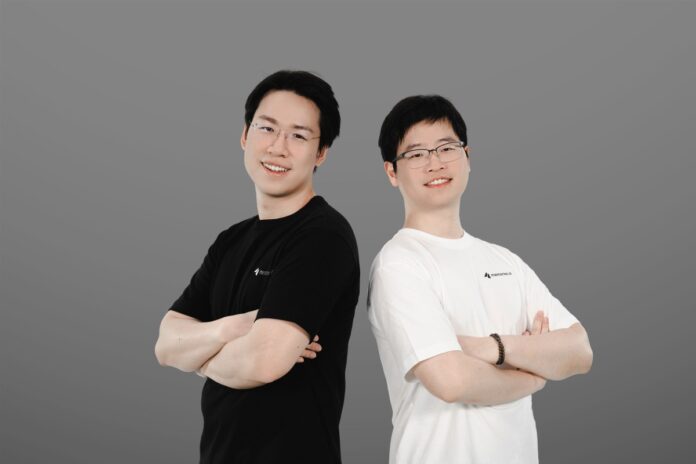
Shawn Shen, co-founder of Memories.ai, envisions a future where artificial intelligence must retain visual experiences to effectively operate in the physical world. His company is pioneering technology that enables wearables and robots to store and retrieve visual memories, leveraging cutting-edge AI tools from Nvidia.
Strategic Partnership with Nvidia to Enhance Visual Memory Capabilities
At Nvidia’s GTC conference, Memories.ai revealed a collaboration that integrates Nvidia’s Cosmos-Reason 2-a vision-language reasoning model-and Nvidia Metropolis, a platform designed for video analysis and summarization. This alliance accelerates the development of Memories.ai’s visual memory infrastructure, aiming to revolutionize how AI perceives and recalls visual data.
From Concept to Creation: The Origin Story of Memories.ai
Shen and CTO Ben Zhou conceived the idea while working on the AI system behind Meta’s Ray-Ban smart glasses. They realized that without the ability to recall recorded video content, the practical utility of such devices would be limited. Finding no existing solutions addressing AI’s visual memory needs, they decided to establish Memories.ai independently, focusing on this untapped niche.
Why Visual Memory is Essential for AI in the Physical Realm
“AI excels in digital environments, but what about real-world applications?” Shen questions. He emphasizes that for AI-powered wearables and robots to function effectively, they must possess a form of visual memory. This capability allows AI to interpret, store, and recall visual information, which is crucial for interacting with dynamic physical surroundings.
Current Landscape of AI Memory Technologies
While AI memory features have gained traction recently-such as OpenAI’s ChatGPT enhancements in 2024 and 2025, and memory tools from xAI and Google Gemini-these primarily focus on text-based data. Text memory benefits from structured formats that simplify indexing, but it falls short for AI systems that rely heavily on visual inputs to navigate and understand the world.
Funding and Growth Trajectory of Memories.ai
Founded in 2024, Memories.ai has secured $16 million in funding, including an $8 million seed round in mid-2025 and an additional $8 million extension. Investors include Susa Ventures, Seedcamp, Fusion Fund, and Crane Venture Partners. This capital supports the company’s mission to build robust visual memory models and infrastructure.
Building the Foundation: Infrastructure and Data Collection
Developing a reliable visual memory system required two critical components: creating a framework to embed and index video data for efficient storage and retrieval, and gathering high-quality visual data to train the AI models. To address the latter, Memories.ai engineered LUCI, a custom wearable camera device used by their data collection team. Unlike conventional video recorders that prioritize resolution and battery life, LUCI is optimized for capturing data suitable for AI training.
Innovations in Visual Memory Models and Industry Collaborations
In July 2025, Memories.ai launched its large visual memory model (LVMM), comparable in function to Google’s recently released Gemini Embedding 2, albeit on a smaller scale. The company has since introduced a second-generation LVMM and announced a partnership with Qualcomm to deploy their technology on Qualcomm’s processors later this year.
Memories.ai is also collaborating with several leading wearable manufacturers, though specific partners remain confidential. Shen anticipates that while current demand exists, the most significant opportunities for visual memory technology will emerge as the wearables and robotics markets mature.
Looking Ahead: The Commercialization of Visual Memory AI
Shen highlights that Memories.ai’s primary focus is on refining the AI models and supporting infrastructure rather than immediate hardware commercialization. He believes that as the ecosystem evolves, the integration of visual memory into wearables and robotics will become indispensable, unlocking new functionalities and user experiences.