
Metropolitan Police Defends Live Facial Recognition Amid Legal Scrutiny Over Deployment Boundaries
The Metropolitan Police Service (MPS) is currently under judicial review over its use of live facial recognition (LFR) technology, with critics arguing that the force’s policies lack clear limitations on where the technology can be applied. The High Court has been examining whether the MPS’s deployment of LFR complies with legal standards and respects individual rights.
This legal challenge was initiated by Shaun Thompson, an anti-knife crime campaigner who was mistakenly identified by the MPS’s facial recognition system and subjected to an extended stop-and-search, alongside Silkie Carlo, director of the privacy advocacy group Big Brother Watch. Their case centers on whether the existing safeguards effectively restrict the Metropolitan Police’s use of LFR or if the policy framework permits overly broad and potentially arbitrary application.
Scope and Criteria for LFR Deployment
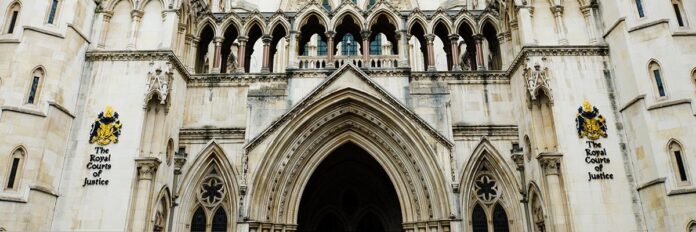
During the two-day hearing at the Royal Courts of Justice, legal representatives for Thompson and Carlo highlighted that the MPS’s policy governing LFR deployment is excessively vague. The policy permits use in three main scenarios: designated “crime hotspots” (including their access routes), public events or critical infrastructure under “protective security operations,” and locations identified through intelligence indicating the likely presence of wanted individuals.
However, the challengers emphasized that the “crime hotspot” category is so broadly defined that it effectively allows the police to deploy LFR across large areas of London with minimal restriction. They pointed out that the force’s watchlists often contain between 16,000 and 17,000 images, and there appears to be little meaningful connection between the individuals targeted and the specific locations where LFR is used. This disconnect raises concerns about mass surveillance and the risk of innocent people being caught in the system simply by passing through monitored areas.
‘Permitted Locations’ and Policy Ambiguities
Legal counsel for the claimants argued that the only practical limitation on where LFR can be deployed is whether the area is classified as a “permitted location.” Given that many parts of London are designated as crime hotspots, the police have conducted multiple LFR operations in different hotspots on the same day using identical watchlists. This practice, they contend, undermines any meaningful link between the individuals sought and the places monitored.
Additional points raised include the broad and unusual definition of “serious crime” used by the MPS, which encompasses offenses punishable by a year or more in prison-a threshold not commonly adopted by other law enforcement or governmental bodies. The claimants also stressed that the automated and large-scale nature of LFR heightens privacy intrusions, and that framing the purpose of LFR simply as “locating sought persons” does not constitute a genuine operational constraint but rather a description of the technology’s function.
Metropolitan Police’s Defense of LFR Use
In response, the Metropolitan Police’s legal team argued that the challenge is essentially a dispute over proportionality rather than legality. They maintained that the LFR policy contains clear, specific use cases that prevent arbitrary deployment. Officers are required to document their reasons for using LFR, which must be approved by senior personnel. Furthermore, the policy prohibits officers from unilaterally designating hotspots and mandates assessments aligned with the European Convention on Human Rights before each deployment.
The police lawyers asserted that these procedural safeguards create a structured framework limiting discretion and ensuring accountability. They warned that ruling in favor of the claimants could significantly impair the police’s ability to utilize LFR effectively, particularly since the technology’s primary benefit lies in locating individuals whose whereabouts are unknown.
They further argued that restricting LFR use solely to locations identified through specific intelligence (the so-called “use case C”) would severely diminish its operational value, effectively neutralizing the technology’s potential to aid policing efforts.
Ongoing Debate and Future of Facial Recognition in Policing
The presiding judges, Lord Justice Holgate and Mrs Justice Farbey, are currently reviewing the arguments and will issue a ruling in due course.
Notably, just prior to the hearing, Home Secretary Shabana Mahmood announced plans to significantly broaden the deployment of facial recognition technology across police forces in England and Wales. This announcement came amid an ongoing public consultation on establishing a clearer legal framework for the technology’s use.
Since the Metropolitan Police first trialed LFR at the Notting Hill Carnival in 2016, its use has expanded rapidly, yet public discourse and formal consultation have been limited. The Home Office has long maintained that existing laws provide a comprehensive framework, but a recent 10-week consultation launched in December 2025 acknowledged that the current regulatory environment is fragmented and complex.
The Home Office highlighted that the patchwork of legislation and guidance governing police use of LFR-including retrospective and operator-initiated applications-fails to inspire confidence among both law enforcement and the public. They noted that understanding the full legal basis for LFR use requires navigating multiple statutes, national guidelines, and force-specific data protection policies, making transparency and accountability challenging for ordinary citizens.