Empowering Humans Through Robotics Innovation
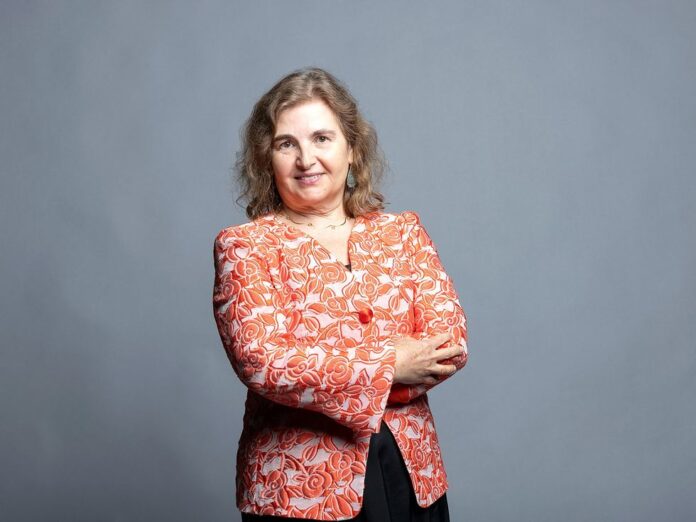
Daniela Rus has dedicated her career to transcending traditional boundaries-scientific, societal, and technological-in her mission to create robots that enhance human potential rather than replace it. She envisions robotics as a transformative tool that extends human capabilities, enabling people to achieve more than ever before.
“I see robotics as a way to grant people extraordinary abilities,” Rus explains. “These machines help us extend our reach, accelerate our thinking, and enrich our lives.”
About Daniela Rus
- Position: Professor of Electrical Engineering and Computer Science; Director of MIT’s Computer Science and Artificial Intelligence Laboratory (CSAIL)
- Academic Background: University of Iowa; Cornell University
- Honors: IEEE Edison Medal recipient, Engelberger Robotics Award, IEEE Pioneer in Robotics and Automation Award, IEEE Robotics and Automation Technical Field Award
From a Challenging Childhood in Romania to Leading Robotics Research
Born in Cluj-Napoca, Romania, during the oppressive regime of Nicolae Ceaușescu, Rus’s early life was shaped by scarcity and hardship, including rationed food and unreliable electricity. Despite these challenges, she was nurtured by a community rich in intellectual curiosity and strong mentorship. Even while working in a state-run factory as part of her schooling, she found inspiration in her environment.
Her parents were academics-her father a computer science professor and her mother a physicist-instilling a passion for science early on. At 19, Rus emigrated to the United States to join her father at the University of Iowa, seeking the freedom to explore and innovate without constraints.
“Leaving Romania opened up a world of possibilities,” she reflects. “In America, I found the liberty to think freely, publish my work, and pursue new ideas.”
A Defining Moment: Discovering Robotics at Cornell
While studying at the University of Iowa, Rus attended a lecture by John Hopcroft, a Turing Award-winning computer scientist from Cornell. Hopcroft declared that classical computer science problems had largely been solved and that the future lay in integrating computation with the physical world.
This insight was transformative. “It was as if a door swung open,” Rus recalls. “I realized that computing’s next frontier was about enabling machines to perceive, move, and assist in the real world.”
Motivated by this vision, she pursued graduate studies at Cornell under Hopcroft’s mentorship, focusing on algorithms for robotic manipulation-teaching machines to handle objects with dexterity. She earned her master’s in 1989 and completed her Ph.D. in 1993.
Building Robotics Labs and Advancing Distributed Systems
Rus began her academic career at Dartmouth College, where she founded a robotics lab and pioneered research in distributed robotics. She developed teams of small robots capable of coordinating warehouse tasks such as order picking, packaging, and routing-early examples of automation that prefigured today’s logistics robots.
Innovatively, she leveraged emerging 3D printing technology to rapidly prototype robots despite limited fabrication resources.
In 2003, Rus joined MIT’s Electrical Engineering and Computer Science Department, bringing her Distributed Robotics Laboratory (DRL) with her. By 2012, she was appointed director of CSAIL, MIT’s largest interdisciplinary research center, overseeing over 60 research groups including the DRL.
Advancing Physical Intelligence: The Future of Adaptive Robotics
At the forefront of integrating AI with robotics, Rus’s research focuses on “physical intelligence”-machines that can understand and adapt to dynamic environments, make real-time decisions, and operate autonomously.
Her team designs soft robots inspired by biological systems, capable of sensing, learning, and adapting without heavy computational demands. These robots can perform complex tasks such as self-balancing and intricate manipulation, mimicking human hand movements through their flexible materials and structures.
One groundbreaking project involves origami-inspired soft robots that can be swallowed to retrieve foreign objects like batteries from children’s stomachs. Controlled magnetically, these robots can fold around objects and safely guide them out of the body.
Another innovation includes ingestible robots that deliver medication directly to targeted areas of the digestive tract, bypassing stomach acid to improve drug efficacy. Made from biocompatible and digestible materials, these robots safely dissolve after completing their tasks.
Robotics Beyond Medicine: Enhancing Safety and Emergency Response
Rus envisions robots with physical intelligence playing critical roles in disaster response-helping firefighters locate victims in burning buildings, assisting miners trapped underground, and providing real-time data to emergency teams after natural catastrophes.
“The potential to empower people with machines that can safely navigate and think in the physical world excites me,” she says. “These technologies will extend human capabilities across workplaces, homes, and healthcare.”
Modular and Networked Robotics: Building Flexible, Collaborative Systems
Her research also explores self-reconfiguring modular robots, such as MIT’s M-Blocks and NASA’s SuperBots, which can autonomously connect and rearrange to perform diverse functions like climbing or slithering.
In addition, Rus’s team advances networked robotic systems similar to those used by Amazon warehouses, where thousands of robots communicate to coordinate tasks, avoid collisions, and optimize logistics.
Enhancing Human-Robot Interaction and On-Device Intelligence
Innovations in human-robot communication include smart gloves that interpret brainwave activity and systems capable of understanding sign language, improving accessibility and control.
To reduce reliance on cloud computing, Rus co-founded Liquid AI in 2023, a Cambridge-based startup developing liquid neural networks inspired by simple biological brains. These adaptable, flexible AI architectures enable robots to learn continuously and operate efficiently within hardware constraints.
Finding a Professional Home in IEEE
Rus’s involvement with IEEE began during her graduate studies when she joined for the student discount but soon found a vibrant community that shaped her career. She credits IEEE’s conferences, journals, and collaborative environment for fostering idea exchange and professional growth.
She actively contributes to IEEE panels and mentors emerging roboticists, emphasizing the organization’s role in helping her develop leadership and communication skills.
Living the American Dream Through Innovation
Reflecting on her journey from Romania to MIT, Rus views her story as a testament to the power of opportunity and perseverance.
“I never imagined I would live in America, let alone lead groundbreaking robotics research,” she says. “Now, I work alongside brilliant students to create robots that improve lives. I truly feel I am living the American Dream.”
Inspired by the musical Hamilton, she concludes, “I never want to throw away my shot.”