
NASA’s Astrobee Robots Propel Space Exploration Through Innovative Partnership
By Arezu Sarvestani | September 24, 2025
Collaborative Efforts to Sustain Astrobee Operations on the ISS
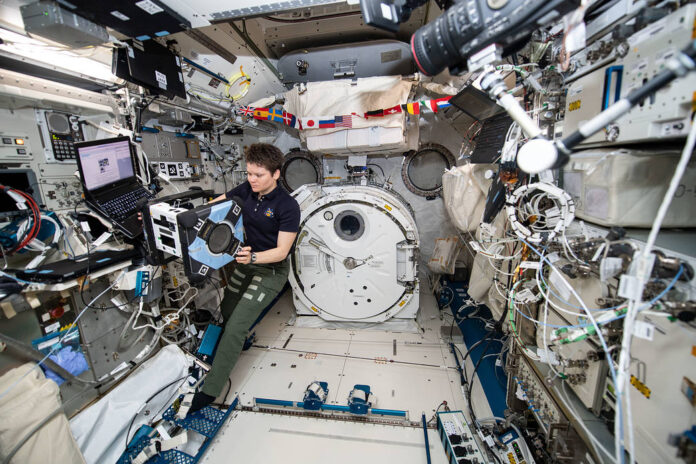
NASA has strengthened its Astrobee program by partnering with Arkisys, Inc., based in Los Alamitos, California, under a reimbursable Space Act Agreement. This collaboration entrusts Arkisys with the ongoing maintenance and operational support of the Astrobee robotic units aboard the International Space Station (ISS). As NASA intensifies preparations for crewed missions to the Moon and Mars, autonomous robotic assistants like Astrobee are poised to assume routine maintenance duties, thereby enhancing the efficiency and safety of future extraterrestrial spacecraft operations.
Expanding Research Horizons Through Strategic Partnerships
In March 2025, NASA issued a call for proposals inviting industry and research entities to contribute to its expanding space technology initiatives. Arkisys was selected to oversee the upkeep of the Astrobee platform, ensuring that this robotic system remains accessible for experimental use in the unique microgravity environment of the ISS. This initiative fosters innovation by enabling partners to test cutting-edge technologies in space, accelerating advancements that could revolutionize space exploration.
Astrobee’s Journey and Achievements in Microgravity
Since its deployment to the ISS in 2018, the Astrobee fleet-comprising three cube-shaped robots named Bumble, Honey, and Queen-has marked significant milestones in robotic space operations. These free-flying units have successfully conducted spacecraft monitoring, simulated alert responses, and collaborated with scientists and industry experts to validate new technologies. Equipped with docking stations for recharging and sophisticated onboard software, Astrobee exemplifies NASA’s commitment to developing autonomous systems that support exploration, maintenance, and long-duration human missions.
The ISS: A Hub of Scientific Innovation and Human Endeavor
The International Space Station stands as a testament to the fusion of scientific inquiry, technological advancement, and human ingenuity. For nearly 25 years, NASA has maintained a continuous American presence aboard this orbiting laboratory, where astronauts have honed the skills necessary for extended space habitation. The ISS serves as a critical platform for research that cannot be replicated on Earth, laying the groundwork for NASA’s ambitious goals of crewed exploration on the Moon and Mars.
Looking Ahead: The Role of Robotics in Future Space Missions
As NASA’s Artemis program aims to return humans to the lunar surface by the late 2020s, robotic systems like Astrobee will play an increasingly vital role. By automating routine tasks and providing real-time environmental monitoring, these robots will free astronauts to focus on complex scientific and exploratory objectives. Moreover, the data and experience gained from Astrobee’s operations aboard the ISS are instrumental in designing next-generation robotic assistants tailored for the harsh conditions of lunar and Martian environments.