
Revolutionizing Robotics: The Challenge of Simulating Deformable Objects
In April, Manycore Tech made headlines with its Hong Kong stock market debut, where its shares skyrocketed nearly fourfold within just two days. After 15 years specializing in home design technology and amassing extensive 3D model data embedded with real-world physical attributes, Manycore became the first among Hangzhou’s “six little dragons” to go public. This milestone spotlighted the growing excitement around “physical AI”-artificial intelligence systems designed to interact seamlessly with the physical environment.
Shortly after, another Hangzhou-based innovator is poised to make waves in a more complex arena: 3D simulation of deformable objects. Unlike Manycore’s focus, this company tackles a notoriously difficult problem where usable data is scarce and computational demands are high.
Introducing Style3D’s SynReal: A Leap Forward in Physics Simulation
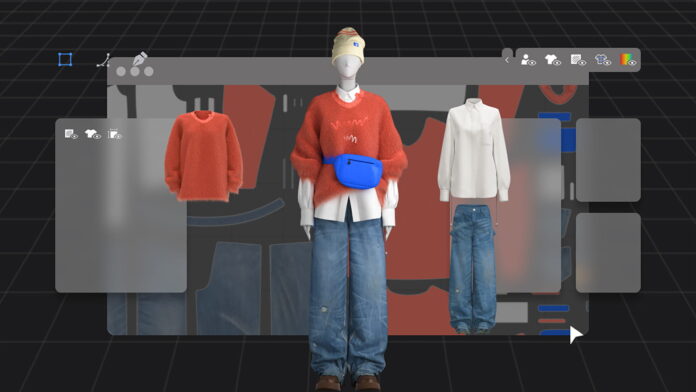
In February, Style3D unveiled SynReal, a proprietary platform combining physics-based simulation with synthetic data generation. With nearly a decade of experience collecting 3D data on flexible materials-especially textiles-Style3D aims to lower the costs of training embodied AI systems while boosting data generation efficiency. Notably, some of the technology behind Galbot’s laundry-folding robot, showcased during China’s Lunar New Year gala, was developed using Style3D’s innovations.
Why Simulating Deformable Objects Remains a Daunting Task
Robots excel at many physical tasks, from lifting heavy objects to running endurance races. Yet, when asked to fold a simple T-shirt, their limitations become apparent. Folding requires precise manipulation: flattening fabric, maintaining a steady grip, and executing even folds-tasks that challenge even the most advanced machines.
Current robotic solutions for folding generally fall into two categories:
- Pre-programmed sequences: These require garments to be pre-positioned and flattened before the robot performs a fixed set of motions.
- Adaptive grasping: Robots learn to handle various garments and adapt to human interference, but this method demands extensive, costly data collection-often taking over six months of manual operation-and struggles to generalize across different environments.
This raises a critical question: can virtual environments that accurately mimic real-world physics be created to train robots more efficiently?
Physical AI and the Dominance of Rigid Body Simulation
Several platforms, including Nvidia Isaac, Microsoft AirSim, and DeepMind’s MuJoCo, are pioneering virtual training grounds for robots. These “physical AI” systems simulate environments governed by real-world physics, enabling robots to learn through interaction. However, most existing datasets and simulations focus on rigid objects-cubes, robotic arms, and other solid shapes-because they are simpler to model and compute.
In reality, many everyday items are deformable: clothing, fruits, plastic bags, and even human skin. Unlike rigid bodies with predictable trajectories, deformable materials respond dynamically to forces. For example, when a robot picks up a shirt, even slight pressure can cause wrinkles, folds, and shifts in tension across thousands of vertices, each with multiple degrees of freedom. This complexity exponentially increases computational requirements.
Moreover, when deformable objects interact-such as fabric folding onto itself-the simulation must account for complex contact dynamics, making accurate modeling even more challenging.
Fashion Technology’s Unexpected Role in Robotics
While robotics and AI labs have traditionally led deformable object simulation research, 3D fashion technology companies like Style3D have quietly advanced the field. Understanding how virtual fabrics drape, flutter, stretch, and fold involves solving intricate physics problems-precisely the expertise Style3D has cultivated over years of research and data collection.
Beyond data accumulation, Style3D’s team has contributed to foundational research in deformable body physics, complex contact modeling, and high-performance numerical methods, publishing at prestigious venues such as SIGGRAPH.
Inside SynReal: A Comprehensive Platform for Embodied Intelligence
SynReal integrates three core components:
- SynReal Sim: A high-fidelity physics simulation engine.
- SynReal Arena: A training environment for embodied AI agents.
- SynReal Core: A model trained on extensive synthetic interaction data.
Together, these modules create virtual worlds governed by realistic physical laws, providing robots with scalable training grounds where millions of interaction scenarios can be simulated per minute. This approach contrasts with traditional human demonstration data collection, which is costly, slow, and often lacks generalizability.
For instance, manual data gathering for a single robotic task can take months and cost hundreds of thousands to millions of RMB, whereas simulation platforms can generate vast, diverse datasets within hours.
SynReal’s Competitive Edge: Precision, Speed, and Stability
Style3D highlights three key advantages of SynReal over existing platforms:
- Enhanced Accuracy: Leveraging extensive rigid and deformable 3D data, SynReal delivers more realistic and complex training environments. Its static and dynamic mechanics calculations reduce errors by nearly 20% compared to Nvidia’s Isaac Sim benchmark.
- Accelerated Performance: By redesigning the simulation workflow around GPU-based parallel computing, SynReal achieves speeds five to ten times faster than Isaac Sim, significantly boosting robot training efficiency.
- Robust Stability: Addressing the challenge of multipoint and multilayer contact, SynReal employs an incremental potential contact (IPC) method-originally presented at SIGGRAPH 2020-to prevent common simulation issues like object clipping, ensuring consistent and reliable learning outcomes in complex scenarios.

The Growing Importance of Synthetic Data in Robotics
As labor costs rise and demand for diverse robot training data surges, scalable, high-quality synthetic datasets become indispensable. Virtual training environments like SynReal enable robots to undergo extensive practice before deployment, reducing costs and improving real-world performance in tasks ranging from laundry folding and cooking to eldercare and companionship.
Cross-Industry Innovation: A Catalyst for Breakthroughs
Historical technological leaps often emerge from cross-sector innovation. Nvidia transitioned from gaming graphics to AI computing; Xiaomi expanded from smartphones to smart home ecosystems. Similarly, Style3D’s deep expertise in fashion technology positions it uniquely to tackle longstanding challenges in embodied intelligence.
By applying its rich deformable 3D model data and simulation know-how, Style3D exemplifies how cross-disciplinary approaches can unlock new frontiers in robotics and AI.