
Tesla’s Q1 2026 Financial Results Highlight Strategic Shift Toward AI and Robotics
Tesla unveiled its financial performance for the first quarter of 2026, shedding light on Elon Musk’s ambitious vision to position the company at the forefront of artificial intelligence and robotics innovation. The automaker reported a net income of $477 million on revenues totaling $22.4 billion for the quarter ending in April 2026. This reflects a 16% growth in revenue and a 17% rise in net profit compared to the same period in 2025, when Tesla posted $409 million in net income on $19.3 billion in revenue. Despite these gains, Tesla’s revenue slightly fell short of Wall Street’s forecast of approximately $22.64 billion.
Robotics Manufacturing Expansion: Preparing for Mass Production
In its earnings presentation, Tesla announced plans to initiate construction of its first large-scale factory dedicated to producing the Optimus humanoid robots starting in Q2 2026. The initial production line, designed to manufacture up to one million robots annually, will replace the existing Model S and Model X assembly lines at the Fremont facility. Meanwhile, Gigafactory Texas is slated to host a second-generation production line engineered for a long-term capacity of 10 million robots per year. This move underscores Tesla’s pivot from traditional vehicle manufacturing toward advanced robotics.
Advancements in AI Computing: Progress on Dojo 3 Supercomputer
Following Musk’s January announcement about resuming development on the Dojo 3 supercomputer-envisioned as a space-based AI computing platform-Tesla confirmed ongoing work on this cutting-edge project. The Dojo 3 aims to significantly enhance Tesla’s AI capabilities, supporting both autonomous driving and robotics applications.
Sales Performance and Market Dynamics
While Tesla reported a 6% year-over-year increase in vehicle sales for Q1 2026, this figure is somewhat skewed by the unusually low sales in Q1 2025, which were impacted by production halts during the Model Y “Juniper” refresh. The previous year’s quarter was also marked by notable controversies surrounding Musk’s leadership and public actions, which may have influenced market sentiment.
Recent Developments: Robotaxi Launch and Regulatory Milestones
Over the past quarter, Tesla introduced its robotaxi service in Dallas and Houston. However, the service’s availability has been limited due to a shortage of vehicles equipped for autonomous operation. On the regulatory front, the Netherlands became the first European nation to approve Tesla’s Full Self-Driving (FSD) Supervised system, a Level 2 advanced driver assistance technology, allowing its use on public roads.
Addressing Cybertruck Sales Challenges
Facing sluggish demand for the Cybertruck, Tesla appears to have adopted an unconventional strategy by allocating some of these vehicles to Musk’s affiliated companies. This approach aims to mitigate inventory buildup while maintaining production momentum for the polarizing electric pickup.
Shifting Focus: From Vehicles to Robotics and Autonomous Mobility
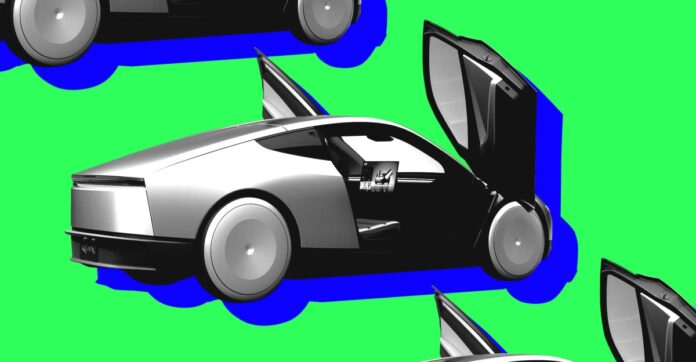
Reflecting its evolving priorities, Tesla has discontinued the Model S and Model X lines to free up manufacturing capacity for the Optimus robot production. Additionally, the Cybercab, a compact two-seater autonomous vehicle prototype, has been spotted undergoing road tests, albeit still equipped with a steering wheel for safety and regulatory compliance.
These developments have fueled speculation that Musk’s enthusiasm for traditional vehicle sales is waning, even though automotive sales continue to constitute the majority of Tesla’s revenue. Notably, recent reports indicate Tesla is revisiting plans to develop a more affordable electric SUV, a project previously shelved two years ago, signaling potential renewed focus on expanding its vehicle lineup.