Inside the Emerging Gig Economy of Robot Training Data
Zeus, a medical student residing in a hillside city in central Nigeria, returns home after a demanding hospital shift. Instead of unwinding, he sets up his ring light, secures his iPhone to his forehead, and begins recording himself performing everyday tasks. With deliberate, slow movements, he folds a sheet on his bed, ensuring his hands remain visible within the camera frame.
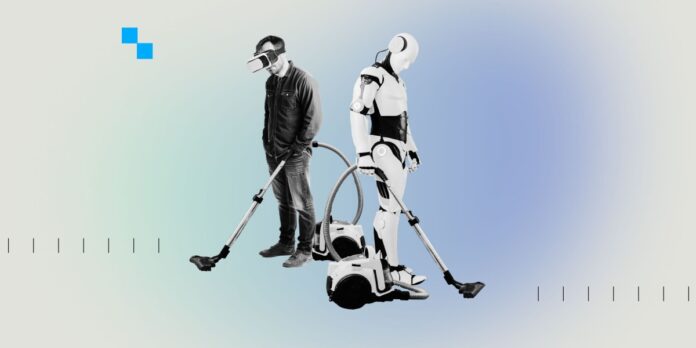
Zeus works as a data contributor for Micro1, a Palo Alto-based American company specializing in gathering real-world video data to support robotics development. As tech giants like Tesla, Figure AI, and Agility Robotics compete to create humanoid robots-machines designed to mimic human appearance and movements in industrial and domestic settings-footage captured by gig workers like Zeus is becoming a critical resource for training these robots.
Global Workforce Powering Robotics Innovation
Micro1 has enlisted thousands of freelancers across over 50 countries, including India, Nigeria, and Argentina, where many young, tech-savvy individuals seek flexible employment. These workers mount smartphones on their heads to film themselves performing household chores such as folding laundry, washing dishes, and cooking. While the compensation is attractive relative to local economies and helps stimulate income, it also raises complex issues concerning privacy, consent, and the unusual nature of the work.
Zeus discovered this opportunity in late 2023 through widespread discussions on LinkedIn and YouTube. “It seemed like a unique chance to contribute data that will help train the robots of tomorrow,” he reflects.
At $15 per hour, the pay is substantial in Nigeria’s challenging economic climate marked by high unemployment. Yet, as an ambitious medical student, Zeus finds the repetitive chore recordings monotonous. “I prefer intellectually stimulating work that challenges me technically,” he admits.
For confidentiality, all workers interviewed requested pseudonyms, as they are not authorized to publicly discuss their roles.
The Robotics Revolution: Learning from Real-World Movement
Building humanoid robots remains a formidable challenge due to the complexity of manipulating physical objects. Inspired by the success of large language models like ChatGPT-which learned language patterns from vast internet text datasets-robotics researchers are now exploring training robots through extensive real-world motion data.
Unlike text, physical interaction data is harder to simulate accurately. While virtual environments can teach robots acrobatic maneuvers, they fall short in replicating the nuanced physics of grasping and moving objects. Consequently, authentic footage of humans performing everyday tasks is invaluable for developing robots capable of working in factories or assisting at home.
In 2025 alone, investors have funneled over $6 billion into humanoid robotics, fueling a surge in demand for real-world training data. Companies like Scale AI and Encord are also mobilizing large networks of data recorders, while platforms such as DoorDash incentivize delivery drivers to film their daily activities. In China, state-run robot training centers employ virtual reality and exoskeleton technology to teach robots household tasks like operating microwaves and cleaning surfaces.
“The appetite for this data is growing exponentially,” says Ali Ansari, CEO of Micro1, estimating that robotics firms spend upwards of $100 million annually on such datasets.
Daily Realities of Data Contributors
Micro1 screens potential workers through an AI system named Zara, which conducts interviews and evaluates sample videos of household chores. Contributors submit weekly footage following strict guidelines-such as maintaining natural movement speeds and keeping hands visible. Both AI algorithms and human reviewers assess the videos for quality before annotating them with detailed labels describing the actions.
Since this method of robot training is still evolving, the criteria for “good” training data remain fluid. Ansari emphasizes the importance of diverse examples to help robots generalize basic navigation and manipulation skills.
However, many contributors find it difficult to generate varied chore content within the confines of their small living spaces. Zeus, for instance, often records himself ironing clothes repeatedly, while Arjun, a tutor in Delhi, spends an hour crafting a 15-minute video, brainstorming new tasks to film.
“There’s only so much you can film at home,” Arjun notes.
Privacy concerns add another layer of complexity. Micro1 instructs workers to avoid showing their faces or revealing personal details like names and birthdates. AI and human moderators then scrub the footage to remove any sensitive information that might have been inadvertently captured.
Despite these precautions, the videos inevitably expose intimate glimpses of workers’ homes, possessions, and daily routines. Identifying and filtering all personal data remains a challenging task.
Balancing Work and Privacy in Shared Spaces
For contributors with families, maintaining privacy is a constant balancing act. Arjun struggles to keep his energetic toddler out of the camera’s view. “It’s tough to work when my daughter is so young,” he says.
Sasha, a former banker turned data recorder in Nigeria, carefully times her laundry sessions in a communal residential area to avoid filming neighbors who watch her with curiosity.
While workers understand their videos train robots, few know the specifics of how their data is stored, used, or shared with third parties, including the robotics companies purchasing it. Micro1 keeps client identities confidential and does not disclose project details to contributors.
“It’s crucial that companies transparently inform workers about the purpose of their data and potential long-term implications,” advises Yasmine Kotturi, a human-centered computing professor at the University of Maryland.
Some workers have requested data deletion via company communication channels, though Micro1 has not publicly addressed these requests.
“Participation is voluntary, and workers can stop anytime,” Ansari states.
Challenges in Data Quality and Quantity
With thousands of individuals performing chores differently across diverse environments, some experts question whether the collected data is sufficiently reliable to train robots safely.
“Our home habits aren’t always safe or ideal,” warns Aaron Prather, a roboticist at ASTM International. “If robots learn from unsafe behaviors, it could lead to accidents.” The vast volume of footage also complicates quality control. However, Ansari notes that videos depicting unsafe methods are rejected, while imperfect movements can help robots learn what to avoid.
Regarding scale, Micro1 reports tens of thousands of hours of footage, while Scale AI has amassed over 100,000 hours of similar data.
Ken Goldberg, a robotics expert at UC Berkeley, cautions that training humanoid robots will require enormous datasets. “Large language models trained on text and images took hundreds of thousands of years of human reading time. Robotics, with its complex joint control, will demand even more data and time,” he explains.
The Human Side of Robot Training
Dattu, an engineering student in a bustling Indian tech hub, juggles university classes with data recording gigs. After a long day, he skips dinner to film himself folding clothes repeatedly on his cramped balcony filled with plants and exercise equipment.
His family finds his routine puzzling, likening it to “space technology.” Friends are amazed that he earns money simply by recording household chores.
Despite the strain of balancing studies and multiple data-related jobs, Dattu feels a sense of purpose. “It’s like contributing to something unique that the world hasn’t seen before,” he says.