- High costs of offshore inspections largely stem from vessel dependence
- Fully autonomous robotic systems aim to eliminate human presence offshore
- Continuous deployment replaces intermittent missions with ongoing data acquisition
Transforming Offshore Operations with Continuous Autonomous Monitoring
Traditional offshore inspections heavily rely on ships and crews, with daily operational expenses reaching up to $100,000. This approach not only inflates costs but also poses significant safety risks and limits scalability.
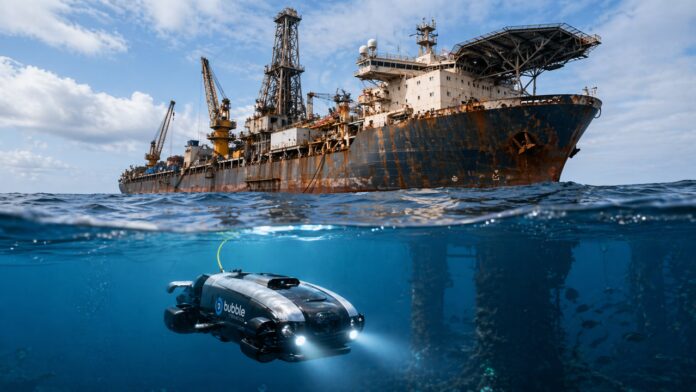
Emerging from a background of expertise at NASA and ETH Zürich, Bubble Robotics is pioneering a shift away from these conventional methods by introducing autonomous robotic platforms designed to remain deployed offshore for extended periods.
In April 2026, the startup announced its emergence from stealth mode, backed by $5 million in pre-seed funding, with a mission to replace costly vessel-based inspections with persistent robotic systems.
From Episodic Missions to Persistent Presence
Bubble Robotics advocates for a paradigm shift: instead of dispatching vessels for short-term inspection trips, their autonomous robots are engineered to stay on-site for months, continuously gathering data and monitoring infrastructure without human intervention.
Jean Crosetti, CEO and Co-Founder of Bubble Robotics, highlights that “vessels and crews account for 80 to 90% of offshore inspection expenses.” By removing this dependency, the company aims to drastically reduce costs, enhance safety, and increase the frequency of inspections, transforming what was once episodic into a continuous process.
Addressing Workforce Shortages and Operational Challenges
The energy sector faces a looming talent gap, with projections indicating a need for an additional 600,000 skilled workers by 2030. Current labor shortages strain operational capacity, making scalable solutions imperative.
Bubble Robotics offers its technology through a robotics-as-a-service (RaaS) model, allowing clients to access advanced inspection capabilities without upfront capital investment or the logistical complexities of offshore mobilization. This approach not only lowers costs but also mitigates workforce constraints and enables more frequent, reliable monitoring.
Enhancing Maritime Security Through Autonomous Surveillance
Beyond industrial inspections, maritime security remains a critical concern. Vital subsea infrastructure such as communication cables, ports, and energy installations are increasingly vulnerable to threats but often lack real-time monitoring.
Persistent autonomous systems provide a promising solution by continuously detecting anomalies and safeguarding assets without the need for human crews, leveraging recent advancements in edge AI and satellite communications.
Technological Hurdles and Market Interest
While the concept of long-duration autonomous operation in harsh marine environments is compelling, challenges remain. The ocean’s corrosive saltwater, unpredictable weather, and biological fouling have historically hindered marine technology deployments.
Bubble Robotics has secured letters of intent exceeding $4 million, signaling strong market interest. However, the true test will be the robots’ performance during extended deployments under real-world conditions.
The Ocean’s Central Role in Global Sustainability and Trade
The ocean is pivotal to the global energy transition, international commerce, and climate resilience efforts. Despite this, many ambitious marine technologies have struggled to overcome environmental challenges.
Bubble Robotics presents a bold vision for persistent autonomy at sea, but this promise requires rigorous validation beyond initial announcements.