
Unlocking Nature’s Mastery of Disguise Through Microbial Engineering
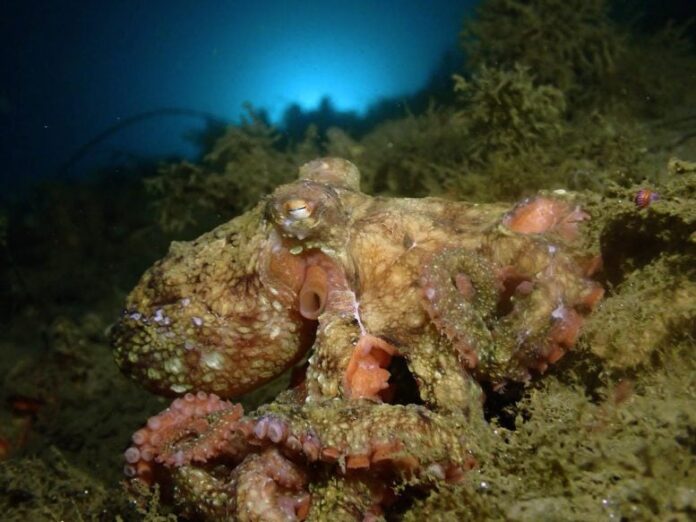
Scientists at the University of California San Diego have made a groundbreaking advance in decoding one of nature’s most fascinating phenomena: the ability of octopuses and other cephalopods to vanish into their surroundings. This remarkable camouflage is powered by a complex pigment called xanthommatin, which enables rapid color and texture shifts on their skin.
The Challenge of Replicating Nature’s Color-Shifting Pigment
For decades, researchers and defense technologists have been captivated by xanthommatin’s unique optical properties. However, synthesizing this pigment in laboratory settings has proven to be a formidable challenge due to its intricate chemical structure and low yields from traditional methods.
Harnessing Bacteria to Mass-Produce Xanthommatin
A multidisciplinary team at UC San Diego’s Scripps Institution of Oceanography has pioneered a novel bioengineering approach that enables bacteria to manufacture xanthommatin at unprecedented scales. By genetically modifying microbes, the researchers achieved pigment production levels up to 1,000 times greater than previous attempts, paving the way for practical applications ranging from eco-friendly dyes to advanced UV-protective coatings and optoelectronic devices.
Innovative Genetic Strategies to Boost Pigment Synthesis
Bradley Moore, a marine chemist affiliated with both Scripps Oceanography and the Skaggs School of Pharmacy, explained, “Our team developed a revolutionary technique to produce xanthommatin inside bacteria, marking the first time this pigment has been biosynthesized efficiently.” This breakthrough not only sheds light on the biochemical underpinnings of cephalopod camouflage but also opens doors to sustainable manufacturing of bio-based materials, reducing reliance on fossil fuels.
Beyond the Ocean: Xanthommatin’s Role in Insect Coloration
Interestingly, xanthommatin is not exclusive to marine life. It also contributes to the vivid yellows and oranges of monarch butterfly wings and the striking reds found in dragonflies and certain fly species. Despite its widespread natural occurrence, producing xanthommatin synthetically has remained laborious and inefficient-until now.
Linking Microbial Survival to Pigment Production
Leah Bushin, lead author and now a professor at Stanford University, described the team’s ingenious method: “We engineered bacteria so that their growth depends directly on producing xanthommatin.” By creating a genetically impaired bacterial strain that could only thrive by synthesizing both the pigment and formic acid-a compound essential for cell growth-the researchers established a self-reinforcing cycle that drives high-yield pigment biosynthesis.
Accelerating Evolution with Robotics and Computational Design
To optimize pigment output further, the team employed robotic systems and advanced bioinformatics tools developed by Adam Feist’s lab at UC San Diego’s Jacobs School of Engineering. This integration of automation and computational biology enabled rapid identification of beneficial genetic mutations, allowing bacteria to efficiently convert a single nutrient source into large quantities of xanthommatin.
Feist remarked, “This project exemplifies how combining engineering, biology, and chemistry with cutting-edge automation can fast-track the development of sustainable biomanufacturing processes.”
Record-Breaking Yields and Future Prospects
Previous laboratory methods yielded only about 5 milligrams of pigment per liter of culture. The new bioengineered system produces between 1 and 3 grams per liter, representing a thousandfold increase. This dramatic improvement was a milestone moment for the researchers, who envision broad industrial adoption of this technology.
Applications Spanning Defense, Cosmetics, and Smart Materials
The potential uses for xanthommatin extend well beyond camouflage. The U.S. Department of Defense is exploring its natural concealment properties, while cosmetic companies are investigating its potential as a sustainable, non-toxic ingredient for sunscreens. Additionally, the pigment’s unique optical characteristics make it a promising candidate for smart coatings, color-adaptive paints, and environmental sensing technologies.
Moore emphasized the importance of sustainable innovation: “As the global population approaches 8 billion, rethinking material production is critical. Our work, supported by federal funding, unlocks a pathway to bio-inspired materials that benefit both people and the planet.”