
Expanding Roles of Ground Robots in Modern Conflict
Increasing Deployment Amidst the Russo-Ukrainian War
While unmanned aerial vehicles dominate the skies with hundreds of thousands of sorties monthly, the use of ground robots in the Russo-Ukrainian conflict has been comparatively restrained. Ukraine reports conducting thousands of ground robot missions each month, a figure that has recently seen a notable rise. This uptick reflects a strategic shift toward employing robots for logistical tasks such as supply delivery and casualty evacuation, minimizing the risk to human personnel from hostile drone activity.
Combat Applications and Technological Innovations
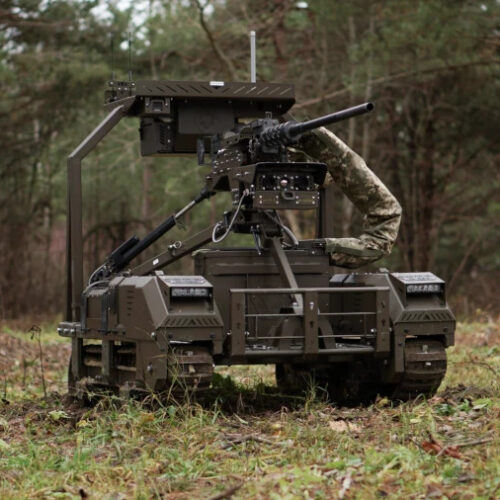
Beyond support roles, Ukrainian forces have begun integrating ground robots into frontline combat operations. These machines are often outfitted with weaponry like machine guns and grenade launchers or configured as mobile explosive devices, effectively serving as autonomous or remotely operated combatants. A prominent example is the Droid TW 12.7, engineered by the Ukrainian firm DevDroid. This tracked robot features a remotely controlled turret armed with an M2 Browning machine gun and can traverse distances up to 25 kilometers at a pace comparable to a human walking speed. Operators maintain control via radio communication, with the option to integrate Starlink satellite connectivity for enhanced command and control capabilities.
Operational Challenges in Hostile Environments
Despite their growing presence, ground robots face significant obstacles on the battlefield. Terrain damage and debris often hinder their mobility, while enemy drones and electronic warfare tactics threaten their operational integrity. For instance, a deputy commander from Ukraine’s 38th Marine Brigade revealed that robotic units tasked with evacuating wounded soldiers succeeded in only one out of five attempts, largely due to these environmental and tactical difficulties.
Communication Vulnerabilities and Electronic Warfare
Similar to drones, ground robots are susceptible to communication disruptions caused by signal interference and jamming efforts by adversaries. The Lowy Institute highlights that such electronic warfare challenges complicate the effective deployment of robotic units. Meanwhile, Russian forces have also escalated their use of robotic systems during the winter of 2025-2026, intensifying the technological contest on the ground.
Strategic Implications and Future Prospects
The surge in ground robot utilization represents a tactical adaptation to the heightened dangers posed by drone-centric warfare. While these robots may not yet offer a decisive technological breakthrough, they provide commanders with valuable tools to reduce human exposure to frontline hazards. The commander of Ukraine’s 3rd Army Corps has projected that integrating more robotic systems could allow a reduction of infantry personnel by up to 30% by the end of 2026. Achieving this would signify a substantial evolution in the role of robotics on the battlefield, underscoring their growing importance in modern military operations.