
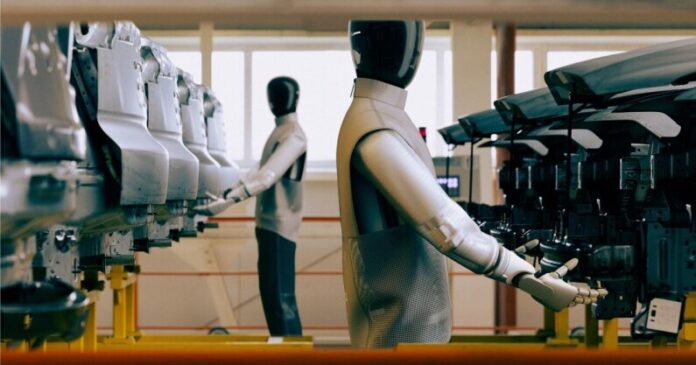
Europe’s Quiet Revolution in Humanoid Robotics: A New Paradigm for the Future
While Elon Musk’s recent Optimus showcase at Tesla’s We Robot event reaffirmed the United States’ leadership in humanoid robotics, and Asia continues to impress with China’s rapid advancements alongside Japan and South Korea’s rich robotics heritage, a subtler yet potentially transformative movement is unfolding in Europe. Unlike the race for flashy prototypes or headline-grabbing budgets, Europe’s strength lies in its methodical, consistent approach-positioning the continent as a formidable contender in the next phase of humanoid robotics development.
Harnessing Regulation as a Catalyst for Innovation
In many innovation circles, regulations are often perceived as obstacles that stifle growth and slow down progress. This is a common sentiment in Silicon Valley, where regulatory frameworks are frequently seen as bureaucratic hurdles. However, Europe is rewriting this narrative by embracing regulation as a strategic advantage, particularly in the realms of artificial intelligence and robotics.
The European Union has pioneered comprehensive legislation that clearly defines the deployment of high-risk AI systems, including humanoid robots. This regulatory clarity not only sets a global precedent but also prepares European companies to adapt swiftly as other regions adopt similar frameworks, even if those are less stringent. For investors and industrial collaborators, this transparency reduces uncertainty and encourages more confident commitments, effectively de-risking the robotics sector.
Several key regulatory updates underpin this environment:
- The Product Liability Directive now explicitly covers AI and software components, fostering safer design and reducing legal ambiguities.
- The General Product Safety Regulation harmonizes safety standards across international markets, smoothing the path for product entry and acceptance.
- The Machinery Regulation establishes clearer certification processes tailored for robotic systems, streamlining compliance.
These frameworks collectively create a predictable and coherent legal landscape, providing the humanoid robotics industry with the stability it needs to thrive.
From Demonstrations to Real-World Integration
Unlike China’s state-driven manufacturing model or the US’s reliance on tech giants, Europe’s robotics ecosystem thrives on modular collaboration. Networks of startups and research institutions, often supported by EU initiatives such as RI4EU and the EIC Accelerator, foster innovation through shared resources, pilot programs, and collaborative R&D.
Europe’s unique industrial geography offers a distinct advantage. The close proximity of logistics centers, manufacturing hubs, and retail networks accelerates iterative development by aligning robotic solutions with tangible operational challenges. According to McKinsey, payroll expenses in critical European sectors like logistics and retail exceed $1.7 trillion (EUR 1.55 trillion), highlighting a vast opportunity for automation-driven efficiency gains.
This pragmatic approach is exemplified by Humanoid, a UK-based robotics company founded in 2013. Rather than chasing spectacle, Humanoid focuses on embedding robotics seamlessly into existing workflows. Their modular design-featuring a wheeled platform optimized for logistics-benefits from continuous simulation and real-world feedback. This grounded philosophy is attracting significant US investment into European robotics, as evidenced by Neura Robotics’ €120 million funding round in early 2025. Investors are increasingly prioritizing credible deployment strategies over speculative technology demonstrations.

Designing Robots for Tomorrow’s Workforce
European regulations embed core values that shape the ethical development and deployment of humanoid robots. The AI Act mandates stringent safety and transparency standards for high-risk systems operating in workplaces, healthcare, and public spaces, fostering trust essential for adoption in sensitive environments.
This regulatory framework goes beyond risk mitigation by promoting ethical co-development and traceability, ensuring robots are perceived as collaborative partners rather than threats. European startups emphasize augmentation over replacement, offering a humane vision of automation that contrasts with narratives prevalent in the US, where robots are often seen as substitutes for human labor.
For example, humanoid robots can relieve workers from monotonous tasks such as repetitive box handling in warehouses, enabling employees to focus on more meaningful and creative responsibilities. This approach not only enhances productivity but also improves job satisfaction and worker well-being.
Environments like logistics centers and healthcare facilities demand precision and reliability, with little tolerance for errors. Robots in these settings must integrate smoothly into daily operations-responding at appropriate speeds, handling objects predictably, and remaining unobtrusive. Such nuanced integration requires a development model informed by real-world user needs, a hallmark of Europe’s cautious and user-centric robotics strategy.
Building Strategic Autonomy and Resilient Supply Chains
Despite Europe’s strengths, challenges remain-particularly in supply chain dependencies. By 2025, China is projected to control approximately 63% of the humanoid robotics supply chain, spanning critical components like rare-earth magnets and actuators. To mitigate this reliance, European original equipment manufacturers (OEMs) are increasingly collaborating with humanoid developers to co-create hardware solutions early in the design process.
While the US leads in AI software, fully integrated robotics stacks remain scarce globally. Europe, still reliant on imports, must assertively navigate this landscape by fostering local manufacturing, diversifying sourcing options, and forging trade partnerships beyond China’s sphere of influence.
Calls for supply chain diversification are intensifying. In June 2025, Benjamin Krieger of the European Association of Automotive Suppliers (CLEPA) emphasized the urgency of strengthening EU supply chains in response to China’s export restrictions on rare-earth materials. Similar concerns are echoed by analysts in the US, underscoring the global nature of this challenge.
Charting the Path Forward
The future of humanoid robotics will not be decided by speed alone but by the quality and reliability of the solutions developed. To succeed, Europe must enhance funding and support mechanisms that facilitate the transition from pilot projects to industrial-scale deployments, focusing on higher Technology Readiness Levels (TRLs).
Early-stage industrial partnerships are crucial, ideally beginning during prototyping rather than post-development. Additionally, regulatory frameworks should maintain safety without impeding certification processes, enabling faster market entry.
Success will not be measured by patent counts but by the ability to create systems that integrate safely into human environments, earn public trust, and address critical concerns such as privacy, transparency, and everyday safety.
Europe’s strength lies in its interdisciplinary collaboration, ethical technology design, and pragmatic industrial approach. Rather than emulating Silicon Valley or Shenzhen, the continent should leverage these unique assets to build a humanoid robotics ecosystem that is sustainable, trustworthy, and human-centered.
This endeavor is a marathon, not a sprint-a long-term investment in infrastructure and innovation. If executed well, Europe could pioneer a future workforce where humans and robots collaborate harmoniously, transforming industries and society one robot at a time.