
Transforming Industrial Sulfur Waste into Innovative 4D-Printed Smart Materials
Each year, the petroleum refining industry generates millions of tons of sulfur as a by-product, often discarded without much consideration. However, a pioneering research team from South Korea has reimagined this abundant yellow element, converting it into the cornerstone of cutting-edge technology: recyclable, self-responsive structures fabricated through 4D printing.
Introducing Sulfur-Based Polymers with Dynamic Capabilities
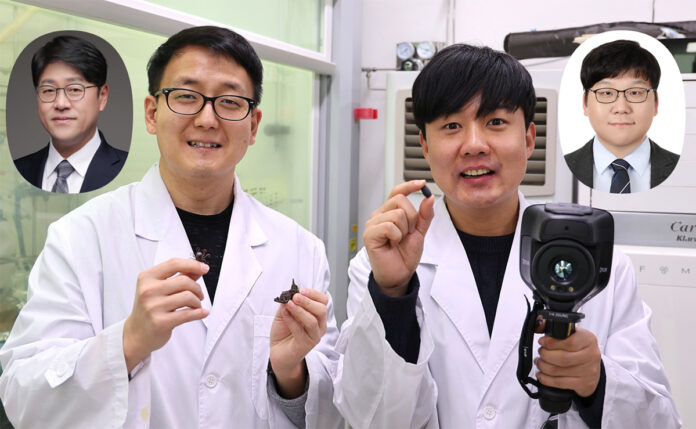
Under the leadership of Dr. Dong-Gyun Kim at the Korea Research Institute of Chemical Technology, alongside Professors Jeong Jae Wie from Hanyang University and Yong Seok Kim from Sejong University, the group has unveiled the first-ever 4D printing technique utilizing sulfur-enriched polymers. Unlike conventional plastics, these innovative materials exhibit responsiveness to external stimuli such as heat, light, and magnetic fields, endowing them with “smart” functionalities.
Beyond Recycling: Multifunctional Applications of Sulfur Polymers
These sulfur-based plastics are far more than a sustainable recycling solution. Their unique ability to transmit infrared radiation makes them ideal candidates for advanced optical components like camera lenses. Additionally, their affinity for heavy metals positions them as promising agents in water purification technologies. Crucially, these polymers are fully recyclable, aligning seamlessly with the principles of a circular economy and sustainable manufacturing.
Overcoming Challenges in 3D Printing Sulfur Polymers
Historically, sulfur-rich plastics have been too rigid and brittle for 3D printing due to their densely cross-linked molecular networks, which hindered their flow and moldability. The breakthrough came when the researchers engineered a more pliable polymer architecture, enabling the material to be extruded into intricate shapes with ease. By fine-tuning sulfur content, they imparted shape-memory properties, allowing the printed objects to autonomously bend, twist, or morph when exposed to heat or light.
Advanced Features: Laser Welding and Magnetic Soft Robotics
A remarkable innovation is the use of near-infrared laser irradiation to “weld” polymer components together without adhesives. Within eight seconds, the polymer’s internal bonds temporarily break and reform, fusing parts seamlessly-akin to assembling modular pieces with light-activated self-assembly.
Incorporating magnetic particles into the polymer matrix, the team fabricated soft robots smaller than one centimeter. These miniature devices can navigate and perform tasks autonomously under external magnetic fields. By merging shape-memory effects with magnetic responsiveness, these tiny machines can crawl, twist, or swim without relying on batteries or wiring, showcasing a new frontier in soft robotics.
Achieving a Sustainable, Closed-Loop Production Cycle
One of the most compelling aspects of this technology is its sustainability. After fulfilling their function, the printed structures can be melted and reprocessed into new feedstock, enabling 100% recyclability. This closed-loop system eliminates waste and landfill accumulation, embodying a truly eco-friendly manufacturing paradigm.
“This research marks the inaugural example of converting industrial sulfur waste into sophisticated robotic materials,” explains Dr. Kim. “Smart, autonomous, and recyclable materials like these are poised to revolutionize future soft robotics and automation sectors.”
The Future Potential of Sulfur in Advanced Technologies
Once dismissed as mere industrial refuse, sulfur is now emerging as a vital resource for next-generation technologies. From enhancing optical devices and purifying water to enabling compact, battery-free soft robots and sustainable manufacturing, this elemental resource is poised to play a transformative role in the technological landscape of tomorrow.