Published: Dec 9, 2025
Estimated Reading Time: 4 minutes
XPeng’s Vision for a Decade of Physical AI: Autonomous Vehicles, Humanoid Robots, and Flying Cars
At the forefront of technological innovation, XPeng has unveiled an ambitious ten-year strategy centered on “Physical AI”-a transformative concept that integrates artificial intelligence directly with the physical world. This vision encompasses Level 4 (L4) autonomous driving, advanced humanoid robotics, and consumer-grade flying vehicles, all designed to seamlessly blend digital intelligence with tangible environments.
Reimagining Industrial Progress: From Scale and Network Effects to the Agent Effect
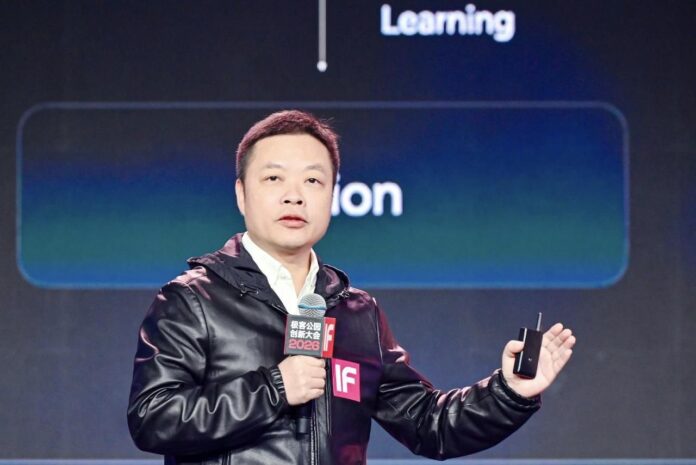
During the 2026 GeekPark Innovation Conference, XPeng’s chairman and CEO, He Xiaopeng, delivered a compelling keynote outlining a paradigm shift in technology. He described the transition from the digital era, dominated by network effects, to a new phase driven by autonomous intelligent agents-what he terms the “Agent Effect.”
Historically, industrial growth has been propelled by two main forces:
- Scale Effect: Increasing production volume to reduce costs in the physical manufacturing world.
- Network Effect: Expanding user bases exponentially to enhance value in the internet age.
Looking ahead, the “Agent Effect” will define the Physical AI era, where autonomous systems-robots, vehicles, and intelligent devices-interact and evolve, generating compounding capabilities beyond human scale.
Emerging Phenomena in Autonomous Systems
He Xiaopeng highlighted two key behaviors already observable in XPeng’s autonomous vehicle technology:
- Black Hole Effect: AI systems continuously ingest and distill vast amounts of data, leading to emergent, unforeseen abilities. For instance, XPeng’s autonomous driving model exhibits intuitive behaviors at intersections, such as cautiously advancing without explicit programming.
- Ant Colony Effect: Decentralized agents communicate locally to adapt and coordinate efficiently, similar to how ant colonies operate without centralized control.
This shift will redefine business models. While traditional enterprises relied on massive human labor and tools, and internet companies scaled through servers and users, future organizations will expand by integrating millions of AI agents alongside human teams and powerful computing resources. As He notes, “Humans learn by experiencing, not by reading manuals.”
Advancing Autonomous Driving: The VLA Model and Upcoming Vehicle Launches
To overcome the constraints of Level 2 assisted driving, XPeng has developed the Video-Language-Action (VLA) model, which grounds AI perception and decision-making directly in real-world sensory data rather than relying solely on language-based reasoning. This approach enables more fluid and natural control loops for perception, planning, and action.
Within the next five years, XPeng anticipates two primary categories of autonomous vehicles will emerge:
- Driverless Robotaxis: Initially deployed on a limited scale, these vehicles will operate fully autonomously in urban environments.
- L4 Consumer Vehicles: Cars capable of near-complete automation but still requiring a human driver for oversight.
XPeng plans to introduce three L4 prototype vehicles by 2019, alongside a new Robo series and expanded Robotaxi pilots tailored for urban, indoor, and residential parking scenarios.
Why Humanoid Robots Are Central to XPeng’s Physical AI Strategy: The IRON Project
XPeng’s flagship robotics initiative, the IRON humanoid robot, embodies the company’s belief that humanoid forms are essential for embodied AI to thrive. Several factors support this direction:
- Environmental Compatibility: Human environments-such as narrow corridors, door handles, and everyday tools-are designed for human anatomy, making humanoid robots naturally suited to navigate and interact within them.
- Rich Data Availability: Extensive datasets on human motion and behavior are uniquely accessible for humanoid robotics, enabling more precise and adaptive movement.
- Tool Interoperability: Thousands of tools and devices are ergonomically designed for human use, allowing humanoid robots to operate them without extensive redesign.
After developing seven robot generations, including four quadrupeds, XPeng found that non-humanoid forms lacked versatility in real-world home environments. IRON features articulated shoulders, a multi-joint waist system, and a lifelike gait. The company is advancing toward “zero gravity control posture” and generative movement planning across 70-80 joints-critical milestones for mass-market humanoid robotics.
XPeng aims to mass-produce its next-generation robot motion control system by 2025, supported by a comprehensive software and hardware stack. The company’s R&D investment is projected to reach 11 billion RMB by that year.
Expanding Horizons: XPeng’s Foray into Consumer Flying Vehicles
Building on over a decade of research, XPeng is also pioneering low-altitude aerial vehicles designed for everyday consumers.
Two key platforms have been introduced:
- Land Aircraft Carrier: A modular flying vehicle with a foldable plane stored in the trunk, ideal for short tourism flights under 20 minutes. Longer-range variants are currently in development.
- A868 eVTOL: An electric vertical takeoff and landing aircraft designed for urban and intercity transport, capable of carrying multiple passengers. He Xiaopeng envisions a future where flying real aircraft becomes commonplace for many people.
Looking Ahead: The Next Ten Years of Physical AI Innovation
XPeng aspires to become a global leader in embodied intelligence, integrating cars, robots, and aircraft into a cohesive ecosystem of intelligent agents powered by on-device computing.
The IRON robot is equipped with three proprietary Turing chips delivering 2,250 trillion operations per second (TOPS), running multiple XPeng operating systems (VLT, VLA, VLM) to achieve high-level autonomy without dependence on cloud connectivity.
Initial deployments in China will focus on commercial applications, while industrial use cases will take precedence in Europe and the United States. Once cost and reliability benchmarks are met, XPeng plans to introduce household robots to the consumer market.
In summary, the forthcoming decade promises a surge of Physical AI breakthroughs that will revolutionize how humans work, travel, and live, ushering in an era where intelligent machines seamlessly integrate with our physical world.