It is more difficult than it seems to grip and release irregular surfaces.
Nature has inspired some of the most innovative tech. From color-changing materials to materials that work like
Cephalopod skin on a tiny biomimetic robotic that looks and moves
The extraordinary adaptations made by some organisms, like a cockroachhave improved our technological capabilities. Now, the octopus lends an arm – or a sucker.
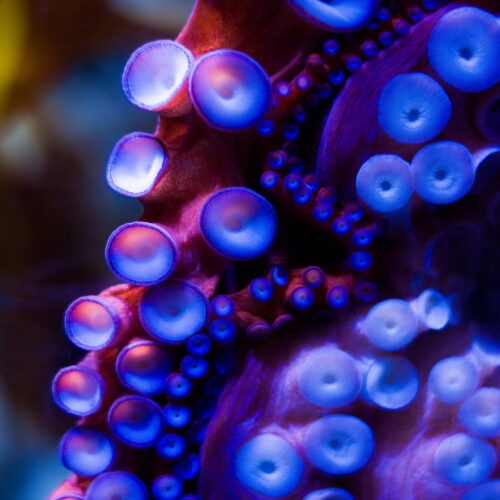
Octopus suckers have an incredible adhesion strength that could be a great asset for soft robots who need to pick up objects and hold them. Artificial suction cups are unable to adhere to irregular surfaces like rocks and shells. Cephalopods like octopuses, squids and squids have evolved biological suckers which can adapt to any surface and attach. Tianqi Y??e and a team of Bristol University researchers have developed robotic suckers that are more realistic than ever.
The secretion of mucus by biological suckers gives them an edge, as it allows them to adhere better to irregular surfaces. Yue has developed a way to make robotic suckers use water instead mucus.
“Organisms dexterously shape their soft body in order to conform to the substrate,” Yue’s team explained in a
PNAS published a study on the topic. “They then use the in-sucker Mechanoreceptors (mechanosensors) to perceive the leakage of suction and secrete a sufficient amount of mucus for an effective seal.”
Do you want to be an Octopus?
The suckers on the arms of an Octopus
When their gripping things
Mechanoreceptor cells detect stimuli, such as the texture on a surface. They send a signal to the brain, telling it how to deform the sucker to adhere to the surface with the least amount of leakage possible. Mechanoreceptors tell suckers how much to produce in order to achieve optimal grip. Muscles contract in order to reduce the water pressure within the sucker. The muscles of an octopus release tension to allow it to detach itself from an object.
It’s not the first time that suction cups have been inspired by highly adaptable octopus suckers. Some models use pressurized chambers that push against the surface and conform to it. Some models have focused on mimicking the morphology and size of a biological sucker. This included giving the suckers
Microdenticlesare tiny tooth-like projections that octopus suckers have to give them a better grip.
Previous artificial conformation methods have been successful, but they are prone to leakage due to gaps between the sucker’s surface and the surface to which it is trying to adhere. They also require vacuum pumps to work. Yue and his group created a sucker which was mechanically and morphologically similar to an octopus.
The sucker is a muscular structure with extreme flexibility. This allows it to conform to objects without leaking, contract when gripping an object, and release tension upon letting go. Researchers were inspired to create suckers with a silicone sponge on the inside and soft silicone pads on the outside.
Yue believed that the solution to the problems with previous models would be to create a sucker that mimicked the mucus secretion from octopus sucker. This really suckers
Cephalopod sucking was thought to be the result of their soft, flexible bodies that can deform easily in order to adapt to any surface they need to grip. Yue’s robo-suckers incorporated mucus secretion, which was largely overlooked.
It is known that mollusk mucus has a viscosity five times greater than water. Yue’s suckers use an artificial fluidic seal that mimics the secretions released from glands on the biological suckers. This liquid seal virtually eliminates gaps between the sucker surface and the surface to which it is adhering. Water may not be as strong as octopus sludge, but it is the best alternative for a robot that will be immersed in the water to explore underwater caves or the bottom of the sea.
Even in the absence of actual mucus or water, suction cups with an attached water seal were found to hold onto objects 55 times longer than those that did not.
The sucker’s gap between it and the surface to which it adheres is a problem. The sucker will lose grip faster if the gaps are larger. The artificial suckers try to conform as much as mechanically possible to a surface. The artificial fluidic system will then seal any gaps that may have been created. A syringe would pump the air through a tube directly connected to the suction cups so that it could be reset every time.
The silicone sucker on the robotic arm was able, when faced with surfaces such as rocks or plastic figures with rough textures, to adapt to them, and hold their grip for long periods with little leakage.
The[Our] suction system demonstrates the great potential for liquid regulation to improve suction adaptation, and shows strong adaptive sucction on challenging dry surfaces.
“It enables a unique, low-cost, clean and powerful soft adhesion strategy for next-generation robots.”“It allows a unique, clean, low-cost soft adhesion strategy that is powerful for next-generation robotics.”
With the technology creating such eerily real suckers, be on the lookout for tentacles filled with them.
PNAS. DOI:
10.1073/pnas.2314359121
Elizabeth Rayne writes. Her work has been published on SYFY WIRE and Space.com as well as Live Science, Grunge Den of Geek and Forbidden futures. She hides outside New York City, with her parrot Lestat. When she’s not writing, she’s either drawing, cosplaying, or shapeshifting into a character no one has ever heard of. Follow her on Instagram @quothravenrayne and Threads.
Comments