Breakthrough in Energy-Efficient Computing: A Hybrid Chip Combining Digital and Microwave Technologies
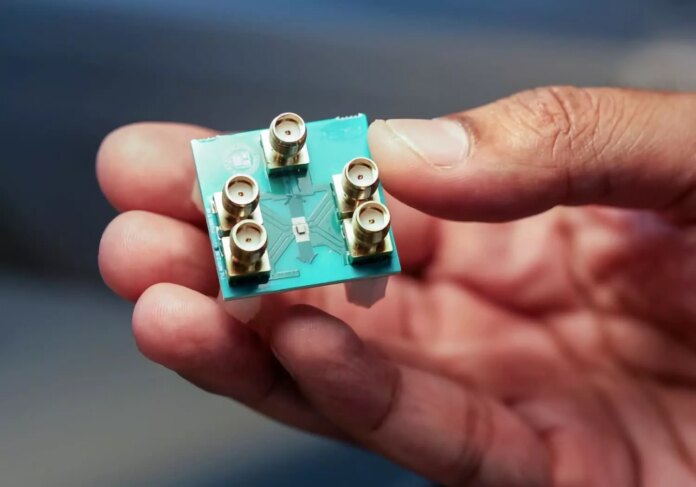
Researchers at Cornell University have unveiled a pioneering chip that integrates conventional digital processing with a microwave network, enabling it to execute neural network functions with remarkable energy efficiency. This innovative design consumes less than 200 milliwatts, setting a new benchmark for low-power artificial intelligence hardware.
Redefining Neural Network Hardware Architecture
Unlike traditional neural network processors that rely solely on digital circuits, this novel chip leverages microwave signal processing to perform complex computations. By fusing these two technologies, the device challenges the conventional paradigms of hardware design, offering a fresh approach to accelerating AI workloads while minimizing power consumption.
Energy Efficiency and Performance Advantages
With power usage under 200 milliwatts, this chip significantly outperforms many existing AI accelerators, which often require several watts to operate. This reduction in energy demand is crucial for applications in edge computing, where power availability is limited, such as in autonomous drones, wearable devices, and remote sensors.
Potential Applications and Future Impact
The hybrid chip’s unique architecture opens doors for deployment in environments where both computational speed and energy conservation are critical. For instance, smart home devices and Internet of Things (IoT) sensors could benefit from enhanced processing capabilities without compromising battery life. Additionally, this technology could inspire further research into combining analog and digital methods to optimize AI hardware.
Looking Ahead: The Evolution of AI Hardware
As AI continues to permeate various industries, the demand for efficient, high-performance hardware grows. This Cornell innovation exemplifies how merging different technological domains can yield solutions that are both powerful and sustainable. Future iterations may incorporate advanced materials or quantum components to push the boundaries even further.