NOAA Deploys Autonomous Vessels to Enhance Hurricane Research
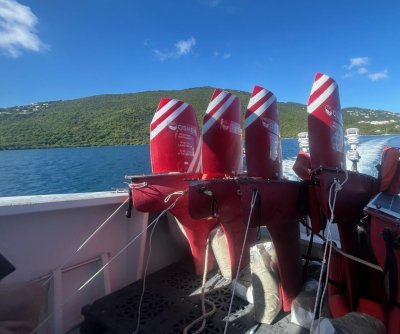
In a groundbreaking initiative to deepen the understanding of hurricane formation and dynamics, the National Oceanic and Atmospheric Administration (NOAA) recently launched a fleet of five unmanned research vessels near the U.S. Virgin Islands. This deployment marks a significant advancement in hurricane data acquisition, aiming to improve forecasting accuracy and storm intensity predictions.
Collaborative Effort to Advance Hurricane Science
NOAA is partnering with the University of Southern Mississippi and the marine robotics company Oshen to spearhead this innovative project. The team plans to introduce additional autonomous vessels, known as C-Stars, later this fall, strategically timed ahead of the peak hurricane season. These robotic platforms are designed to operate independently, providing continuous, real-time data crucial for meteorological analysis.
How C-Stars Revolutionize Ocean-Atmosphere Data Collection
C-Stars harness renewable energy through solar panels and wind propulsion, supplemented by compact motors that enable precise maneuvering in challenging marine environments. Equipped with advanced sensors, these vessels monitor the critical interface between the ocean surface and the lower atmosphere-a zone pivotal to understanding hurricane intensification. The collected data is transmitted back to researchers, who utilize it to generate detailed visualizations and high-resolution imagery for comprehensive storm analysis.
Expanding the Role of Autonomous Marine Technology
While unmanned vessels have long been employed for tasks such as seabed mapping, marine wildlife monitoring, and fisheries management, their application in hurricane research represents a novel frontier. Beyond storm tracking, similar technologies are instrumental in assessing tornado aftermaths and predicting harmful algal blooms, showcasing their versatility in environmental monitoring.
Implications for Future Hurricane Forecasting
Greg Foltz, an oceanographer at NOAA’s Atlantic Oceanographic and Meteorological Laboratory, emphasizes the importance of these robotic platforms: “Capturing detailed weather data at the ocean-atmosphere boundary is essential for refining our models of hurricane strength and behavior.” With climate change contributing to more frequent and intense hurricanes-NOAA reports a 30% increase in major hurricanes over the past two decades-such technological innovations are critical for enhancing preparedness and mitigating risks.