Scott LaValley on the Future of Humanoid Robotics: Challenges and New Directions
From Disney Imagineering to Robotics Innovation
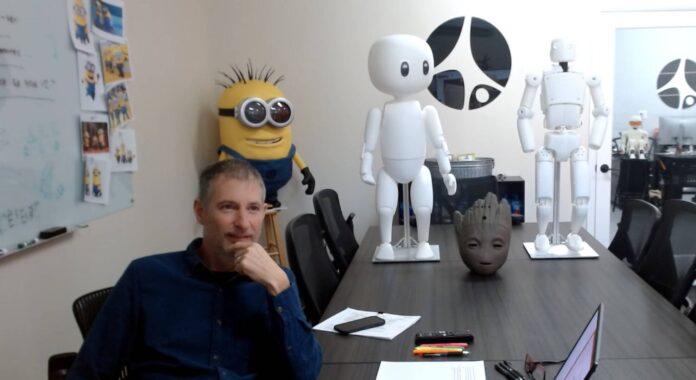
Scott LaValley, founder and CEO of Cartwheel Robotics, has played a pivotal role in shaping the humanoid robotics landscape. With a rich background that includes leadership roles at Boston Dynamics and Disney Imagineering, LaValley has been at the forefront of developing legged robotic platforms. His experience spans from working on Boston Dynamics’ humanoid robots like PETMAN and Atlas to pioneering animatronic characters such as Baby Groot at Disney.
Inspiring Industry Giants and Shaping Visions
LaValley recalls a memorable encounter with Elon Musk, who visited him with his children to explore the possibility of launching a humanoid robotics team. “He spent half a day with me at Disney, watching Baby Groot and asking if he should start his own humanoid robotics project,” LaValley shared. He encouraged Musk, questioning why such an endeavor hadn’t already begun. This interaction hints at LaValley’s influence on Musk’s ambitions in the humanoid robotics sector.
Market Realities and the Hype Surrounding Humanoids
Despite the excitement, LaValley remains skeptical about the current trajectory of humanoid robotics. He critiques the industry’s tendency to prioritize flashy demonstrations over practical, scalable solutions. “Many companies are showcasing carefully curated demos to attract investors, but the real-world applications and efficiencies are still lacking,” he explains.
Financial forecasts, such as Morgan Stanley’s projection of $5 trillion in robot revenue by 2050, and Elon Musk’s ambitious prediction of billions of humanoid robots by 2040, fuel high expectations. However, LaValley cautions that these numbers may be overly optimistic given the technical and social hurdles yet to be overcome.
Technical and Social Barriers to Adoption
LaValley emphasizes that humanoid robots today often resemble intimidating, industrial designs that fail to resonate with people. “They look like machines-cold, unfriendly, and frankly unsafe,” he notes. This perception creates a barrier to widespread acceptance, as many individuals feel uneasy around large, bipedal robots.
He shares a personal anecdote about his son’s fear of Boston Dynamics robots, contrasting it with the joyful reaction his daughters had to Baby Groot at Disney. This highlights the importance of designing robots that foster emotional connections rather than fear.
Rethinking Robot Design: From Tools to Social Companions
LaValley advocates for a shift in focus from purely functional robots to those that prioritize social interaction and user comfort. His company’s latest project, Yogi, exemplifies this approach. Unlike previous humanoid robots such as SoftBank’s Pepper-which was limited by its stationary design and lack of natural language capabilities-Yogi is envisioned as a character-driven robot that engages users naturally and warmly.
“We’re not just building a robot; we’re creating a personality powered by humanoid technology,” LaValley explains. Yogi aims to serve as a concierge in hospitality settings or a guide in healthcare environments, with capabilities that evolve through user interaction and ongoing training.
Challenges in the U.S. Robotics Market and Global Competition
LaValley points out that most advanced humanoid robots in the U.S. are tied to industrial applications through partnerships with companies like Amazon, BMW, and Hyundai. For consumers seeking humanoid robots today, options are limited, often leading them to Chinese manufacturers. However, concerns about data privacy and security with foreign-made robots remain significant.
He sees an opportunity to develop American-made humanoid robots that people can trust and enjoy, even if their initial functions are modest. This vision aligns with growing calls for ethical and user-friendly robotics in the global market.
Looking Ahead: Social Acceptance as the Key to Success
LaValley stresses that before humanoid robots can become indispensable tools, they must first be embraced socially. “People need to want to be around robots, not just tolerate them,” he says. The current narrative around AI and job displacement adds to public unease, complicating the path forward.
He warns that without addressing these social and emotional factors, many humanoid robots risk ending up unused and forgotten. “Right now, there’s a lot of pushing technology without enough pull from real user demand,” LaValley observes.
Innovating Beyond Open-Source Frameworks
Cartwheel Robotics has developed its own proprietary software stack for Yogi, deliberately moving away from widely used platforms like the Robot Operating System (ROS). This bespoke approach aims to deliver a more seamless and natural interaction experience, with a planned gradual rollout to pilot partners such as universities and healthcare institutions starting as early as late 2025 or early 2026.
Conclusion: Prioritizing Human-Centric Robotics
Scott LaValley’s insights underscore the need for a paradigm shift in humanoid robotics-from focusing solely on technical prowess and market hype to fostering genuine human-robot relationships. By prioritizing social acceptance and emotional engagement, the next generation of humanoid robots could transcend their current limitations and become valued companions in everyday life.