Revolutionizing Remote Healthcare: Australia’s Breakthrough in Robotic Surgery
Transforming Access to Critical Care in Remote Regions
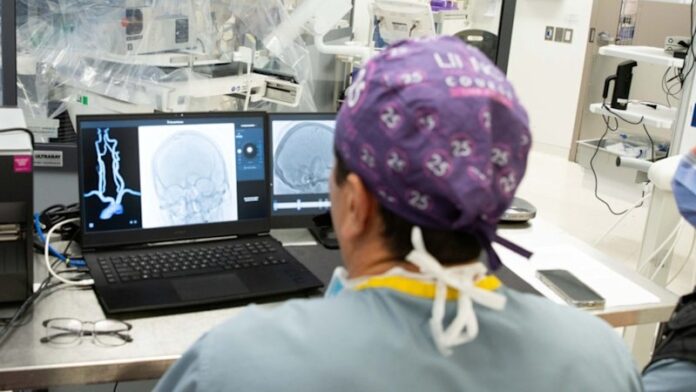
An innovative Australian medtech startup has achieved a world-first by successfully conducting fully remote robotic surgeries, marking a significant leap forward in healthcare accessibility for patients in isolated and rural communities. Remedy Robotics, founded by Perth-born cardiac surgeon David Bell, has pioneered this advancement by remotely performing multiple neurointerventional procedures in Toronto using robotic catheters operated by surgeons from afar. This milestone overcomes challenges that have hindered surgical robotics for more than 30 years.
Global Collaboration and Local Impact
Headquartered in San Francisco, Remedy Robotics is collaborating with the Australian Stroke Alliance to introduce this cutting-edge technology domestically. Upcoming clinical trials will focus on stroke patients in remote Australian locations such as Darwin and Alice Springs, where specialists located thousands of kilometers away will remotely manage critical interventions. This initiative aims to bridge the gap in emergency stroke care caused by Australia’s vast geography.
Addressing Geographic Barriers with Advanced Robotics
The company’s proprietary N1 System integrates custom-designed catheters with a robotic surgical platform controlled via specialized software. This setup enables physicians to perform intricate cardiac and neurovascular procedures from any location with a reliable internet connection. Utilizing sophisticated machine learning algorithms, the system expertly maneuvers delicate, flexible instruments through the brain’s vasculature, a task that demands exceptional precision despite the remote operation.
Patients still require admission to hospitals equipped with catheterization labs, similar to those used in cardiac care. A local clinician initiates the procedure by inserting a catheter into the patient’s femoral artery, after which the remote specialist assumes control of the robotic system to navigate the catheter through blood vessels to the brain, effectively removing clots responsible for strokes.
Inspiration and Innovation: From Self-Driving Cars to Surgical Robotics
David Bell’s inspiration for Remedy Robotics emerged during his MBA studies at Stanford University, where he was immersed in an environment focused on autonomous vehicle technology. He realized that if cars could be taught to navigate complex urban environments autonomously, similar principles could be applied to guide catheters through the intricate network of human blood vessels, dramatically expanding access to specialized medical care.
To bring this vision to life, Bell enlisted Jake Sganga, a doctoral candidate in robotics, after persuading a professor to connect him with the brightest graduate student. Together, they developed a comprehensive hardware and software solution that manages everything from latency issues to real-time medical imaging streams, protected by an extensive portfolio of 45 patents.
Addressing the Urgent Need for Remote Stroke Treatment
Stroke remains a leading cause of death and disability worldwide, with approximately 445,000 Australians affected annually-a figure projected to double by 2050. The economic burden of stroke care in Australia exceeds $32 billion each year. The gold standard treatment for acute ischemic stroke, endovascular thrombectomy, involves threading catheters through arteries to remove clots but is typically limited to specialized urban hospitals.
Professor Stephen Davis, co-chair of the Australian Stroke Alliance, emphasizes the critical role of this technology in overcoming geographic healthcare disparities. Currently, patients in Darwin must travel nearly 3,000 kilometers to Adelaide for treatment, a journey that is often unfeasible for remote Indigenous communities. The new robotic system allows local doctors to initiate catheter insertion, while remote experts complete the procedure, supported by on-site specialists to ensure safety and efficacy.
Davis notes, “While we are optimistic about the potential, rigorous clinical trials are essential to validate this approach. Initially, remote procedures will be conducted alongside backup neurointerventionists on-site to guarantee patient safety.”
Backing and Future Prospects
Remedy Robotics’ team of 18, predominantly technical experts, is actively raising capital in the United States to secure FDA approval, while simultaneously preparing for Australian clinical trials focused on remote stroke interventions. Although the exact funding target remains undisclosed, the company is nearing the close of its current investment round.
Investors such as Blackbird Ventures, DCVC, and Tony Fadell’s Build Collective recognize the company’s groundbreaking achievements. Michael Tolo, partner at Blackbird Ventures, praises Remedy Robotics for pushing the boundaries of modern medicine by integrating robotics, machine learning, and real-time imaging to enable remote cardiovascular procedures, describing it as “transformative.”
Remedy Robotics has contributed to leading academic journals on remote robotic neurointervention and serves as the exclusive robotic partner for Mission Thrombectomy, a global initiative aimed at improving stroke outcomes.
Looking Ahead: The Role of Physicians in Robotic Surgery
Despite his family’s medical background, Bell admits his passion lies in innovation rather than traditional medicine. He likens himself to a “frustrated engineer” driven by the conviction that geographic location should never dictate healthcare quality.
While fully autonomous surgeries may become a reality in the future, Bell anticipates that physicians will remain integral to the process, overseeing procedures to ensure safety and intervene if necessary. Patient feedback from these pioneering remote surgeries has been overwhelmingly positive, with many recognizing the clear benefits of this technology.