Comprehensive Guide to Modern Technology Trends
In today’s rapidly evolving digital landscape, staying informed about the latest technology trends is essential for both individuals and businesses. This article explores key advancements shaping the tech world, supported by current data and fresh examples to provide a clear understanding of their impact.
Emerging Innovations Driving the Tech Industry
Technological innovation continues to accelerate, with breakthroughs in artificial intelligence, cloud computing, and edge technologies transforming how we live and work. For instance, AI-powered tools now automate complex tasks, enhancing productivity across sectors. According to recent studies, the global AI market is projected to reach $126 billion by 2025, underscoring its growing significance.
Cloud services have also expanded dramatically, with over 94% of enterprises adopting cloud platforms as of 2023. This shift enables scalable, flexible infrastructure that supports remote work and data-driven decision-making. Edge computing complements this by processing data closer to the source, reducing latency and improving real-time analytics, which is crucial for applications like autonomous vehicles and smart cities.
Revolutionizing Connectivity: 5G and Beyond
The rollout of 5G networks marks a pivotal moment in connectivity, offering unprecedented speed and reliability. This advancement facilitates innovations such as augmented reality (AR) and virtual reality (VR) experiences, which are increasingly used in education, healthcare, and entertainment. For example, telemedicine platforms now leverage 5G to provide high-definition video consultations, improving patient outcomes.
Looking ahead, research into 6G technology promises even greater enhancements, including ultra-low latency and enhanced AI integration. These developments will further enable the Internet of Things (IoT) ecosystem, connecting billions of devices seamlessly and securely.
Data Security and Privacy in the Digital Age
As technology advances, safeguarding data privacy and security becomes more critical. Cybersecurity threats have grown in complexity, with ransomware attacks increasing by 105% in 2023 alone. Organizations are investing heavily in advanced security measures such as zero-trust architectures and AI-driven threat detection to protect sensitive information.
Moreover, regulatory frameworks like the General Data Protection Regulation (GDPR) and the California Consumer Privacy Act (CCPA) have set new standards for data protection, compelling companies to adopt transparent and ethical data practices. Consumers are also becoming more aware of their digital rights, demanding greater control over personal information.
Practical Applications: Technology Transforming Everyday Life
Technology’s influence extends beyond industry, reshaping daily experiences. Smart home devices, for example, now integrate voice assistants and automation to enhance convenience and energy efficiency. In transportation, electric vehicles (EVs) are gaining traction, with global EV sales surpassing 10 million units in 2023, driven by environmental concerns and government incentives.
Education has also embraced digital transformation, with virtual classrooms and interactive platforms enabling personalized learning. These tools have proven invaluable during recent global disruptions, ensuring continuity and accessibility for students worldwide.
Conclusion: Navigating the Future of Technology
Understanding and adapting to technological trends is vital for leveraging their benefits and mitigating risks. By embracing innovation thoughtfully and prioritizing security and ethical considerations, individuals and organizations can thrive in the digital era. Staying informed and agile will be key to unlocking the full potential of technology in the years ahead.
Beatbot AquaSense 2 Ultra: A Comprehensive Review
Overview
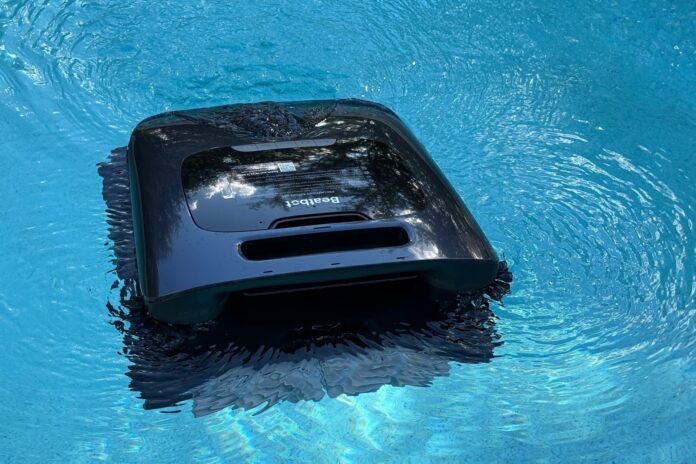
The Beatbot AquaSense 2 Ultra represents a significant evolution in robotic pool cleaning technology. Building on the success of its predecessor, the AquaSense Pro, this new model offers enhanced features, improved performance, and a sleek black design. However, these upgrades come with a heftier price tag and increased size, which may impact usability for some pool owners.
Key Features and Specifications
The AquaSense 2 Ultra draws heavily from the design language of the AquaSense Pro, featuring a cetacean-inspired shape with large wheels, durable treads, and dual spinning brushes positioned between the wheels. Weighing in at 29 pounds dry and up to 45 pounds when filled with water, it is notably bulkier and heavier than the 24-pound Pro model. This increased mass contributes to its powerful cleaning capabilities but also makes handling more challenging.
Equipped with an impressive array of 27 sensors-including ultrasonic, infrared, and AI-driven video technology-the Ultra maps your pool with precision and actively seeks out debris. It is the first robotic cleaner to perform a full-floor sweep followed by a targeted scan for leftover leaves using its front-facing camera. Remarkably, the AI can identify 12 different leaf types by tree species, with plans for future updates to expand this capability.
Powering the unit is a robust 13,400mAh battery, delivering up to 6 hours of continuous cleaning on the pool floor and 10 hours when operating on the surface. The included contact-based charging dock eliminates the need for manual cable connections, simplifying recharging. Additionally, the Ultra supports dual-band Wi-Fi (2.4GHz and 5GHz), enabling remote control via the Beatbot mobile app, though Wi-Fi connectivity is limited to when the robot is above water or docked due to signal attenuation underwater.
Setup and Installation
Setting up the AquaSense 2 Ultra is straightforward but requires some initial effort. The charging station assembles easily with snap-in legs. However, installing the two side brushes demands manual attachment of rubber brush strips around small wheels located at the robot’s front corners. These brushes serve as surface skimmers and bumpers, but fitting the strips takes patience and a bit of trial and error.
The package also includes a retrieval hook and a protective cover for storage-an uncommon but welcome addition among robotic pool cleaners. The mobile app setup is quick, involving simple Wi-Fi pairing and basic configuration steps.
Performance and User Experience
Operation can be controlled either through the robot’s four-button interface or the mobile app. Cleaning modes range from floor-only to comprehensive floor, wall, and surface cleaning, with a customizable mode offering up to 20 different cleaning combinations. Upon activation, the robot scans the pool surface for orientation before descending to the bottom to begin cleaning.
In the most thorough mode, the Ultra performs a full floor sweep, cleans the walls, and skims the surface. Its AI-driven debris detection is particularly impressive: after the initial cleaning, the robot uses its camera to locate any missed leaves, adjusting its path to vacuum them up. Testing showed it effectively collected 9 out of 10 scattered leaves during this phase, demonstrating remarkable accuracy.
Battery life exceeded manufacturer claims, with actual runtime reaching 6 hours. Pools were consistently debris-free after approximately 3 hours of cleaning, even when tested with both natural and synthetic debris.
However, the surface skimming function remains a weak point. The robot’s narrow profile and design cause floating debris to be pushed aside by the water wave it generates, rather than being sucked in. The new side brushes offer limited improvement, capturing only about 40% of surface debris during tests-similar to the performance of the previous Pro model.
Advanced App Features
The Beatbot app allows detailed customization, including scheduling cleanings for the floor, walls, and surface independently, with options for zero, one, or two cycles per cleaning session. Specialized modes include AI-only “search and destroy,” MultiZone cleaning for pools with complex layouts, and an eco mode that cleans the floor every other day. Users can also activate a water clarifier dispensing feature during cleaning, though this requires separate clarifier solutions not included with the robot.
Post-Cleaning and Maintenance
After finishing a cleaning cycle, the Ultra surfaces and docks against the pool wall, floating there for about 15 minutes. If not retrieved within this window, it will float freely on the surface for easier access. The app’s “Park” function can summon the robot back to the dock, provided sufficient battery remains.
Debris is collected in a two-chamber basket system, which is relatively easy to clean but requires emptying two separate compartments. The robot’s substantial weight and size make it cumbersome to lift in and out of the pool, often resulting in wet clothes during retrieval.
Pros and Cons
- Pros: Exceptional cleaning power, outstanding battery longevity, innovative waterline retrieval system, extensive app customization options.
- Cons: Heavy and bulky, limited effectiveness in surface skimming, premium price point.
Pricing and Availability
At the time of review, the Beatbot AquaSense 2 Ultra was priced at approximately $3,550, with current market offers around $2,799. While it represents a significant investment, the advanced features and cleaning performance may justify the cost for pool owners seeking a high-end automated solution.
Final Thoughts
The Beatbot AquaSense 2 Ultra is a powerhouse robotic pool cleaner that excels in thorough floor and wall cleaning, supported by cutting-edge AI technology. Its long battery life and smart debris detection set it apart from competitors. However, its size, weight, and surface skimming limitations may deter some users. For those willing to invest in convenience and advanced features, the Ultra offers a compelling option to automate pool maintenance effectively.
Comprehensive Pool Mapping and Cleaning Insights
The Beatbot AquaSense 2 Ultra offers detailed tracking of its cleaning sessions, including the duration and coverage of each run. One notable feature is the pool map generated during the cleaning cycle. Although the map’s orientation varies with each session and may not be perfectly precise, it provides a useful glimpse into the robot’s navigation capabilities. In most cases, the layout it produces closely resembles the actual shape of the pool, demonstrating a commendable level of spatial awareness.

Remote Control Functionality and Practical Use Cases
The accompanying mobile app includes an on-demand remote control feature, which allows users to manually steer the robot. However, this function is limited to when the robot is at the water’s surface and within Wi-Fi range. This can be handy for targeting stray debris like leaves that have floated to the surface. Still, given the robot’s moderate ability to skim debris, many users might find it more efficient to either wait for debris to sink or simply remove it manually with a net.
Is the Beatbot AquaSense 2 Ultra Worth the Investment?
With a manufacturer’s suggested retail price of $3,550, the Beatbot AquaSense 2 Ultra ranks among the priciest robotic pool cleaners currently available. As of this writing, it retails for approximately $2,779 on Amazon. This model is backed by an impressive three-year full-unit replacement warranty, which helps mitigate the financial risk of such a significant purchase.
While the AquaSense 2 Ultra boasts advanced features and robust cleaning power, it may exceed the needs of many pool owners, even those with larger pools. Its substantial size and weight could be cumbersome for smaller pools, despite its ability to deliver thorough cleaning performance. Prospective buyers should weigh the robot’s capabilities against their pool size and cleaning requirements to determine if this high-end model is the right fit.
Current Market Pricing
As of the latest update, the Beatbot AquaSense 2 Ultra is available for around $2,799, reflecting a competitive price point for a premium robotic pool cleaner with advanced mapping and warranty coverage.