Jeff Bezos Joins Forces to Revolutionize AI in the Physical World with Project Prometheus
Introducing Project Prometheus: AI Beyond the Digital Realm
Jeff Bezos has re-entered the executive arena as co-CEO of an ambitious new artificial intelligence startup, Project Prometheus. This marks his first leadership role since stepping down as Amazon’s CEO in mid-2021. Prometheus is pioneering a novel approach to AI, focusing on its application in the tangible, physical economy rather than just digital data.
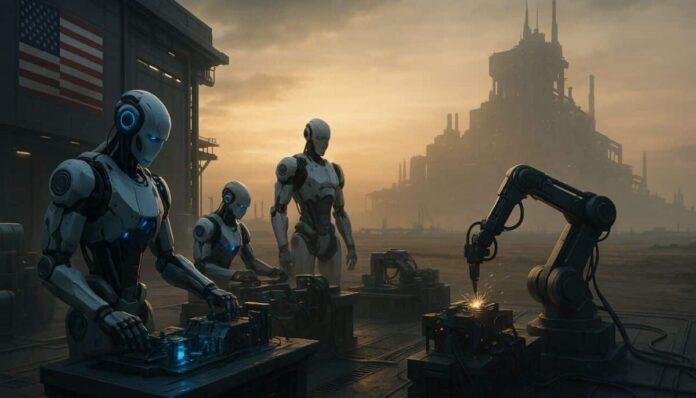
Project Prometheus positions itself as a company dedicated to “AI for the physical economics,” aiming to embed artificial intelligence deeply into industries that rely heavily on engineering and material sciences. This includes sectors such as automotive manufacturing, aerospace, heavy machinery, and electronics production-fields where AI can transform how physical goods are designed, produced, and maintained.
From Bits to Atoms: The New Frontier of AI
While most current AI technologies, including popular large language models that power chatbots and virtual assistants, operate primarily on digital information (“bits”), Prometheus is shifting the focus to “AI for atoms.” This means developing AI systems capable of simulating physical processes, automating factory operations, optimizing engineering designs, and significantly reducing production timelines.
With a staggering $6.2 billion in initial funding-largely backed by Bezos himself-Prometheus stands as the most well-capitalized startup in this emerging niche. For context, Periodic Labs, another company targeting physical AI to accelerate scientific discovery, raised $2 billion earlier this year. Prometheus’s financial muscle gives it a distinct edge in a competitive and rapidly evolving market.
China’s Dominance in Physical AI and Robotics
Despite U.S. efforts to curb China’s technological advancements through stringent export controls on AI-compatible semiconductor chips, China continues to outpace the U.S. in deploying AI-driven physical technologies. According to the International Federation of Robotics, China ranks third globally in robot density within factories, boasting 470 robots per 10,000 workers-a significant increase from 402 in 2022. Remarkably, China only entered the top 10 in 2019 and has since surpassed industrial powerhouses like Japan and Germany. The U.S. trails at 10th place with 295 robots per 10,000 employees.
Higher robot density correlates with more automated, efficient manufacturing processes, characterized by fewer defects and faster innovation cycles. When combined with AI, these factories evolve into “smart” facilities featuring AI-driven quality control, predictive maintenance, and autonomous operational management.
Talent and Manufacturing Prowess
China’s vast talent pool further fuels its lead. Annually, China graduates over 1.5 million engineers with bachelor’s degrees, alongside 400,000 master’s and 60,000 Ph.D. holders in STEM fields. In contrast, the U.S. produces approximately 140,000 bachelor’s, 50,000 master’s, and 12,000 Ph.D. graduates in similar disciplines. This disparity compels U.S. AI startups, including Prometheus, to recruit heavily from existing companies to fill talent gaps.
China’s manufacturing supremacy is evident across multiple sectors:
- China dominates global electronics exports, accounting for over 70%, while the U.S. contributes just 4%.
- By 2022, China produced approximately 77% of the world’s electric vehicle (EV) batteries, underpinning its leadership in the EV supply chain.
- In solar energy, China is projected to hold 55% of the global installed photovoltaic capacity in 2024, with 329 gigawatts operational.
These achievements highlight the steep challenge the U.S. faces in catching up, with physical AI deployment seen as a critical strategy to regain competitiveness.
Bridging the Gap: Challenges in Physical AI Development
Despite the hype around AI, many U.S.-based robotics and AI products remain far from fully autonomous or intelligent. For example, tech reviewer Marques Brownlee critiqued the NEO robot, one of the most advanced U.S. humanoid robots, noting its heavy reliance on human control and limited autonomous capabilities. Its battery life lasts only about four hours, and it performs a narrow range of tasks without direct instructions.
In contrast, China’s UBTECH Robotics has deployed the Walker S2, a humanoid robot capable of continuous 24/7 operation with self-replaceable batteries. UBTECH plans to mass-produce 10,000 units annually by 2027 for use in smart factories, logistics, and automotive manufacturing-demonstrating a significant technological and operational lead.
Why Jeff Bezos Is the Ideal Leader for This Mission
Jeff Bezos’s unparalleled experience uniquely positions him to spearhead Project Prometheus. His track record includes building Amazon’s vast logistics network, pioneering advanced warehouse automation, founding Blue Origin for space exploration, and developing Amazon Robotics. This diverse portfolio reflects deep expertise in integrating AI, robotics, and large-scale engineering systems.
Prometheus aims to develop cutting-edge physical simulation platforms, industrial-grade AI solutions, and engineering automation tools-areas where Bezos has decades of insight and hands-on involvement. His leadership not only brings substantial capital but also attracts top-tier investors and talent, instilling confidence in the startup’s long-term vision.
Complementary Expertise: Vik Bajaj as Co-CEO
Joining Bezos is Vik Bajaj, co-CEO of Prometheus, whose background diverges from typical AI leaders. Bajaj’s expertise lies in bioinformatics, biophysics, and molecular simulation. He co-founded Google’s Life Sciences division (now Verily), which specializes in integrating robotics, sensors, AI, and cloud computing to navigate complex R&D cycles.
Bajaj’s experience managing long-term, research-intensive projects complements Bezos’s strategic vision, making their partnership well-suited to tackle the extended development timelines and capital demands inherent in physical AI innovation.
Looking Ahead: The Long Road to Physical AI Maturity
Unlike software-centric AI startups that can deliver results within months, breakthroughs in physical AI require years of rigorous research, prototyping, and testing. The journey from concept to commercial deployment is lengthy and capital-intensive, demanding patience and resilience.
With Bezos and Bajaj at the helm, Project Prometheus is poised to navigate these challenges, potentially reshaping manufacturing, robotics, and heavy industry through AI-driven physical innovation.