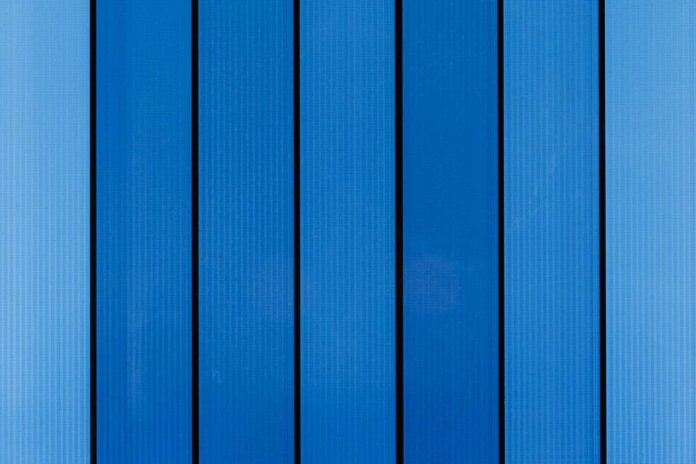
Close-up view of glass embedded with map data from Microsoft Flight Simulator
Microsoft Research
Revolutionizing Data Storage: The Promise of Glass-Based Archives
As the digital age advances, the demand for reliable, long-term data storage solutions has never been greater. From vast internet traffic and industrial sensor outputs to complex scientific datasets, the need to preserve information securely and sustainably is critical for modern infrastructure.
Innovative Laser-Engraved Glass Storage
In 2014, researchers led by Peter Kazansky at the University of Southampton pioneered a groundbreaking technique that uses ultrafast lasers to inscribe nanostructures within glass, encoding hundreds of terabytes of data. This method offers an extraordinary lifespan, potentially preserving information for durations exceeding the universe’s age.
Although initially limited by scalability challenges, this concept has been revitalized by Microsoft’s Project Silica team, headed by Richard Black. Their approach refines the laser inscription process, aiming to create durable, high-capacity glass data libraries suitable for industrial applications.
Why Glass? Durability Meets Sustainability
Glass stands out as a data medium due to its resilience against extreme environmental factors such as heat, moisture, dust, and electromagnetic interference. Unlike conventional storage devices that degrade or require frequent replacement, glass offers a sustainable alternative with minimal energy consumption during production and straightforward recyclability.
Technical Process: From Data to Glass
The Project Silica team employs femtosecond lasers-emitting pulses lasting mere quadrillionths of a second-to etch microscopic 3D patterns into thin glass layers. These patterns represent encoded data, enhanced with error-correcting bits to minimize read/write inaccuracies.
Data retrieval involves capturing images of the glass with a microscope-camera setup, which are then decoded by advanced neural network algorithms back into digital information. This automated, repeatable process paves the way for robotic data centers that can manage vast glass archives efficiently.
Impressive Storage Density and Longevity
In a recent demonstration, the team successfully stored 4.8 terabytes of data within a glass pane measuring just 120 millimeters square and 2 millimeters thick-equivalent to the storage capacity of approximately 37 smartphones compressed into a fraction of their combined volume.
Accelerated aging tests, including prolonged exposure to temperatures of 290°C, suggest that the data remains intact and accessible for over 10,000 years. At ambient room temperatures, the preservation period could extend even further. The researchers also experimented with borosilicate glass, a cost-effective alternative, though it currently supports less complex data encoding.
Scaling Up and Industry Interest
Kazansky highlights that Project Silica’s key advancement lies in delivering a comprehensive, scalable system ready for integration into data center operations. While the fundamental physics of glass data storage have been understood for over a decade, this project demonstrates practical viability.
Beyond Microsoft, other innovators are exploring similar technologies. For instance, Kazansky co-founded SPhotonix, which has successfully encoded the entire human genome into glass. Meanwhile, Austrian startup Cerabyte offers solutions for storing massive datasets within ultra-thin ceramic and glass layers, showcasing the growing commercial interest in this field.
Challenges and Future Prospects
Despite promising results, questions remain regarding the economic feasibility of retrofitting existing data centers with glass storage systems and the potential to boost storage capacity to the theoretical maximum of 360 terabytes per glass unit, as suggested by Kazansky’s research.
Currently, Project Silica’s technology is best suited for archival purposes where data longevity is paramount-such as national archives, scientific repositories, and cultural heritage collections. Collaborations with organizations like Warner Bros. and the Global Music Vault are underway to preserve valuable digital assets indefinitely, moving data off volatile cloud storage.
From Science to Pop Culture
Interestingly, this cutting-edge technology has even inspired Hollywood. The film Mission: Impossible – The Final Reckoning features glass data storage as a secure vault for a rogue artificial intelligence, reflecting a rare instance where science fiction closely mirrors peer-reviewed scientific advancements.