Unitree Robotics’ Breakthrough: Martial Arts Robots Captivate Lunar New Year Gala
Just before midnight on Lunar New Year’s Eve, Wang Xingxing, the visionary founder of Unitree Robotics, was found at the company’s robot training facility nestled within a film and television production hub in Beijing’s Daxing district. Fresh from the live broadcast of the annual gala, Wang was visibly invigorated despite the late hour.
From Reserved Innovator to Enthusiastic Storyteller
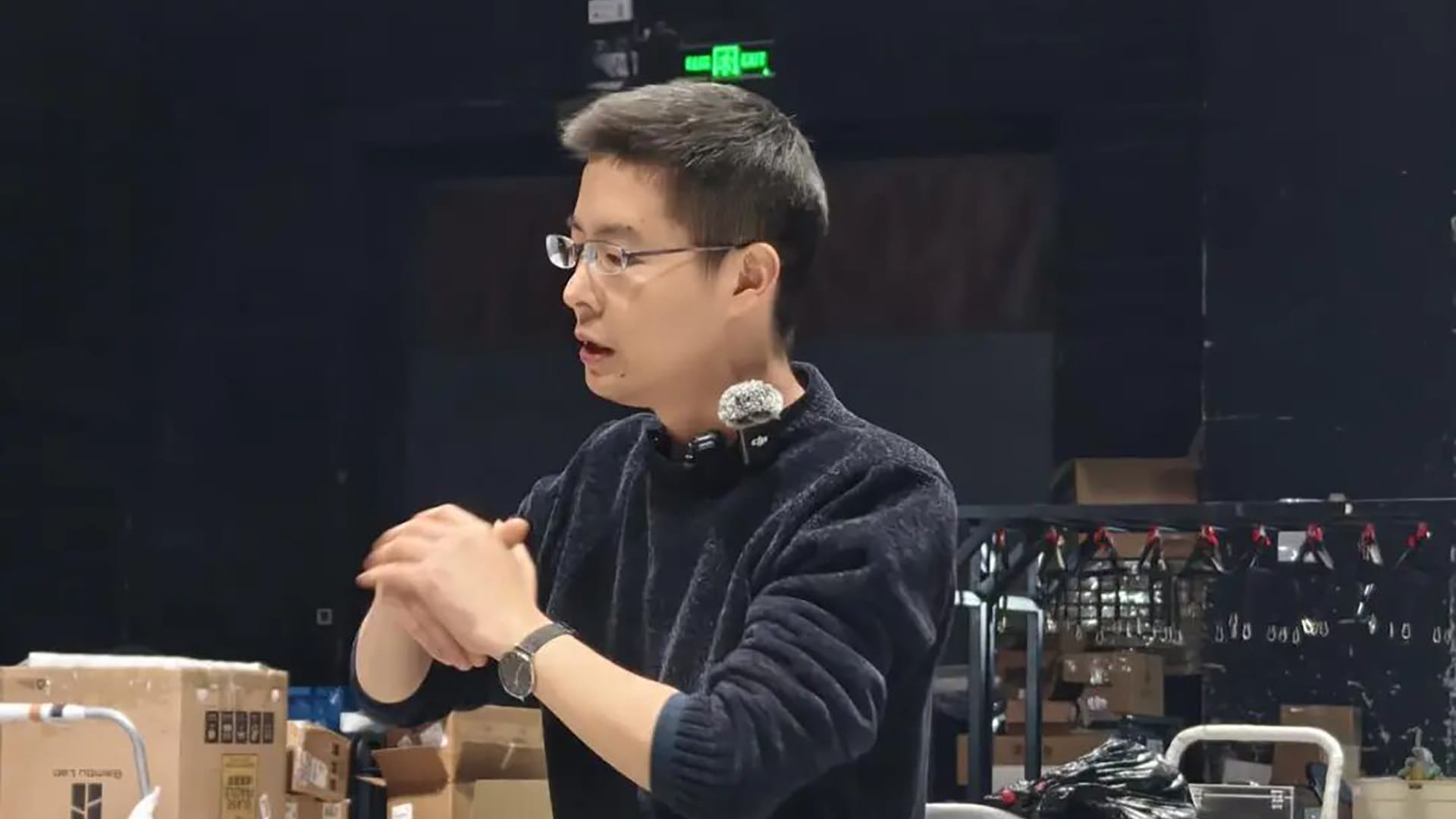
As the discussion turned technical, Wang’s usual calm demeanor gave way to excitement. He animatedly demonstrated combat moves with his arms, his voice rising as he described the robots’ dynamic martial arts maneuvers. “Once the performance wrapped up, I finally felt a huge relief,” Wang shared. Although this marked Unitree’s third consecutive gala appearance, the pressure to innovate remained intense.
Elevating the Performance: Beyond Last Year’s Dance
“Repeating last year’s dance routine wouldn’t have been challenging,” Wang explained. Instead, the team opted for a martial arts showcase to push the robots’ physical limits. The result was a stunning display featuring 24 G1 humanoid robots executing complex moves such as vaulting over tables, backflips, and spinning kicks alongside human performers.
Technical Innovations Behind the Scenes
To prepare, Unitree collaborated closely with the gala’s creative team, studying martial arts styles worldwide and selecting dozens of signature moves for the choreography. Unlike the previous year’s slower, walking-based transitions, this year’s robots sprinted between formations at speeds reaching four meters per second.
Managing a larger group of robots introduced new challenges in coordination. Unitree developed advanced cluster control technology, enabling each robot to use onboard sensors to perceive its environment in real time. This system allows the robots to self-correct their positions during rapid, high-intensity movements, maintaining formation without human intervention.
From Stage to Real-World Applications
Wang emphasized that the gala performance was more than entertainment-it served as a testing ground for practical technologies. “Our cluster coordination and high-speed mobility innovations are designed to facilitate large-scale robotic operations in real-world scenarios,” he said.
Looking ahead to 2026, Unitree plans to broaden its focus beyond consumer and educational markets, targeting industrial and commercial service sectors. Wang projects that the company’s shipments could reach between 10,000 and 20,000 units next year, reflecting growing market demand fueled by technological advancements.
Exclusive Insights: An Interview with Wang Xingxing
Choosing Martial Arts: A New Challenge
Q: What motivated the decision to feature martial arts in this year’s gala?
Wang Xingxing (WX): We wanted to surpass last year’s performance. Repeating the dance routine wouldn’t push our robots’ capabilities. Martial arts offered a chance to showcase more complex, athletic movements, enhancing both positioning accuracy and physical agility.
Pressure and Preparation
Q: How did you feel after the performance concluded?
WX: The past couple of months were intense. We aimed to deliver a show that was not only visually impressive but also technologically superior. We studied martial arts techniques globally, teaching the robots to replicate them and selecting the most impactful moves. Synchronizing the choreography with music and human performers required meticulous fine-tuning, which was time-consuming but rewarding. After the show, I felt a great sense of relief.
Industry Impact and Competition
Q: With many robotics companies featured at the gala, what does this mean for the sector?
WX: The robotics field is becoming increasingly competitive, which is natural as the industry grows. However, our main competitor remains ourselves. Last year’s performance set a high bar, and we were determined to exceed it both technologically and artistically.
Overcoming Technical Challenges
Q: What were the biggest hurdles in preparing this performance?
WX: We achieved several firsts in humanoid robotics. For example, last year’s transitions involved slow walking repositioning, which lacked stage appeal. This year, we developed the ability for robots to run along complex paths at speeds up to four meters per second-a capability with significant practical applications for coordinated robotic fleets.
We also pushed the limits with advanced moves, such as a robot stepping twice on a wall before leaping. Initially, it could only manage one step, but after extensive optimization, it performed two steps and a higher jump, enhancing the visual impact.
Preparation Timeline and Scale
Q: How long did the preparation take, and what were the key breakthroughs?
WX: We started in November. Selecting moves, crafting the storyline, and refining actions consumed most of the time. This year, we increased the robot count from 16 to 24 G1 units, improving formation uniformity. To counteract positional drift during intense movements, we developed precise positioning technology to maintain visual consistency.
Performance Highlights and Storytelling
Q: There was a moment when a robot fell and got back up. Was that planned?
WX: Yes, it was intentional. The performance incorporated elements of humor and storytelling. The “drunken boxing” style involves near-falls, so the robot’s fall and recovery added a dramatic and artistic touch.
Strategic Value of Gala Participation
Q: What benefits does participating in the gala bring?
WX: The gala offers a prestigious platform to showcase our technology to a nationwide audience, highlighting the rapid progress in robotics.
Future Directions: Models and Market Expansion
Q: What are Unitree’s priorities for 2026?
WX: We are exploring diverse approaches to embodied intelligence, including world models, vision-language-action (VLA) frameworks, and reinforcement learning integrations. Collaborations with external AI developers are ongoing, as no company has yet cracked the full potential of embodied intelligence.
Commercially, we aim to expand beyond consumer and educational sectors into industrial and commercial services. Since 2024, we have piloted humanoid robots in automotive factories for production and material handling, though large-scale adoption remains a challenge due to efficiency comparisons with human workers.
Consumer Market and Accessibility
Q: Is the consumer market a key focus?
WX: Absolutely. Our quadruped and humanoid robots are available on major e-commerce platforms like JD.com and Taobao. The R1 humanoid robot starts at approximately RMB 29,900 (around USD 4,200).
Emerging Real-World Applications
Q: Beyond performances, what practical uses are on the horizon?
WX: While robots can be programmed for specific environments, the variability of household settings makes widespread adoption challenging. However, fixed environments like guided tours or industrial sites are promising areas for deployment within the next year or two.
Humanoid robotics is still in its infancy, with roughly three years of rapid development. Pushing too aggressively too soon could hinder the industry’s growth.
Bridging the Gap Between Stage and Practicality
Q: How will robots transition from performances to everyday applications?
WX: Mobility is foundational. A robot must first master movement before it can effectively perform tasks. We are prioritizing enhancements in locomotion as a prerequisite for advancing embodied intelligence and practical functionality.
Market Outlook and Industry Trends
Q: Do you agree with forecasts predicting a surge in global humanoid robot shipments in 2026?
WX: Yes, we anticipate global shipments reaching tens of thousands, with Unitree alone potentially delivering 10,000 to 20,000 units. Market growth hinges on continued technological progress; without meaningful innovation, shipment volumes may stagnate.
Balancing Innovation and Market Realities
Q: Is the rapid emergence of robotics companies driven by genuine technological advances or short-term investment hype?
WX: The current wave is relatively measured compared to mature applications. While capital inflows and expectations influence the market, the industry remains fundamentally healthy, though fluctuations are natural.
Addressing Industry Challenges
Q: How can the sector avoid redundant competition and destructive practices?
WX: With significant capital entering robotics, homogenization is a risk. I advocate for rational restraint to prevent harmful price wars or unsustainable business models that could damage the industry’s long-term prospects.
Scaling Production and Customer Support
Q: How has Unitree prepared for increased demand?
WX: After last year’s surge in orders, we bolstered inventory and enhanced our sales and after-sales support systems to better serve customers.
Q: What is your current production capacity?
WX: Our annual production capacity for humanoid robots is in the tens of thousands, with similar capacity for quadruped models.
Q: What are common pitfalls in delivery and customer adoption?
WX: Delivery is crucial to closing the commercial loop. After-sales service is vital because many issues stem from users’ unfamiliarity rather than product defects. We focus on improving usability to make robot operation intuitive and accessible.