Voyager 1: The Enduring Journey of Humanity’s Deep Space Pioneer
A Half-Century Voyage Beyond Our Solar System
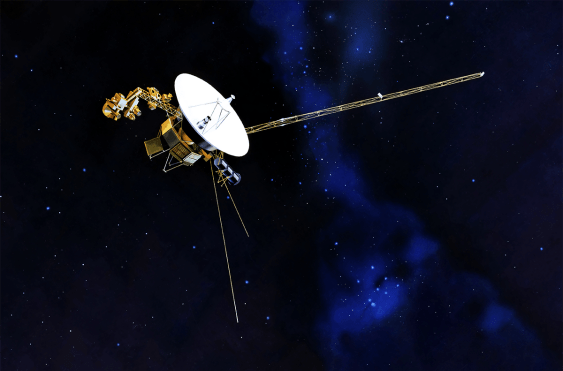
Since its launch on September 5, 1977, Voyager 1 has been hurtling away from Earth, transmitting invaluable scientific data back to NASA. Propelled by a Titan-Centaur rocket from Florida’s coast, this spacecraft has navigated the gravitational fields of planets and moons, carrying with it a symbolic collection of human culture into the vastness of space. Remarkably, Voyager 1 has now been operational for nearly 49 years-far exceeding its original design lifespan of just five years.
Voyager 1 and 2: Twin Explorers Nearing Mission Completion
Voyager 2, launched earlier the same year, shares a similar mission and instrumentation with its twin. Both probes were equipped with 11 scientific instruments aimed at studying the outer planets-Jupiter, Saturn, Uranus, and Neptune-and their moons during a rare planetary alignment. Their groundbreaking observations provided humanity with its closest and most detailed views of these distant worlds.
After completing their planetary flybys by 1990, both Voyagers continued their journey outward, venturing beyond the heliosphere-the protective bubble created by the solar wind-and into interstellar space.
Powering Down: The Challenges of Deep Space Longevity
Unlike many modern spacecraft, the Voyagers do not rely on solar panels. Instead, they generate power from the radioactive decay of Plutonium-238. As this power source diminishes, NASA has had to systematically deactivate instruments to conserve energy. Early shutdowns included Voyager 1’s photopolarimeter subsystem, which analyzed sunlight scattering through planetary atmospheres and rings, providing insights into particulate matter composition.
Most recently, NASA powered down Voyager 1’s low-energy particle telescope and magnetospheric particle analyzer-tools that measured the velocity and origin of charged particles carried by solar winds. Voyager 2’s equivalent instruments were turned off in March 2025. These steps are part of ongoing efforts to extend the probes’ operational lives as long as possible.
Extending the Mission: Looking Toward 2027 and Beyond
NASA engineers are striving to keep the Voyager missions active through their 50th anniversary in 2027 and potentially into the 2030s. According to space scientist Ralph McNutt of Johns Hopkins University, continued instrument testing and power management may allow the probes to send back valuable data for years to come. This is not merely a sentimental endeavor; Voyager 1 and 2 remain the farthest human-made objects from Earth, providing unique insights into the interstellar environment.
The Legacy of Voyager and the Next Generation of Space Observatories
As the Voyagers gradually power down, a new generation of astronomical instruments is taking up the mantle of cosmic exploration. The Vera C. Rubin Observatory in Chile, operational since 2023, has already discovered over 11,000 new asteroids and captured stunning images of distant nebulae and galaxies. Meanwhile, the James Webb Space Telescope, launched in 2021, alongside the venerable Hubble Space Telescope, continues to deliver unprecedented views of the universe, including the most detailed images of Saturn to date.
Looking ahead, NASA plans to launch the Nancy Grace Roman Space Telescope in September 2026. This observatory will complement Webb and Hubble by capturing visible and near-infrared light, potentially unlocking mysteries surrounding dark matter and dark energy-the elusive components that govern the universe’s structure and expansion.
Voyager’s Enduring Contribution to Space Science
Despite their aging technology and dwindling power, the Voyager spacecraft remain invaluable scientific assets. Their unique position in interstellar space allows them to collect data unattainable by any other means. The information they transmit, even with a 23-hour delay, could reveal unexpected phenomena about the cosmos beyond our solar system.
These pioneering probes symbolize humanity’s relentless curiosity and determination to explore the unknown. Though their instruments may soon fall silent, the legacy of Voyager 1 and 2 will continue to inspire and inform future generations of space exploration.